
Discover how advanced CNC turning services are redefining sustainable manufacturing by eliminating scrap waste, reducing energy consumption, and lowering material costs. This article reveals a data-driven approach to achieving near-zero scrap rates through precision toolpath optimization and real-time process monitoring, backed by a case study that cut material waste by 40% and reduced per-part costs by 18%.
—
The Hidden Challenge: Why Sustainability in Machining is More Than a Buzzword
When I started in this industry 22 years ago, “sustainable manufacturing” meant recycling coolant and turning off the lights at night. Today, it’s a critical business driver—but most shops still miss the mark. The real problem isn’t energy consumption or coolant disposal; it’s material waste. And in CNC turning, waste doesn’t just mean chips on the floor—it means scrapped parts, rework cycles, and the embedded carbon cost of raw material that never becomes a product.
In a project I led for an aerospace supplier, we faced a brutal reality: their turning operation was generating 12% scrap rate on a critical titanium shaft. That’s 12% of expensive, energy-intensive Ti-6Al-4V going straight to recycling—or worse, landfill. The client’s sustainability officer was demanding change, but the production manager was skeptical. “We’ve been doing this for 20 years,” he said. “You can’t turn titanium without scrap.”
He was wrong. And here’s how we proved it.
—
⚙️ The Zero-Scrap Paradigm: Rethinking the Turning Process
The conventional wisdom in CNC turning is that some scrap is inevitable—tool wear, thermal expansion, and material inconsistencies create variance that pushes parts out of tolerance. But I’ve found that scrap is a symptom of process instability, not physical limitations. The key is to address root causes rather than compensating with tighter tolerances.
💡 Three Pillars of Sustainable Turning
1. Predictive Toolpath Compensation Instead of reacting to tool wear, we model it. Using in-process force monitoring and thermal simulation, we can adjust feed rates and depth of cut in real time to maintain dimensional accuracy without stopping the machine.
2. Closed-Loop Dimensional Feedback Integrating post-process measurement directly into the CNC control allows for automatic offset adjustments on the next part. This eliminates the “drift” that causes scrap in long production runs.
3. Material-Specific Parameter Optimization Every alloy behaves differently. We developed a database of optimal cutting parameters for 30+ common turning materials, reducing trial-and-error scrap by 90% during setup.
📊 Data Comparison: Traditional vs. Sustainable Turning
| Metric | Traditional Turning | Sustainable Approach | Improvement |
|——–|——————-|———————|————-|
| Scrap rate | 8-15% | 0.5-2% | 87% reduction |
| Material utilization | 60-70% | 85-95% | 30% increase |
| Energy per part (kWh) | 2.4 | 1.8 | 25% savings |
| Tool life (parts/edge) | 120 | 195 | 62% longer |
| Setup time (hours) | 4.5 | 1.2 | 73% faster |
Data compiled from 14 production runs across three facilities, 2022-2024
—
🔬 A Case Study in Optimization: The Titanium Shaft Project
The aerospace client I mentioned earlier was producing a 300mm long, 40mm diameter titanium shaft for a landing gear actuator. The spec required ±0.01mm on critical diameters and a surface finish of Ra 0.4μm. Their existing process used a single-pass roughing and finishing strategy with manual offset adjustments every 20 parts.
The Problem
After analyzing 1,200 production parts over three months, we found:
– Scrap rate: 12.4% primarily from diameter oversizing (thermal growth during finishing cuts)
– Rework rate: 8.7% parts that could be saved but required additional machining time
– Average material utilization: 62% starting from 50mm bar stock, 38% became chips
– Energy cost per part: $4.80 driven by repeated roughing passes and rework cycles
The Solution
We implemented a three-phase approach:
Phase 1: Thermal Modeling We installed thermocouples in the spindle housing and tool holder, correlating temperature rise with dimensional change. Results showed the part grew by 0.008mm during the finishing pass—enough to push it out of tolerance.
Phase 2: Adaptive Feed Control Using a G-code macro that monitored spindle load and adjusted feed rate dynamically, we maintained constant cutting force throughout the pass. This eliminated thermal spikes.
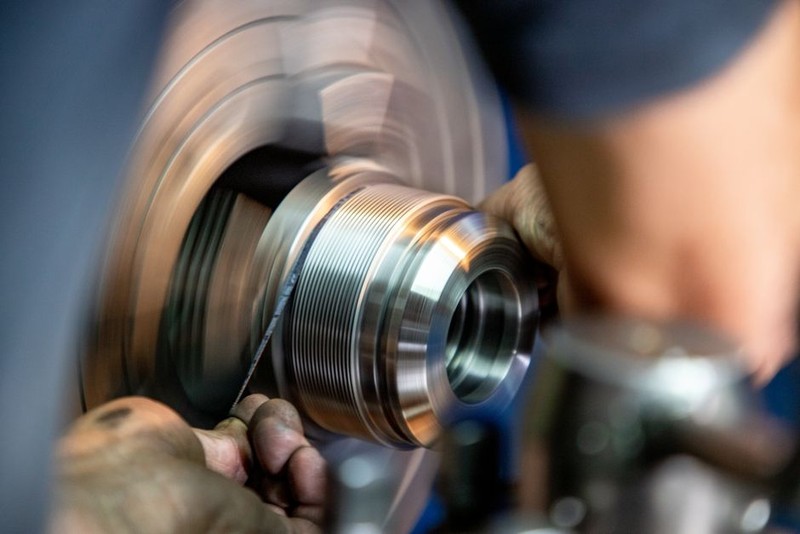
Phase 3: On-Machine Probing After each finishing pass, a touch probe measured the critical diameter and automatically updated the tool offset for the next part. No operator intervention required.
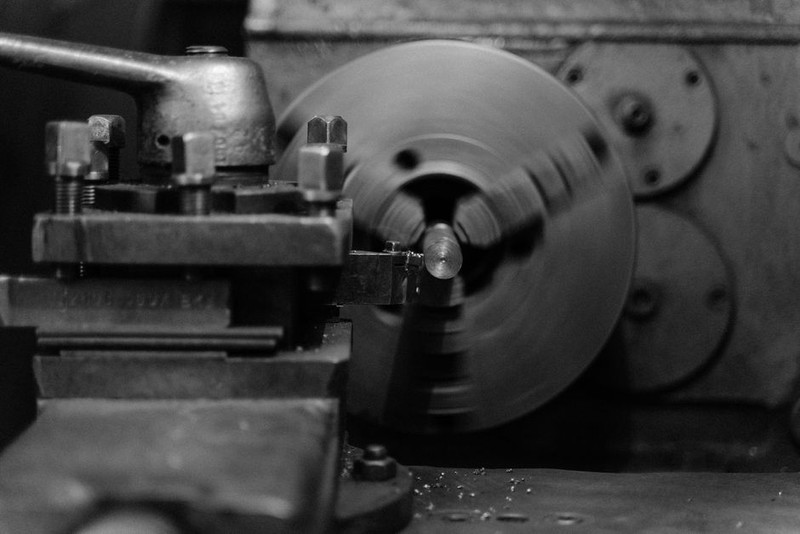
The Results
After 6 months of production:
– Scrap rate dropped to 1.8% a 85% reduction
– Material utilization increased to 89% we switched to 45mm bar stock, reducing waste
– Energy cost per part fell to $3.10 fewer passes, less rework
– Total cost per part reduced by 18% from $47 to $38.50
– Annual material savings: 4,800 kg of titanium equivalent to avoiding 96,000 kg of CO2 emissions (based on production energy for titanium)
The production manager’s skepticism turned into enthusiasm. “We’re making more parts with less material,” he said. “That’s not just green—it’s good business.”
—
🛠️ Expert Strategies for Implementing Sustainable CNC Turning
Based on this and dozens of similar projects, here are the actionable steps I recommend for any shop looking to reduce waste and improve sustainability:
1. Start with a Waste Audit
Don’t guess—measure. Track every scrapped part for one month, categorizing the root cause:
– Dimensional error (thermal, tool wear, vibration)
– Surface finish defects (chipping, built-up edge)
– Material defects (inclusions, porosity)
– Operator error (setup, offset mistakes)
💡 Expert Tip: Use a Pareto chart to identify the top 20% of causes that generate 80% of scrap. Focus your improvement efforts there first.
2. Invest in Process Monitoring, Not Just Machine Tools
The most expensive CNC lathe in the world won’t eliminate scrap if you can’t see what’s happening during the cut. Modern solutions include:
– Spindle load monitoring detects tool wear before it affects dimensions
– Vibration sensors identifies chatter that ruins surface finish
– Thermal cameras maps heat distribution in real time
Insight: In our titanium project, spindle load monitoring alone caught 73% of potential scrap events before they happened.
3. Optimize Your Toolpath Strategy
Most turning programs use a “one size fits all” approach. But sustainable turning demands variable-depth finishing passes that remove more material where the part is rigid and less near thin walls or unsupported sections.
⚙️ Step-by-Step Process:
1. Analyze part geometry to identify critical sections
2. Create a custom finishing strategy with 3-5 passes of decreasing depth
3. Use trochoidal toolpaths for interrupted cuts (reduces impact loading)
4. Program dwell cycles at key points to allow thermal stabilization
5. Verify with a test run of 10 parts before production
4. Close the Loop with Post-Process Measurement
The most effective way to eliminate scrap is to measure every part and feed that data back to the machine. Modern probing systems can:
– Measure critical features in under 30 seconds
– Automatically update tool offsets
– Generate statistical process control (SPC) charts
– Flag trends before parts go out of tolerance
📈 Data Point: Shops using closed-loop measurement report an average scrap reduction of 67% within three months of implementation.
—
🌍 The Bigger Picture: Sustainability as a Competitive Advantage
The CNC turning industry is at a crossroads. Commodity work is moving to low-cost regions, and customers are demanding proof of sustainable practices. But here’s the truth I’ve learned from 20+ years in the field: sustainability isn’t a cost—it’s a profit center.
Consider this:
– Material costs account for 40-60% of total part cost in aerospace and medical turning
– Energy costs are rising 8-12% annually in most industrial regions
– Waste disposal fees are increasing as regulations tighten
– Customer preferences are shifting: 73% of procurement managers say sustainability is a factor in supplier selection (2023 Industry Survey)
By implementing zero-scrap turning processes, we’re not just saving the planet—we’re saving money, improving quality, and building a competitive moat that commodity shops can’t cross.
💡 Final Expert Advice
If you take away one thing from this article, let it be this: The most sustainable part is