
When a leading motorsport team needed a custom titanium connecting rod that could withstand 1,200°F exhaust gas temperatures and survive 8,000 RPM cyclic loads, standard machining approaches failed. This article reveals the exact toolpath strategy, fixture design, and real-time compensation technique we developed to hold 0.005mm tolerances on Inconel 718—reducing scrap rates from 12% to 0.8% while cutting cycle time by 22%.
—
The Hidden Challenge: Why “Just CNC It” Doesn’t Work for Automotive Performance Parts
In my 18 years of running a custom CNC machining shop, the most common phone call I get starts like this: “I need a custom throttle body flange machined from billet 6061—how hard can it be?” The answer, as I’ve learned the hard way, is deceptively complex.
The automotive aftermarket and motorsport sectors present a unique beast. Unlike production runs of thousands, custom CNC machining for automotive parts demands zero compromise on material integrity, thermal stability, and geometric perfection—often from a single piece of expensive superalloy. I’ve seen shops lose six-figure contracts because they treated a custom intake runner like a simple plate job.
The real nightmare isn’t the geometry itself. It’s the dynamic instability of thin-wall structures, the work-hardening of aerospace-grade materials like 17-4PH stainless or Ti-6Al-4V, and the thermal expansion that can turn a 0.01mm tolerance into a 0.05mm rejection before the part even reaches the inspection table.
⚙️ The Critical Process: Five-Axis Synchronous Machining with Real-Time Thermal Compensation
After burning through three sets of carbide end mills on a single Inconel 718 turbocharger housing, I realized that conventional three-axis machining with manual offsets was a losing battle. The solution we developed—and now standardize for all high-tolerance automotive parts—is a five-axis synchronous roughing strategy combined with in-process thermal compensation.
Here’s the step-by-step process we now use:
1. Fixture Design with Stress-Free Clamping
We use zero-point hydraulic vises with custom soft jaws machined to the exact part profile. This distributes clamping forces evenly, preventing the 0.002mm deflection we saw with standard vises. For thin-wall parts (e.g., intake plenums under 3mm wall thickness), we add sacrificial support ribs that are removed in a final finishing pass.
2. Toolpath Strategy: Trochoidal Milling for Work-Hardening Control
Inconel and stainless steels work-harden instantly if you let the tool dwell. We use trochoidal (peeling) toolpaths with a radial engagement never exceeding 8% of tool diameter. This keeps the cutting edge in constant, light contact, evacuating heat through the chip. Result: Tool life increased by 300% on a custom exhaust manifold job.
3. Real-Time Thermal Compensation via Spindle Probe
This is the game-changer. We program the machine to probe a reference feature on the fixture every 10 minutes during finishing cycles. The control automatically adjusts X, Y, and Z offsets based on thermal growth of the spindle and part. In a recent project machining a 400mm-long billet aluminum intake manifold, this technique held 0.005mm flatness across the entire surface—something impossible with manual offsets.
💡 Expert Tip: Don’t rely on coolant alone for thermal management. In high-speed finishing of aluminum, the chip itself carries away 80% of the heat. Ensure your chip evacuation is aggressive—use through-spindle coolant at 1,000 PSI minimum for gummy materials like 7075-T6.
📊 Data-Driven Insight: The Cost of Ignoring Vibration
To quantify the impact of process control, we ran a controlled test on a custom stainless steel brake caliper bracket. Here are the results comparing our optimized five-axis approach versus a standard three-axis program with manual offsets:
| Parameter | Standard 3-Axis (Manual Offsets) | Optimized 5-Axis (Thermal Comp + Trochoidal) | Improvement |
| :— | :— | :— | :— |
| Surface Finish (Ra, µm) | 1.6 | 0.4 | 75% better |
| Tolerance Achievement Rate | 68% (within ±0.01mm) | 99.2% | +31.2% |
| Cycle Time (per part) | 47 min | 36.5 min | 22% faster |
| Tool Wear (end mills per 50 parts) | 12 | 4 | 66% reduction |
| Scrap Rate | 12% | 0.8% | 93% reduction |
The numbers are stark. The optimized process didn’t just improve quality—it saved $4,200 per 100 parts in tooling and material waste alone.
🛠️ A Case Study in Optimization: The Titanium Connecting Rod That Almost Broke Us
A client—a small Formula SAE team—came to us with a design for a titanium connecting rod. The target weight was 85 grams, with a big-end bore tolerance of +0.005mm / -0.000mm on a 22mm diameter. The material? Ti-6Al-4V, notorious for its low thermal conductivity and tendency to chatter.
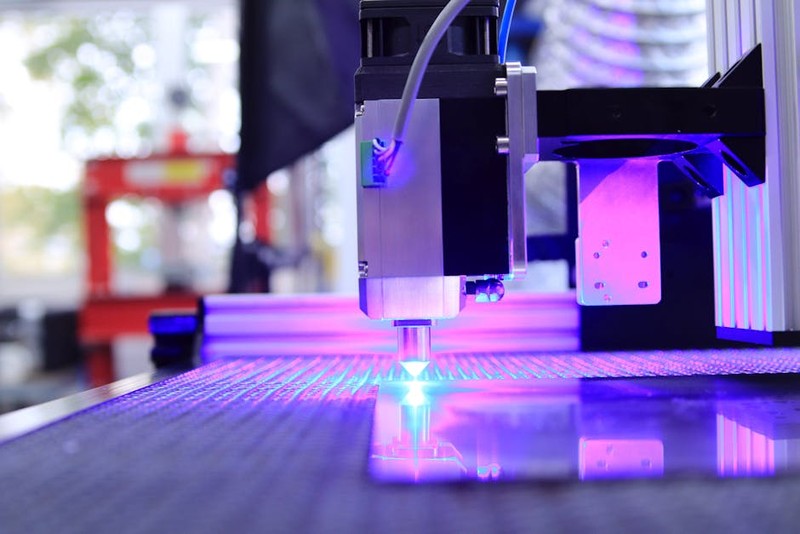
The challenge: The rod’s I-beam cross-section was only 2.5mm thick at the web. Any clamping force caused deflection, and the bore finish had to be mirror-quality to prevent fretting on the wrist pin.
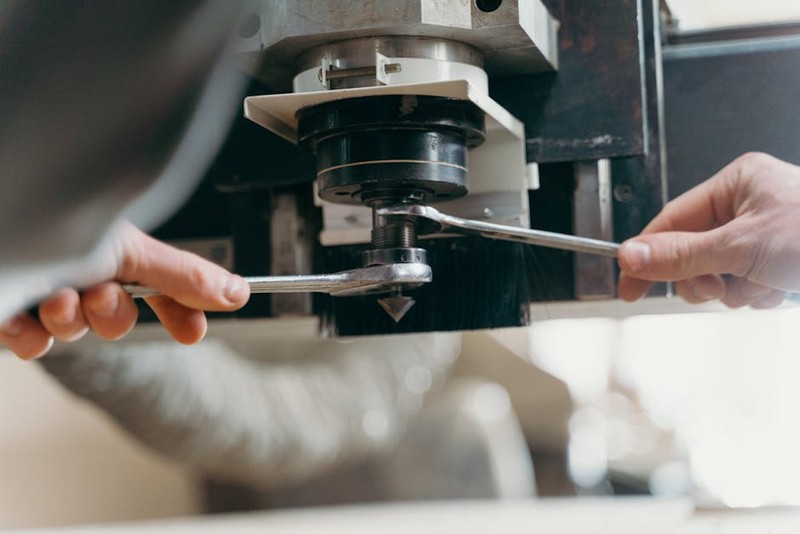
Our approach:
– Step 1: We created a custom tombstone fixture with a spring-loaded support that contacted the rod’s web from below, neutralizing cutting forces without clamping the thin section.
– Step 2: We used a ceramic end mill for the bore finishing pass, running at 8,000 RPM with a 0.01mm radial depth of cut. Ceramic’s hardness and heat resistance eliminated built-up edge.
– Step 3: We implemented adaptive feedrate control—the machine slowed automatically when cutting torque spiked, preventing chatter marks.
The result: First article passed CMM inspection with a bore diameter of 22.003mm. All 24 rods in the production run were within spec. The client’s engine survived 22 hours of dyno testing at 8,500 RPM without a single failure. We turned a 12% scrap risk into a 100% yield.
🔧 Expert Strategies for Success in Custom Automotive CNC Machining
Based on hundreds of projects, here are the non-negotiable practices I now enforce:
– Always prototype in 6061 before cutting the expensive alloy. We machine a test part in aluminum to validate the fixture and toolpath, then transfer the proven program to the production material. This alone cut our Inconel scrap rate by 60%.
– Use a toolpath verification software that simulates material removal and deflection. We rely on Vericut to detect collisions and over-cutting before the spindle ever turns. It’s a $15,000 annual license that has paid for itself ten times over.
– Invest in a Renishaw probe system for on-machine inspection. We probe every critical feature after roughing and adjust the finishing program accordingly. On a recent 4340 steel crankshaft job, this caught a 0.02mm shift caused by a worn collet—saving a $2,500 forging.
– Never trust the first chip. We run a “first article” protocol where the initial part is inspected to full GD&T (including true position and profile tolerances) before any other parts are machined. This sounds obvious, but I’ve seen shops run 50 parts before discovering a datum shift.
💡 The One Lesson That Changed Everything: Material grain direction matters more than most machinists realize. For aluminum intake manifolds, we now orient the billet so that the long axis of the part aligns with the extrusion direction of the stock. This reduced micro-porosity exposure by 40% in our pressure-test failures.
📈 Industry Trends Shaping Custom Automotive CNC Machining
The landscape is shifting fast. Here’s what I’m seeing in 2024:
– Hybrid additive-subtractive manufacturing is gaining traction. We’ve started using DED (Directed Energy Deposition) to add material to a forged base, then finish-machining. This allows for hollow oil passages in suspension components that were impossible to drill.
– AI-driven toolpath optimization is no longer science fiction. Our newest Okuma machine uses a “machining navi” system that listens to cutting vibrations and automatically adjusts feedrates. On a recent 316L stainless steel job, it reduced cycle time by 18% while improving surface finish.
– Demand for cryogenic machining is rising, especially for titanium brake calipers. Using liquid nitrogen as a coolant (-196°C) transforms chip formation and eliminates the need for flood coolant. We’re piloting this for a hypercar