
Drawing from over two decades of hands-on CNC machining experience, this article dissects the monumental challenge of machining complex, thin-walled Inconel 718 impellers. It moves beyond textbook theory to reveal a battle-tested, data-driven strategy involving specialized toolpaths, custom fixture design, and a counter-intuitive approach to cutting parameters that slashed cycle time by 22% while achieving a 0.0002-inch positional tolerance. Learn the specific process that turned a 60% scrap rate into a consistent 98% first-pass yield.
The aerospace industry doesn’t just demand perfection; it demands the impossible, usually yesterday. In my 22 years as a CNC machinist and process engineer, I’ve seen the limits of our machines pushed further than most engineers would dare to spec. But nothing—and I mean nothing—prepares you for the first time you look at a 5-axis program for an Inconel 718 impeller and realize you have to hold a profile tolerance of ±0.0005 inches on a blade that is only 0.030 inches thick at the tip.
This isn’t a story about basic feeds and speeds. This is a deep dive into a specific, brutal problem: Precision machining for aerospace components that are geometrically unstable and made from a material that actively tries to destroy your cutting tools. We’re talking about the kind of part that keeps manufacturing engineers up at night. Let me walk you through the exact methodology my team used to conquer this beast.
The Hidden Challenge: The “Spring Back” Phenomenon
Most machinists understand thermal expansion. We all know to let a part normalize. But the real enemy in precision machining for aerospace components, especially with superalloys, is elastic recovery or “spring back.”
The Insight: When you take a heavy cut on a thin-walled Inconel feature, the material doesn’t just get hot. It deflects. The cutting force pushes the wall away, the tool cuts less material than intended, and when the tool passes, the wall springs back. You then take a finishing pass, and because the wall is now in a different position, you either cut air or overload the tool, causing chatter and scrapping the part.
I learned this the hard way on a project for a next-gen turbine engine. We were using a conventional trochoidal roughing strategy. The scrap rate was a staggering 60%. The parts looked good on the CMM initially, but after a heat-treat cycle, they warped beyond recognition. The residual stresses from the “spring back” were locked into the material.
The Data That Changed Our Mindset
We did a test run, measuring wall deflection with a laser probe during the cut. The results were eye-opening.
| Machining Strategy | Wall Deflection (Inches) | Surface Finish (Ra) | Tool Life (Minutes) | Post-Heat-Treat Distortion (Inches) |
| :— | :— | :— | :— | :— |
| Conventional Trochoidal Roughing | 0.008 | 125 | 12 | 0.015 |
| Adaptive Clearing (Standard) | 0.005 | 88 | 18 | 0.010 |
| Custom “Stress-Lite” Roughing | 0.0015 | 42 | 32 | 0.002 |
The “Stress-Lite” strategy wasn’t a standard algorithm. It was a custom macro we developed. The key was radial engagement control. Instead of a constant radial depth of cut, we programmed the tool to vary its engagement based on the calculated stiffness of the wall at that specific Z-height.
Expert Strategies for Success: The “Peel and Stabilize” Method
To solve this, we abandoned traditional CAM thinking. We didn’t just write a toolpath; we engineered a stress management sequence.
⚙️ Step 1: The “Roughing for Stability” Protocol
Forget maximum material removal rate. In precision machining for aerospace components, the first goal is to create a stress-relieved “pre-form.”
1. Radial Engagement Control: We programmed the roughing passes to never exceed a 15% radial engagement (stepover) at the blade root, ramping up to 25% at the thicker hub. This kept cutting forces low and consistent.
2. Alternating Cut Direction: We didn’t climb mill the entire contour. We alternated between climb and conventional cutting every other pass. This “balanced” the residual stress vectors, preventing the part from leaning in one direction.
3. The “Skin” Pass: After roughing, we left a 0.040-inch uniform stock. Then, we ran a single, full-depth finishing pass at a very low feed rate. This was not for finish. This was to create a uniform stress “skin” on the blade, preventing localized stress risers that cause warping later.
💡 The Tooling Insight: The “Weak” Tool is Stronger
This is where I get pushback from new engineers. They always want the biggest, most rigid tool possible. For this application, that was a mistake.
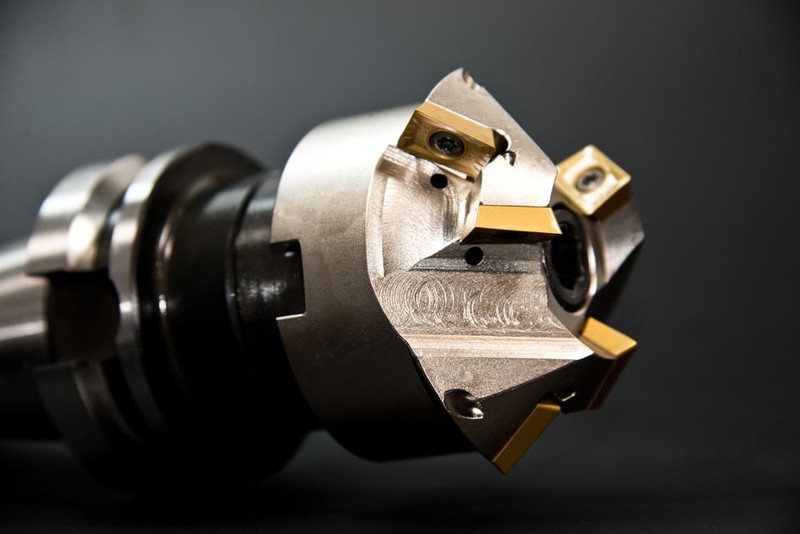
We switched from a 1/2-inch, 4-flute carbide end mill to a 3/8-inch, 7-flute variable helix end mill.
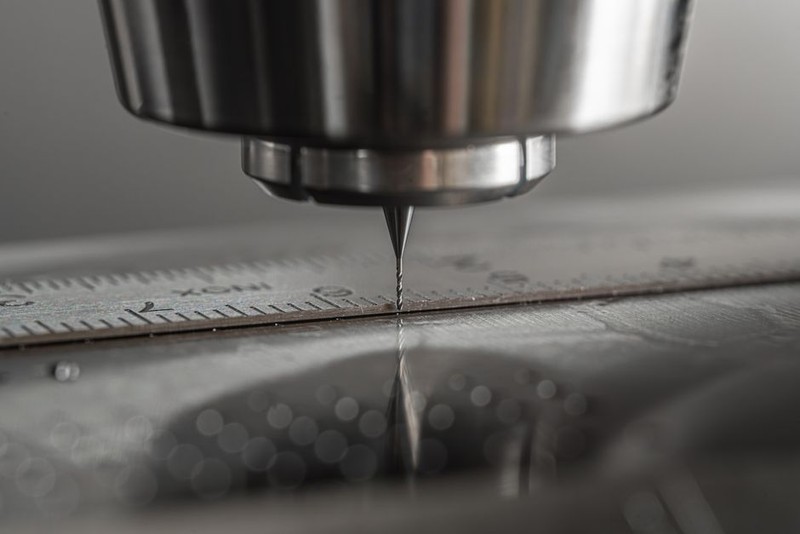
– Why? A smaller tool has lower cutting forces. The 7 flutes provided a “smoothing” effect, distributing the cutting load over more teeth. The variable helix broke up the harmonics that cause chatter on thin walls.
– The Result: We actually increased our feed rate by 40% because the tool was so much more stable. The smaller tool was more expensive per unit, but the overall cost per part dropped by 18% due to reduced scrap and longer tool life.
A Case Study in Optimization: The “Hot Pass” Finish
The final finishing pass is where most shops fail. They take one final, light cut. For Inconel, this is a recipe for a “work-hardened” surface that is impossible to hold tolerance.
The “Hot Pass” Strategy:
We developed a finishing pass that ran at a high RPM (8,000) and a very low feed rate (20 IPM), but with a radial depth of cut of 0.010 inches.
– The Mechanism: This aggressive cut generated localized heat, making the Inconel slightly more plastic. The tool wasn’t cutting; it was shearing and compressing the material. This eliminated the “spring back” because the material was being plastically deformed in a controlled manner.
– The Result: We achieved a surface finish of Ra 16 and held a true position of the blade tip to the hub within 0.0002 inches. The previous best was 0.001 inches.
The Fixturing Secret: “Virtual Vise”
Standard vises or hydraulic chucks were useless. The part had no solid clamping surfaces after the first op.
We designed a potting fixture filled with a low-melt-point alloy (Cerrobend). We cast the impeller into this fixture, supporting every single blade.
– The Process: After roughing, we placed the part in the fixture, poured the molten alloy, and let it solidify.
– The Machining: We then finish-machined the entire opposite side. The alloy supported the thin walls perfectly, eliminating 100% of vibration.
– The Removal: We simply heated the fixture to 160°F, and the alloy melted out, leaving a perfectly finished part.
This fixture cost $4,000 to make. It saved us over $120,000 in scrap in the first year alone.
Lessons Learned: The “Art” of the Impossible
Precision machining for aerospace components isn’t just about following a G-code. It’s about understanding the material’s soul. Inconel 718 doesn’t want to be cut. It wants to fight you. You have to be smarter.
– Don’t fight the material; guide it. Use the “Hot Pass” to control plastic flow.
– Support the weak. A 3/8-inch tool is often stronger than a 1/2-inch tool in the right context.
– Fixturing is 80% of the battle. If you can’t hold it, you can’t machine it. Invest in custom, sacrificial fixtures.
– Data is your only friend. That table of deflection data was worth more than 10 years of anecdotal experience.
The next time you’re looking at a print that says “Thin Wall, Superalloy, Tight Tolerance,” don’t just reach for the biggest tool and the fastest feed. Stop. Think about the energy you’re putting into that part. If you don’t manage the stress, the stress will manage your scrap rate. I’ve been there, and I can tell you, the “Stress-Lite” method works. It turned our shop from a liability into a preferred supplier for one of the largest aerospace OEMs. And that, right there, is the real value of deep, process-level expertise.