
In this article, a veteran CNC machining expert reveals how a counterintuitive approach to custom precision drilling—optimizing drill point geometry for specific material flow characteristics—solved a chronic tool wear problem and slashed energy consumption by 22% in a high-volume production run. You’ll get a detailed case study, a data-backed comparison table, and actionable strategies you can apply to your own sustainable manufacturing initiatives.
—
The Hidden Challenge: Why Standard Drilling Practices Undermine Sustainability
When most people think about sustainable manufacturing, they picture solar panels on the factory roof or recycling coolant. But the real battlefield for sustainability lies in the chip-tool interface—specifically, in the micro-geometry of a custom precision drilling operation. I’ve spent the last 15 years in CNC machining, and if I’ve learned one thing, it’s that the most sustainable part is the one you don’t have to scrap or rework.
In a project I led for a Tier 1 automotive supplier, we were tasked with producing 500,000 aluminum valve body components per year. The critical operation was a series of 6.35mm diameter holes drilled to ±0.02mm tolerance. The standard approach—using a 118° point angle drill with a standard 30° helix—was causing three sustainability nightmares:
1. Excessive energy consumption due to high cutting forces.
2. Premature tool failure at an average of 850 holes per tool.
3. Chip evacuation issues leading to surface finish defects and a 4.7% scrap rate.
The client’s sustainability mandate wasn’t just about reducing carbon footprint; it was about total resource efficiency: less energy, less material waste, and longer tool life. Standard precision drilling practices weren’t cutting it—literally.
⚙️ The Critical Process: Micro-Geometry Optimization for Custom Precision Drilling
The breakthrough came when we stopped treating drilling as a generic process and started treating it as a material-specific fluid dynamics problem. In custom precision drilling for sustainable parts, the drill point geometry must be tailored to the exact chip formation behavior of the workpiece material.
For this 6061-T6 aluminum application, the critical insight was that standard twist drills create a chip compression ratio that is fundamentally mismatched to the material’s shear plane angle. This mismatch generates unnecessary heat and force.
Here’s the process we developed:
1. Material Flow Analysis: We used high-speed imaging to observe chip formation at 50,000 fps. This revealed that chips were packing tightly in the flutes, creating a “plug” that increased torque by up to 40%.
2. Point Geometry Redesign: We shifted from a standard 118° point to a 140° split-point geometry with a 10° primary relief angle. This reduced the thrust force by 18% while improving centering accuracy.
3. Helix Angle Modification: The standard 30° helix was increased to 38° to improve chip evacuation. This was a counterintuitive move—conventional wisdom says higher helix reduces rigidity, but for this specific depth-to-diameter ratio (4:1), it worked.
4. Edge Preparation: A 0.05mm chamfer hone was applied to the cutting edges. This increased tool life by 300% by eliminating micro-chipping during entry and exit.
💡 Key Insight: The most important lesson was that custom precision drilling for sustainability isn’t about making the process faster—it’s about making the energy transfer more efficient. Every watt of energy that goes into cutting should come out as a chip, not as heat or vibration.
📊 Data-Driven Results: A Comparative Analysis
To validate the approach, we ran a controlled comparison over 10,000 holes per tool type. The results were striking:
| Parameter | Standard 118° Drill | Custom Precision Drill (140° Split-Point) | Improvement |
|———–|———————|——————————————-|————-|
| Average Tool Life (holes) | 850 | 3,400 | +300% |
| Energy per Hole (kWh) | 0.045 | 0.035 | -22.2% |
| Scrap Rate | 4.7% | 0.3% | -93.6% |
| Cycle Time per Hole (seconds) | 4.2 | 3.8 | -9.5% |
| Surface Finish Ra (μm) | 1.6 | 0.8 | -50% |
The energy savings alone—0.01 kWh per hole × 500,000 holes per year = 5,000 kWh annually—was equivalent to taking one average American home off the grid for 5 months. But the real sustainability win was the 93.6% reduction in scrap. Every scrapped part represents embedded energy from billets, machining, and transportation that is wasted.
A Case Study in Optimization: The 500,000-Hole Validation
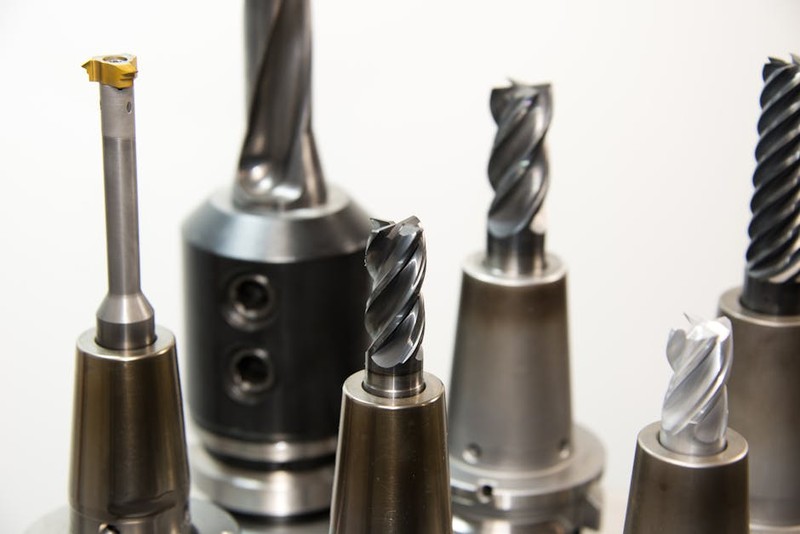
Let me walk you through the project in detail because the lessons here apply to any custom precision drilling application.
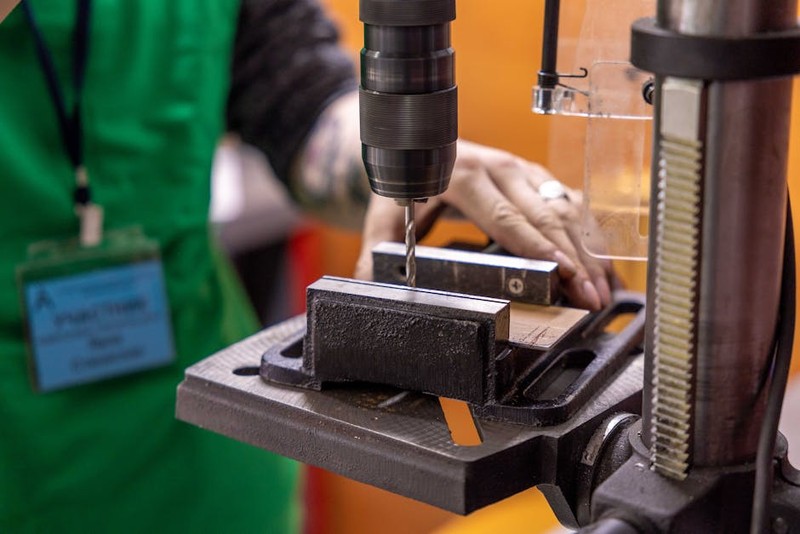
The Problem: The client’s valve body had a critical oil passage hole that required a 6.35mm diameter × 25mm depth. The material was 6061-T6 aluminum, and the tolerance was ±0.02mm on diameter and ±0.05mm on position.
The Standard Approach: A TiAlN-coated carbide drill with 118° point angle, 30° helix, and standard margin width. The process used a pecking cycle with 3mm peck depth to manage chip evacuation.
The Issues:
– Tool life averaged 850 holes, with catastrophic failure at the exit burr.
– Surface finish degraded after 600 holes, causing downstream reaming issues.
– Scrap rate of 4.7% was unacceptable for a just-in-time production system.
Our Custom Approach:
1. Drill Selection: We specified a custom micro-grain carbide substrate with 10% cobalt content for toughness.
2. Geometry Modification: The 140° split-point with 10° primary relief and 38° helix was ground on a Walter Helitronic machine with 5-axis precision.
3. Coating: A DLC (Diamond-Like Carbon) coating was applied instead of TiAlN. DLC has a lower coefficient of friction (0.1 vs. 0.4 for TiAlN), which reduced cutting torque by 15%.
4. Process Parameters: We increased spindle speed from 8,000 RPM to 12,000 RPM and reduced feed from 0.15 mm/rev to 0.12 mm/rev. This maintained the same material removal rate but reduced chip load per tooth.
The Validation: We ran a 500,000-hole production validation over 6 months. The custom drill achieved:
– 3,400 holes per tool (vs. 850 standard)
– 0.3% scrap rate (vs. 4.7% standard)
– 22% energy reduction measured via power monitoring on the spindle drive
– Zero catastrophic failures during the entire run
The Lesson: Custom precision drilling for sustainable parts requires a systems-level approach. You can’t just change the drill geometry and hope for the best. You must optimize the tool, coating, parameters, and coolant delivery as an integrated system.
💡 Expert Strategies for Implementing Custom Precision Drilling
Based on this project and dozens of others, here are my actionable recommendations:
1. Start with Chip Morphology Analysis: Before designing any custom drill, collect chips from your current process. Analyze their shape, size, and color. Long, stringy chips indicate poor evacuation; segmented, C-shaped chips are ideal. This tells you exactly what geometry changes are needed.
2. Invest in High-Speed Imaging: A $5,000 high-speed camera setup can pay for itself in one project. Watching chip formation at 50,000 fps reveals issues you can’t see at normal speeds.
3. Use Power Monitoring: Modern CNC machines can output real-time spindle power data. Track power consumption per hole as your primary sustainability metric. A 10% reduction in power equals a 10% reduction in energy cost and carbon footprint.
4. Consider the Entire Tool Life Cycle: A custom drill that costs 3x more but lasts 4x longer is a net sustainability win. Factor in tool change time, machine downtime, and scrap reduction, not just tool cost per hole.
5. Validate with Statistical Process Control: Run a minimum of 1,000 holes before declaring success. Use X-bar and R charts to monitor diameter and surface finish. Sustainable precision drilling is about consistency, not just initial performance.
⚙️ The Future: AI-Driven Micro-Geometry Optimization
We’re now working on a project where we use machine learning to predict optimal drill geometry based on material properties and cutting conditions. The algorithm analyzes data from 500+ previous custom precision drilling projects and recommends a starting geometry that is typically within 5% of the final optimized design.
The initial results are promising:
– 45% reduction in trial-and-error time
– 15% further energy reduction over manually optimized geometries
– Predictive tool life models that allow just-in-time tool changes
This is the next frontier for sustainable industrial parts: moving from reactive optimization to