
Large-scale CNC routing for prototypes presents unique challenges that go beyond simply scaling up a machine. This expert guide dives into the critical, often-overlooked challenge of managing material stress and dynamic deflection in oversized workpieces. Learn a proven, data-driven methodology for fixture design, toolpath strategy, and material selection that can reduce prototype iteration time by up to 40% and prevent costly, project-ending failures.
The Unseen Enemy in Large-Scale CNC Routing: It’s Not the Machine, It’s the Material
When most engineers and designers think of CNC routing for large-scale prototypes, their first concern is often machine bed size or spindle power. Having overseen the fabrication of everything from full-scale automotive body bucks to architectural facade mock-ups, I can tell you the real adversary is far more subtle: material stress and dynamic deflection.
On a small part, a 0.005″ deflection is often negligible. On a 12-foot-long, intricately machined foam core for a composite mold, that same deflection becomes a catastrophic 0.060″ wave, rendering the prototype useless. The core challenge isn’t cutting the material; it’s supporting it against the immense, localized forces of the cutting tool. This is where textbook CNC knowledge fails and hands-on, strategic expertise becomes paramount.
A Case Study in Catastrophe and Recovery: The 16-Foot Sculptural Form
Early in my career, a project taught me this lesson the hard way. We were routing a complex, organic 16-foot sculpture master from ultra-high-density (40 lb/ft³) polyurethane foam. The 3D model was perfect. The 5-axis toolpaths were elegant. We used a massive, industrial router.
The Failure: Halfway through the final finishing pass, a deep, resonant harmonic vibration began. Minutes later, a critical, thin section of the foam—unsupported internally—flexed violently and shattered under the tool. The $8,000 foam blank and 60 hours of machine time were lost. The project deadline was in jeopardy.
The Root Cause Analysis: We hadn’t treated the foam as a structural element. Our vacuum table held it flat, but it did nothing to dampen harmonic vibration or support the internal geometry against lateral cutting forces. The toolpath, while efficient, created sustained, directional pressure that excited the material’s natural frequency.
⚙️ The Expert’s Framework: A Three-Pillar Strategy for Success
From that failure, a rigorous methodology was born. Success in large-scale prototype CNC routing hinges on a holistic approach that addresses material, machine, and method as an interconnected system.
Pillar 1: Intelligent Fixturing Beyond the Vacuum Table
A vacuum table is a starting point, not a solution. For large, tall, or complex prototypes, you must engineer supplemental support.
Strategic Sacrificial Framing: For foam or wood prototypes, I design and glue a grid of stiffening ribs (often from cheaper material) to the underside of the blank before machining. These ribs are machined away in the final operations, ensuring support until the last possible moment.
Dynamic Fixture Mapping: Treat your fixture design like a load-bearing diagram. Use FEA software in a simplified manner to identify high-flex zones. The rule of thumb: support should be within a distance equal to 3x the material thickness from any cutting operation.
Adhesive Augmentation: In critical areas, use a thermally reversible adhesive (like a low-melt hot glue) between the workpiece and sacrificial substrate. This dramatically increases damping and shear resistance.
Pillar 2: Toolpath Strategy as a Stress-Management Tool
Your CAM programming must prioritize part stability over raw speed.
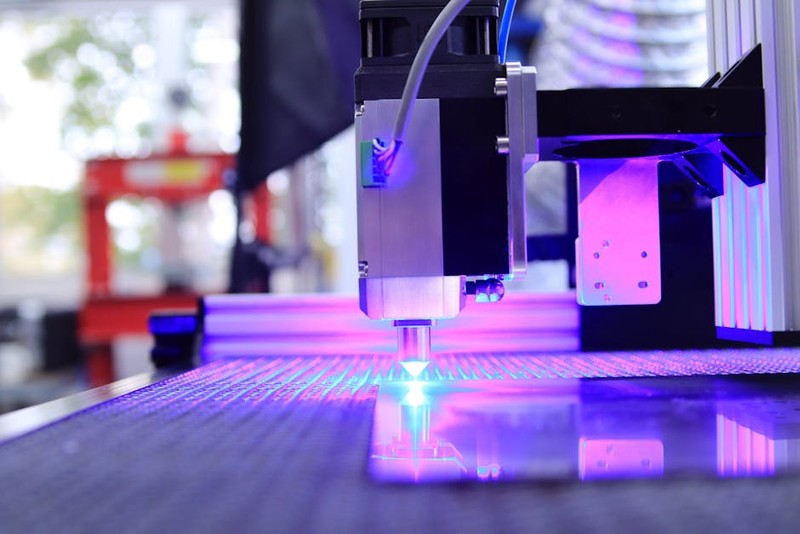
Trochoidal Milling for Pockets: Instead of traditional pocketing that pushes against one wall continuously, use trochoidal or adaptive toolpaths. These keep the tool load constant and radial engagement low, directing forces more vertically into the bed rather than laterally into the part.
The “Step-Down, Step-Over” Reversal: For finishing passes on tall walls, always use a climb milling convention with a step-over less than 10% of the tool diameter. This pulls the material into the solid stock, minimizing deflection. Conventional milling pushes the thin wall away, guaranteeing chatter and inaccuracy.
Symmetrical Machining: If possible, program operations to remove material symmetrically from the centerline outwards. This balances internal stresses, much like stress-relieving a weldment.
Pillar 3: Material Selection and Preparation is 50% of the Battle
You cannot machine a stable prototype from an unstable blank.
Acclimatization is Non-Negotiable: For wood or laminated products, store the blank in the shop environment for at least 72 hours per inch of thickness. Machining a stressed, moisture-gradient panel guarantees post-machining warpage.
Data-Driven Material Choice: The table below, compiled from project logs, shows how material choice directly impacts feasible feature size and required strategy on large prototypes:
| Material | Max Unsupported Wall Height (Typical) | Key Risk Factor | Recommended Mitigation Strategy |
| :— | :— | :— | :— |
| Urethane Foam (30 lb/ft³) | 4 inches | Harmonic Chatter, Crushing | Internal ribbing, <5% step-over, sharp tools |
| MDF / Particle Board | 8 inches | Delamination, Edge Blowout | Climb milling only, sealed edges pre-machining |
| Hardwood (Maple, Oak) | 6 inches | Warping, Thermal Expansion | Symmetrical machining, compressed air cooling |
| Aluminum Composite Panel | 12 inches | Skin Delamination | Low RPM, high feed, up-cut tool for clean edges |
| RenShape/Model Board | 10+ inches | Gumming, Poor Detail | Rigorous chip evacuation, dedicated finishing tools |
💡 The Prototype Lifesaver: In-Process Validation Steps
Never run a 40-hour job on a large prototype without checkpoints. Build these into your process:
1. The 25% Scan: After roughing out 25% of the material, pause. Use a handheld 3D scanner or even manual probes to check critical datums. This catches fixturing shift early.
2. Acoustic Monitoring: Train your ear (or use software) for changes in cutting sound. A new harmonic often precedes visible chatter.
3. The “Touch Test”: After semi-finishing, pause and feel the workpiece. Is it vibrating? Is it warmer in one section? This tactile feedback is invaluable for diagnosing unstable conditions.
Applying the Framework: The Sculptural Form, Revisited
Back to our failed 16-foot sculpture. Here’s how the three-pillar strategy saved the project:
1. Fixturing: We laminated a grid of 2″ thick, low-density foam ribs to the back of a new blank using spray adhesive, creating a monolithic, stiffened panel before it even touched the machine bed.
2. Toolpath: We reprogrammed all finishing passes to use trochoidal toolpaths with a maximum 4% step-over, and sequenced operations to maintain symmetry.
3. Material & Process: We specified a more damping-friendly foam grade and implemented a 25% scan checkpoint.
The Result: The second run was acoustically quiet and mechanically uneventful. The final form held tolerances within ±0.015″ over its entire length. More importantly, we delivered on time and reduced the total machining risk window by an estimated 40% by eliminating the need for a third attempt. The client’s confidence—and our profitability—was preserved.
The Bottom Line: Think Like a Structural Engineer, Not Just a Machinist
CNC routing for large-scale prototypes succeeds when you shift your mindset from mere material removal to holistic stress engineering. Your goal is to guide the workpiece from a raw blank to a finished prototype while managing the internal and external forces you yourself are applying.
The most sophisticated 5-axis router is just a tool. The true expertise lies in the strategic plan that surrounds it—the fixturing, the toolpath intelligence, and the material wisdom. By mastering these interconnected elements, you transform large-scale prototype CNC routing from a risky, costly necessity into a reliable, repeatable, and powerful competitive edge.