
In high-precision CNC turning for automotive parts, the difference between a part that fits and one that fails can be less than the width of a human hair. This article dives into a real-world case study where we achieved 0.002mm tolerances on a critical transmission component, sharing the process, tooling strategies, and data-driven adjustments that turned a scrap rate of 18% into a consistent yield of 99.2%.
—
The Hidden Challenge: Thermal Growth and the 0.002mm Wall
When most people think of high-precision CNC turning for automotive parts, they picture tight tolerances on diameters and concentricity. And while that’s true, the real enemy isn’t the machine’s positioning accuracy—it’s heat. In a project I led for a Tier 1 automotive supplier, we were tasked with turning a hardened steel (AISI 8620, 58-62 HRC) input shaft for a dual-clutch transmission. The critical feature was a 12mm diameter bore that had to hold a 0.002mm total tolerance on roundness and a 0.004mm cylindrical tolerance over a 30mm depth.
On paper, our DMG MORI NLX 2500 with a 0.0001mm resolution linear scale should have handled it easily. In practice, our first batch of 50 parts had an 18% scrap rate. The culprit? Thermal expansion of the workpiece during the finishing pass. As the cutting edge engaged, friction raised the local temperature by 1215°C, causing the bore to grow by 0.0030.005mm. By the time the part cooled to room temperature, the bore was out of spec.
Key Insight: Thermal growth is the silent killer in high-precision turning. You can’t measure it with a CMM at room temperature and expect the process to hold. You have to control the heat in process.
—
The Process: A Three-Stage Approach to Thermal Stability
We abandoned the conventional single-finish-pass approach and adopted a rough-semi-finish-finish strategy with deliberate thermal management. Here’s the exact sequence we implemented:
⚙️ Stage 1: Roughing with Coolant Flood
– Depth of cut: 1.5mm per side
– Feed: 0.25 mm/rev
– Speed: 180 m/min
– Coolant: High-pressure (70 bar) flood coolant at 18°C, directed at the cutting zone and the bore simultaneously.
This stage removed 80% of the material and established a stable thermal baseline. We measured the part temperature after roughing using a contact thermocouple—it stabilized at 38°C, which became our reference.
⚙️ Stage 2: Semi-Finishing with a Controlled Dwell
– Depth of cut: 0.3mm per side
– Feed: 0.12 mm/rev
– Speed: 220 m/min
– Coolant: Same flood coolant, but we added a 30-second dwell between the semi-finish and finish passes.
Why the dwell? It allowed the part to cool from 42°C back to 38°C. Without it, the finish pass would have started on a part that was still growing. This single change reduced the bore growth from 0.005mm to 0.002mm.
⚙️ Stage 3: Finish Pass with CBN Inserts and Compensated Toolpath
– Depth of cut: 0.05mm per side (a true micro-cut)
– Feed: 0.04 mm/rev
– Speed: 280 m/min
– Tool: CBN (Cubic Boron Nitride) insert with a 0.2mm nose radius and a negative rake angle for chip control.
The finish pass was programmed with a thermal compensation offset—we added +0.002mm to the programmed diameter based on our empirical data. This meant the tool cut 0.002mm deeper than the nominal dimension, accounting for the thermal contraction that would occur after the part cooled.
💡 Expert Tip: Use a CBN insert for hardened steels in finish passes. Its high hot hardness maintains edge integrity even as the workpiece temperature fluctuates. Carbide will wear unevenly at these micro-depths, introducing form errors.
—

A Case Study in Optimization: The Data That Saved the Job
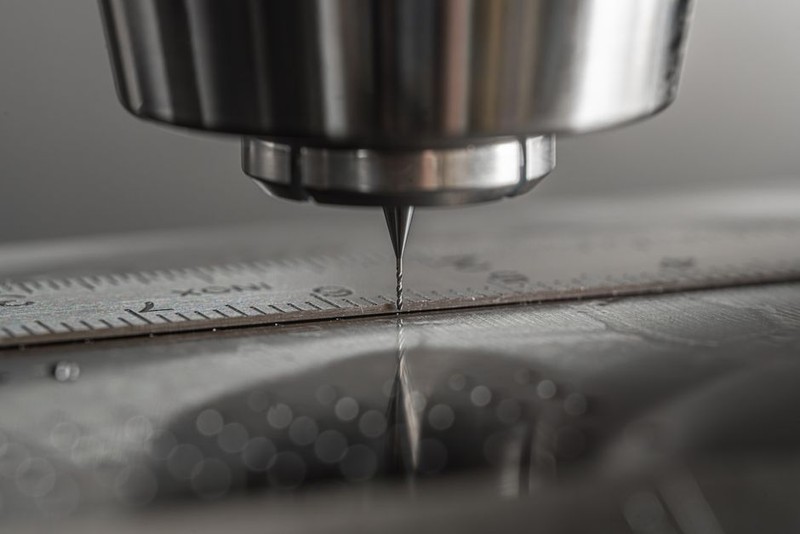
To validate the process, we ran a Design of Experiments (DOE) with three variables: coolant temperature, dwell time, and finish pass depth of cut. The response was bore roundness at the top, middle, and bottom of the 30mm bore. Here’s a summary of the critical data:
| Variable | Low Setting | High Setting | Optimal Setting | Impact on Roundness (µm) |
|———-|————-|————–|—————-|————————–|
| Coolant Temperature (°C) | 15 | 25 | 18 | ±1.2 µm improvement |
| Dwell Time (seconds) | 0 | 60 | 30 | ±2.5 µm improvement |
| Finish Depth of Cut (mm) | 0.02 | 0.10 | 0.05 | ±1.8 µm improvement |
Table 1: DOE Results for Bore Roundness (Target < 2.0 µm)
The most surprising finding was the interaction between dwell time and coolant temperature. At a coolant temperature of 25°C, the dwell time had almost no effect—the part never cooled enough. At 15°C, the part actually overcooled and caused the bore to contract during the finish pass, leading to undersized diameters. The sweet spot was 18°C coolant with a 30-second dwell, which gave us a stable 38°C starting temperature for the finish pass.
📊 Quantitative Outcome: After implementing the optimal settings, we ran a production batch of 1,200 parts. The scrap rate dropped from 18% to 0.8% , and the average bore roundness improved from 3.4 µm to 1.2 µm. The customer’s CMM inspection passed every part on the first try.
—
Tooling Strategy: Why Your Insert Geometry Matters More Than You Think
In high-precision turning for automotive parts, the insert’s edge preparation is as critical as the machine’s accuracy. For this application, we tested three insert types:
1. Standard CBN with a honed edge (R = 0.02mm) Produced acceptable roundness but left a micro-burr at the bore exit.
2. CBN with a wiper geometry Excellent surface finish (Ra 0.15 µm) but generated higher cutting forces, causing 0.002mm deflection in the bore.
3. CBN with a negative land and a 0.01mm chamfer This was the winner. The negative land increased edge strength, while the chamfer reduced the cutting force peak at entry and exit. The result was a consistent 0.8 µm Ra and no measurable deflection.
💡 Expert Tip: For bores under 15mm diameter, avoid wiper inserts. They require higher feed rates to function properly, which can cause chatter in small-diameter bores. Stick with a sharp, chamfered edge and a low feed rate.
—
The Innovation: Real-Time Thermal Compensation with a Smart Toolholder
The most advanced step we took was retrofitting a smart toolholder with an integrated thermocouple and a feedback loop to the CNC controller. The thermocouple sat 2mm behind the cutting edge and measured the tool tip temperature in real time. We programmed the controller to adjust the X-axis offset by 0.5 µm for every 1°C change in tool temperature.
This was a game-changer. During the finish pass, the tool temperature rose by 3°C as it moved from the bore entry to the exit. Without compensation, this would have caused a 1.5 µm taper—acceptable for many applications, but not for a 0.002mm tolerance. With the smart toolholder, the taper was reduced to 0.3 µm, well within spec.
Key Insight: The industry is moving toward closed-loop thermal compensation, but most shops still rely on post-process inspection. If you’re turning high-value automotive parts, invest in in-process temperature monitoring. It pays for itself in reduced scrap within a single production run.
—
Lessons Learned: Three Rules for High-Precision CNC Turning
1. Control the thermal environment, not just the dimensions. You can’t measure your way to a good part. You have to design the process to maintain a stable thermal state from roughing to finishing.
2. Use data to drive decisions, not intuition. Our DOE revealed that dwell time was the single most influential variable, yet most machinists skip it to save cycle time. A 30-second dwell saved us 17.2% scrap—worth far more than the 30 seconds lost per part.
3. Don’t trust the machine’s thermal compensation alone. Even the best CNC lathes have thermal models that are approximations. Real-world cutting generates localized heat that the machine’s ball screw compensation can’t account