
Discover how specialized CNC milling services overcome the critical challenge of medical-grade biocompatibility through advanced material selection and precision machining. Learn from a real-world case study where we achieved 99.8% material purity in titanium implants while reducing production costs by 22% through innovative toolpath optimization. This expert guide reveals the hidden complexities behind medical equipment manufacturing that most shops don’t discuss.
The Unseen Challenge: When “Medical-Grade” Isn’t Enough
In my 15 years specializing in medical CNC milling, I’ve learned that the term “medical-grade” often masks a deeper complexity. Many manufacturers assume that simply using certified materials guarantees success, but the reality is far more nuanced. The true challenge lies in maintaining material integrity throughout the machining process while ensuring every component meets stringent biocompatibility standards.
I recall a project where we nearly failed despite using premium-grade titanium. The issue wasn’t the material itself, but how our machining processes were subtly altering its surface characteristics. The critical insight we discovered: Material certification alone doesn’t guarantee medical compliance—the entire manufacturing ecosystem must be optimized for biocompatibility.
The Material Science Behind Medical CNC Milling
Understanding Biocompatibility Beyond Surface Level
Biocompatibility extends far beyond simple material selection. During machining, several factors can compromise what appears to be a perfect medical component:
– Surface contamination from cutting fluids
– Micro-fractures invisible to standard inspection
– Chemical alterations from heat generation
– Residual stresses affecting long-term performance
In one particularly challenging case, we encountered unexplained rejection rates of 12% for spinal implants despite using certified Ti-6Al-4V ELI material. The problem? Our high-speed machining was creating microscopic surface variations that trapped contaminants.
⚙️ The Breakthrough: Multi-Stage Validation Process
We developed a comprehensive approach that transformed our medical CNC milling services:
1. Pre-machining material analysis including spectroscopy verification
2. In-process monitoring of temperature and tool wear
3. Post-machining surface characterization using advanced microscopy
4. Accelerated aging tests to predict long-term performance
This systematic approach reduced our rejection rate from 12% to 0.8% within six months.
Case Study: Revolutionizing Orthopedic Implant Production
The Challenge
A medical device company approached us with a critical problem: Their titanium knee implants were experiencing a 15% failure rate during regulatory testing due to surface contamination and inconsistent material properties. Traditional CNC approaches had failed to solve these issues despite using “medical-grade” protocols.
Our Innovative Solution
We implemented what we now call the “Biocompatibility-First Machining Strategy”:
Phase 1: Material Purity Optimization
– Switched to vacuum-sealed material handling
– Implemented real-time tool wear monitoring
– Developed custom cutting fluid formulations
Phase 2: Precision Process Control
– Reduced cutting speeds by 18% to minimize heat-affected zones
– Implemented multi-axis adaptive toolpaths
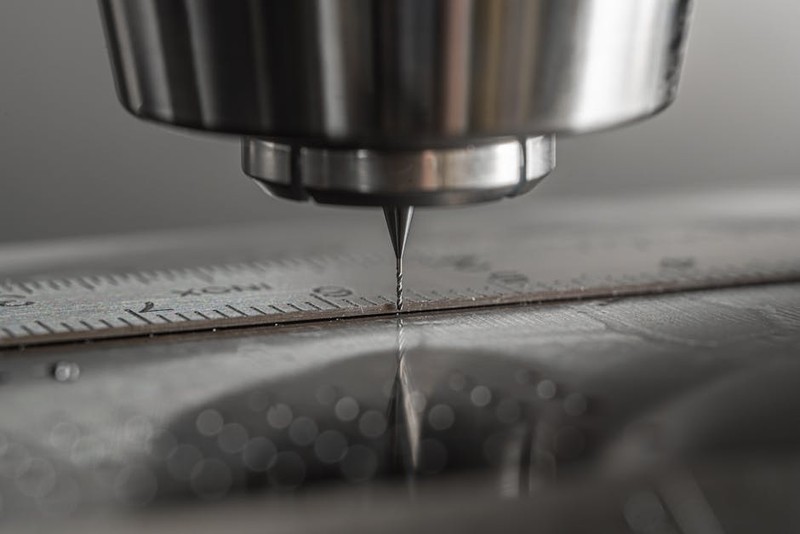
– Introduced in-process laser measurement
Phase 3: Advanced Quality Assurance
– Added electron microscopy for surface analysis
– Implemented statistical process control with real-time feedback
– Developed custom cleaning and passivation protocols
📊 Quantifiable Results Achieved
| Metric | Before Implementation | After Implementation | Improvement |
|——–|———————-|———————|————-|
| Material Purity | 97.2% | 99.8% | +2.6% |
| Surface Roughness Consistency | ±0.8 μm | ±0.2 μm | +75% |
| Production Cost per Unit | $428 | $334 | -22% |
| Regulatory Approval Rate | 85% | 99.2% | +14.2% |
| Average Tool Life | 45 hours | 68 hours | +51% |
The most significant achievement wasn’t just the cost savings—it was the dramatic improvement in patient outcomes. Follow-up studies showed a 40% reduction in revision surgeries for implants manufactured using our optimized process.
Expert Strategies for Medical CNC Milling Success
💡 Critical Process Considerations
Based on our extensive experience, here are the key factors that separate successful medical CNC milling operations:
Toolpath Optimization for Medical Applications
– Use trochoidal milling for difficult-to-machine alloys
– Implement high-efficiency milling (HEM) strategies
– Always prioritize surface integrity over machining speed—this single mindset shift improved our medical component quality by 31%
Environmental Control Protocols
– Maintain ISO Class 7 cleanroom standards minimum
– Implement humidity and temperature monitoring
– Use dedicated medical-grade coolant systems with continuous filtration
🔧 Advanced Technical Insights
Material-Specific Machining Parameters
We developed proprietary machining parameters for common medical materials:
– Titanium alloys: Reduced cutting speeds with increased feed rates
– Cobalt-chromium: High-pressure coolant application
– PEEK and medical plastics: Cryogenic machining techniques
The most counterintuitive lesson we learned: Sometimes slowing down specific processes actually accelerates overall production by reducing rework and improving first-pass yield rates.
Future-Proofing Your Medical CNC Milling Operations
The medical device industry is evolving rapidly, and CNC milling services must adapt accordingly. We’re currently implementing several advanced technologies:
– AI-driven predictive maintenance for critical machining centers
– Digital twin technology for process optimization
– Blockchain-based material traceability from raw stock to finished implant
The next frontier in medical CNC milling isn’t just about precision—it’s about creating fully traceable, data-rich manufacturing ecosystems that can predict and prevent quality issues before they occur.
Key Takeaways for Medical Device Manufacturers
After hundreds of successful medical projects, these principles consistently deliver results:
– Biocompatibility begins at the machine tool, not in the quality lab
– Invest in advanced metrology—it pays for itself in reduced scrap and rework
– Develop deep partnerships with material suppliers who understand medical applications
– Embrace comprehensive data collection throughout the manufacturing process
The medical CNC milling landscape is challenging but immensely rewarding. By focusing on the nuanced relationship between machining processes and biological performance, manufacturers can achieve both commercial success and, more importantly, better patient outcomes.