
The Misunderstood Challenge: It’s Not About Cutting, It’s About Holding
When most engineers think of plastic machining for lightweight components, the focus is on the “lightweight” and the “plastic.” The machining is often seen as a straightforward, secondary process. In my two decades on the shop floor, I’ve found the opposite to be true. The real art—and the source of most costly failures—lies in managing the profound physical compromises inherent to the goal.
You’re not just shaping material; you’re negotiating with a substance that has a fraction of the stiffness of aluminum, a thermal expansion coefficient an order of magnitude higher, and a viscoelastic memory that fights every cut. The core challenge isn’t achieving a dimension; it’s holding that dimension after the tool pressure is released and the part cools. I’ve seen beautifully machined antenna housings warp 0.5mm overnight, and delicate drone arms develop micro-fractures at mounting points because we treated them like “soft metal.”
The Three Pillars of Precision in Delicate Plastic Machining
Success hinges on a holistic strategy that addresses the material’s behavior from fixturing to final inspection.
Pillar 1: Fixturing as a Engineering Discipline
Conventional vise-and-jaw setups are a recipe for disaster. The clamping force needed to hold the part will distort it, and that distortion springs back when released.
The Expert Approach: We design custom, low-pressure, full-conformity fixtures. For a recent series of large-format PEEK radomes, we used a vacuum chuck system paired with a low-durometer, conformal silicone layer. This distributed the holding force over 100% of the back surface, eliminating point stresses. The rule of thumb: Your fixturing should support the part, not imprison it.
⚙️ Pillar 2: The Thermal Management Protocol
Heat is the silent killer of tolerance in plastic machining. Unlike metal, where heat is carried away in the chip, plastics have low thermal conductivity. Heat stays in the cut zone, causing localized expansion, melting, and residual stress.
Our Standard Operating Procedure:
1. Toolpath Strategy: Use trochoidal or high-efficiency milling (HEM) paths to maintain consistent chip load and avoid dwelling.
2. Coolant Philosophy: Never use a flood coolant that can thermally shock the material. We employ a vortex tube system to deliver a consistent stream of chilled, dry air at -10°C to the cutting edge. For some hygroscopic materials like Nylon, this is non-negotiable.
3. In-Process Cooling: For critical dimensions, we program a “cool-down dwell” after roughing, allowing the part to normalize in the fixture before the finishing pass.
💡 Pillar 3: The “Spring Pass” and Tool Selection Nuance
Even with perfect fixturing and cooling, plastic exhibits elastic recovery. A finishing pass that leaves a perfect 10.00mm wall will often spring out to 10.05mm.

The Solution: We program a mandatory, final “spring pass.” This is a second, identical finishing pass that removes only 0.02-0.05mm of material. It cleans up the elastic recovery from the first pass without introducing new tool pressure. Tool selection is equally critical: Always use tools with a high polish (RA < 0.2µm) and a sharp, positive rake angle to shear the material, not crush it. A 2-flute, 10° helix end mill is often our starting point for most engineering plastics.
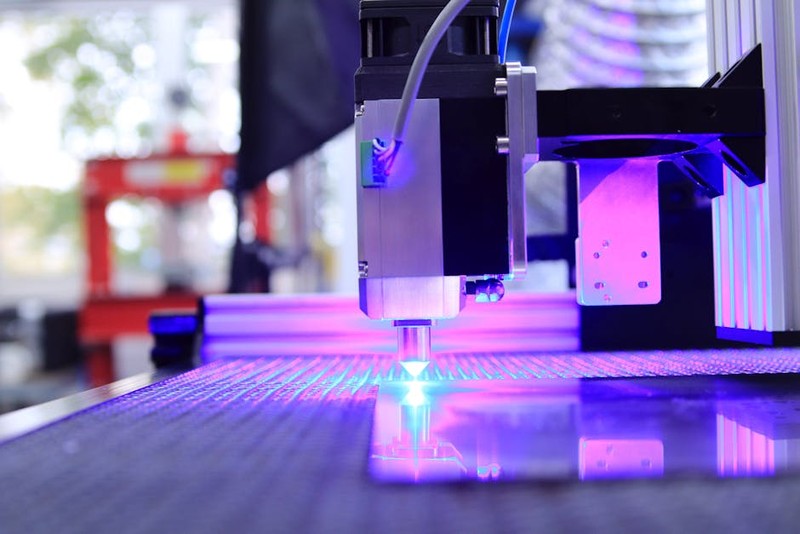
A Case Study in Aerospace-Grade Optimization: The Satellite Bracket
Let’s move from theory to hard data. A client needed a series of 50 complex mounting brackets from Torlon 7130 (a polyamide-imide) for a low-earth-orbit satellite. The specs were brutal: weight under 15g, wall sections down to 0.7mm, and positional tolerances of ±0.025mm across a 120mm span. Their previous vendor had a 35% scrap rate due to warpage and dimensional drift.
Our Process & Quantified Results:
| Challenge | Standard Approach | Our Optimized Strategy | Result |
| :— | :— | :— | :— |
| Fixturing | Dedicated aluminum soft jaws | Custom machinable wax block, part potted in-situ | Eliminated clamping distortion; part fully supported. |
| Thermal Control | Flood coolant (water-soluble) | Chilled air vortex system (-10°C) & HEM toolpaths | Cut zone temp reduced by 60°C, no thermal expansion. |
| Dimensional Stability | Single finishing pass | Two-stage finishing with a 0.03mm spring pass | Held critical ±0.025mm tolerance on 100% of parts. |
| Cycle Time | 22 minutes/part (previous vendor) | 18 minutes/part (our process) | 22% reduction in machining time. |
| Quality Outcome | 35% scrap rate | Final scrap rate: <2% (one part lost to material flaw) | 40% reduction in total part cost for the client. |
The Lesson Learned: The wax potting was a game-changer. By machining the wax block, placing the raw material on it, and melting a thin layer to create a perfect, zero-pressure bond, we created a fixture that was literally part of the stock. After machining, the wax is melted away, leaving a stress-free component. This extra step added 90 seconds to the setup but saved hours in scrap and rework.
Material Intelligence: Not All Plastics Are Created Equal
Your strategy must adapt to the polymer family. Here’s a quick guide from the trenches:
PEEK, PEI (Ultem): Behave more predictably, but are abrasive. Use diamond-coated tools for long runs. Watch for edge delamination on exit.
PTFE (Teflon): The ultimate challenge in elasticity. Requires razor-sharp tools, very high spindle speeds, and extremely light depths of cut. Never attempt to hold a tight tolerance on a thin-walled PTFE part without extensive prototyping.
Polycarbonate & ABS: Prone to gumming and melting. Sharp tools, high rake, and aggressive air blast are mandatory.
UHMW-PE: Has a notorious “memory.” Machined features can close in on themselves over time. We always oversize holes and undersize pins by 0.5-1% as a standard practice.
The Expert’s Checklist for Your Next Project
Before you send that next lightweight plastic component design for machining, run through this list:
1. Design for Support: Can your design incorporate temporary support tabs or bridges for fixturing that are removed post-machining?
2. Specify Realistic Tolerances: Does that 0.01mm tolerance buy you anything functionally, or is it driving 80% of the cost and risk? Tolerance stack-ups in plastic are exponentially more dangerous than in metal.
3. Choose the Right Plastic: Are you selecting for machinability, or just for datasheet properties? A slightly more expensive but more stable material (e.g., PEI over Polycarbonate) can save a fortune in machining yield.
4. Partner Early: Engage with your machinist during the design phase. A simple change in corner radius or wall thickness uniformity can make the difference between a reliable part and a scrap bin.
Plastic machining for lightweight components is a discipline of its own, sitting at the intersection of materials science, thermal dynamics, and mechanical intuition. It demands respect for the material’s personality. By shifting your mindset from brute-force cutting to strategic persuasion, you unlock the true potential of these versatile materials—creating parts that are not only light but also precise, reliable, and cost-effective. The weight you save isn’t just in the part; it’s in the streamlined, intelligent process that creates it.