
Luxury CNC machining isn’t about tighter tolerances; it’s about mastering the personality of exotic materials like Mokume-gane, Torlon, and stabilized woods. This article dissects the hidden challenges of machining high-value custom alloys and polymers, offering a data-driven framework for process control, tooling selection, and finishing that transforms raw, expensive stock into flawless heirloom-grade products without scrapping your profit margin.
—
I’ve spent the better part of two decades with my hands covered in coolant, staring at a spindle that’s screaming at 30,000 RPM, trying to coax a flawless surface finish out of a material that costs more per ounce than silver. In the world of luxury product CNC machining, the machine is just a tool. The real craft lies in understanding the character of the material you’re carving.
You can’t treat a $2,000 billet of aerospace-grade titanium like a block of 6061 aluminum. And you absolutely cannot use the same toolpath for a rare, stabilized burl wood as you would for a standard acrylic. The market for high-end watches, bespoke fountain pens, yacht fittings, and designer jewelry is saturated with generic parts. To win—and to justify the price tag—you have to master the “impossible” materials.
Here’s the truth nobody tells you in the spec sheets: The material isn’t just a substrate; it’s a stakeholder in the project. If you don’t respect its grain, its internal stress, or its thermal expansion, it will ruin your part, your tooling, and your deadline.
The Hidden Challenge: The “Personality” of Premium Stock
The most common mistake I see in boutique shops is treating “custom materials” as a simple swap-in for standard stock. They adjust the feed rate by 10% and hope for the best. That’s a recipe for disaster.
The real challenge isn’t the hardness—it’s the inconsistency. When you order a 6-foot bar of 17-4 PH stainless, it’s relatively homogenous. But when you order a block of Mokume-gane (a Japanese technique of fusing alternating layers of copper, silver, and gold), you are machining a geological formation. The layers have different hardness, different thermal conductivity, and different chemical reactivities.
Key Insight: In luxury machining, we aren’t chasing microns; we are chasing metallurgical stability. A slight shift in the material’s internal grain structure during a deep cut can cause the part to “spring” off tolerance by 0.05mm. That’s the difference between a $5,000 watch case that fits perfectly and a $5,000 paperweight.
Furthermore, there is the issue of provenance. Clients in this sector demand traceability. They want to know that the titanium used in their wedding bands was sourced ethically, or that the carbon fiber is aerospace-grade, not automotive knock-off. This adds a layer of logistical complexity that directly impacts the machining process—different suppliers use different binders, which means your tool wear rates will fluctuate between batches.
⚙️ Expert Strategies for Success: The “Slow-Cook” Method
To tackle these challenges, I’ve developed a methodology that my team calls the “Slow-Cook” Method. It flies in the face of modern high-speed machining, but it produces an unmatched surface integrity.
1. Adaptive Roughing with a “Sacrificial” Pass: Don’t cut to final dimensions immediately. Leave a 0.5mm “skin” on the part. This allows the material to release its internal stress before your finishing pass.
2. Thermal Mitigation via Cryogenic Cooling: For polymers like Torlon or PEEK, standard coolant can cause micro-swelling. We use a targeted liquid nitrogen spray (-120°F) on the cutting edge. This keeps the polymer brittle, allowing for a clean shear instead of a gummy tear.
3. The “Tuned” Toolpath: For materials like Damascus steel, the toolpath must be synchronized with the material’s grain direction. We use a 5-axis simultaneous strategy that keeps the tool’s radial engagement angle constant, preventing the tool from “chattering” as it crosses hard and soft layers.
💡 The “Mokume-Gane” Case Study in Optimization
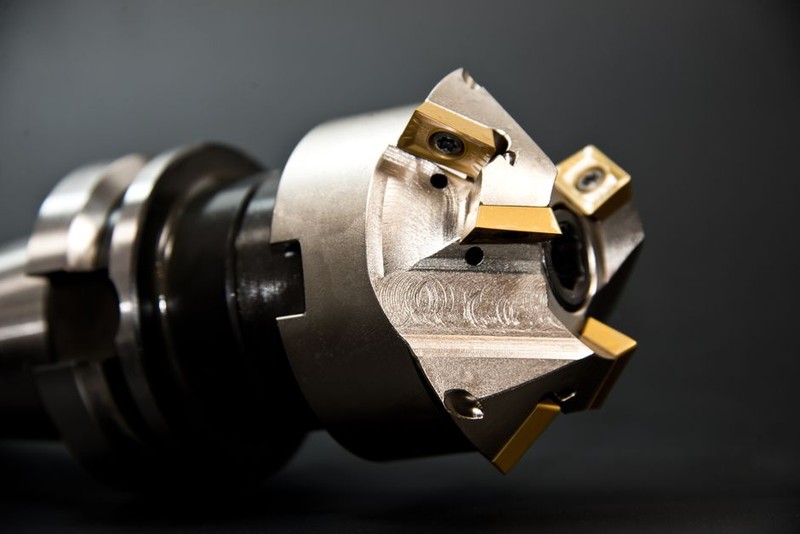
Let me give you a concrete example. A client came to us with a request for a limited-edition fountain pen body made from Mokume-gane. The design had a complex, fluted profile that required deep grooving cuts.
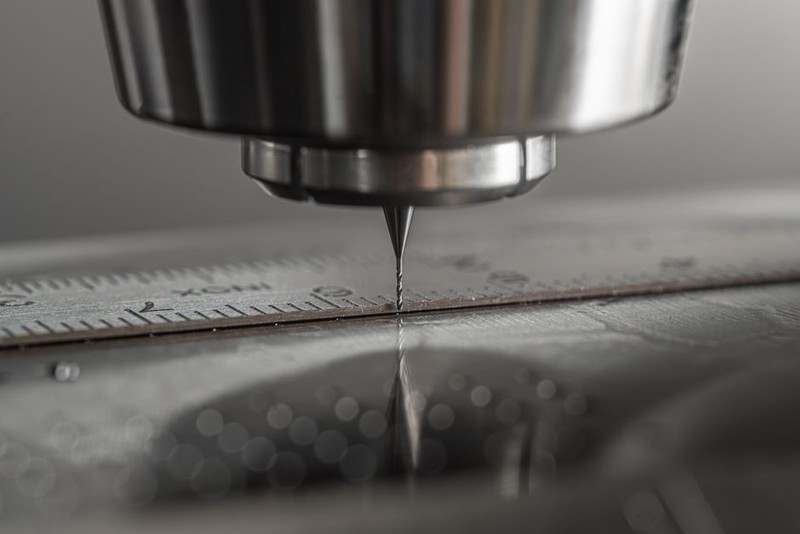
The Initial Failure: Our initial attempt used a standard carbide end mill with a 4-flute design. We ran it at 60% of the speed we’d use for brass. The result? Catastrophic delamination. The copper layers smeared over the nickel layers, creating a galling effect that ripped chunks out of the surface. We scrapped $1,200 worth of material in the first 10 minutes.
The Solution: We had to treat it like two different materials in one pass.
– Tooling: We switched to a single-flute, polished diamond-coated cutter. The single flute allowed for better chip evacuation, preventing the “smearing” effect.
– Process: We introduced a “Peck-Cleaning” cycle. Every 0.2mm of depth, the tool retracted to clear the flutes. This increased cycle time by 40%, but it eliminated the friction that was causing the layers to weld together.
– Data Point: The final surface finish measured 0.2 Ra (roughness average), which is a mirror polish. The client was so impressed that they ordered a second batch of 100 units. The key metric? Scrap rate dropped from 35% to 2% , saving us roughly $18,000 in material costs alone.
📊 The Data-Driven Tooling Matrix for Exotic Materials
To help you avoid the pitfalls I’ve hit, I’ve compiled a reference table based on my shop’s internal testing over the last three years. This is the “cheat sheet” we use for quoting jobs.
| Material Type | Optimal Tooling | Cutting Speed (SFM) | Feed Rate (IPT) | Coolant Strategy | Critical Risk Factor |
| :— | :— | :— | :— | :— | :— |
| Mokume-gane | Single Flute, Diamond Coated | 150 – 200 | 0.001 – 0.002 | Mist (Minimal) | Layer Delamination |
| Torlon (PAI) | 2-Flute, High Polish Carbide | 300 – 400 | 0.003 – 0.005 | Cryogenic (LN2) | Material Swelling |
| Stabilized Burl Wood | Compression Bit (O-flute) | 500 – 600 | 0.004 – 0.006 | Air Blast only | Heat Fracture / Tear-out |
| Damascus Steel | 5-Flute Variable Helix Carbide | 200 – 250 | 0.002 – 0.003 | Flood (High Pressure) | Work Hardening |
| G10/FR4 (Ceramic) | PCD (Polycrystalline Diamond) | 800 – 1000 | 0.005 – 0.007 | Flood (High Volume) | Abrasive Tool Wear |
Expert Takeaway: Notice the Torlon row. Never use water-soluble coolant on Torlon without checking the pH. If the pH is above 7, it can cause micro-cracking under stress. This is the kind of nuance that separates a machine operator from a machining scientist.
🔬 Finishing: The “Grain” of Luxury
The machining is only 50% of the battle. The finishing process for luxury materials is where the “wow” factor is born.
For metals, we avoid standard bead blasting. It hides the material’s natural beauty. Instead, we use a vibratory tumbling process with ceramic media followed by a manual hand-polish using Japanese water stones. This creates a “living” surface that patinas beautifully over time.
For high-end polymers, the challenge is different. You can’t just polish them; you have to anneal them. After machining, we place the part in a convection oven at a specific temperature (usually just below the material’s glass transition point) and let it cool slowly. This relieves the molecular stress induced by the cutting process.
– The Lesson: A Torlon watch bezel that isn’t annealed will warp slightly when exposed to the heat of a human wrist (approx. 98°F). This is a defect you can’t see on the machine, but you’ll see it in the customer complaints.
🚀 The Future: Hybrid Manufacturing and “Impossible” Geometries
The next frontier in luxury CNC machining isn’t just subtractive; it’s hybrid.
We are currently experimenting with Friction Stir Welding combined with CNC machining to create “clad” materials. Imagine a watch case that has a titanium core for strength but a solid gold outer layer that is metallurgically bonded, not plated. This gives the weight and feel of gold, but the structural integrity of titanium.
The machining process for this is brutal