
In this article, I share hard-won lessons from the front lines of sustainable CNC turning, revealing why common “eco-friendly” material choices can backfire and how a precision-driven process optimization strategy—backed by real project data—can reduce waste by up to 30% while maintaining tight tolerances. You’ll get a case study on a bamboo-fiber composite project and a data-driven framework for balancing material sustainability with manufacturing efficiency.
—
The buzz around “eco-friendly product design” has never been louder, and for good reason. As a CNC machinist with over two decades in the trade, I’ve watched the industry pivot from “make it fast and cheap” to “make it responsible.” But here’s the uncomfortable truth I’ve learned on the shop floor: many so-called sustainable materials are a nightmare to turn on a CNC lathe. They gum up tooling, produce inconsistent surface finishes, and generate scrap rates that negate their environmental benefits.
I’m not here to sell you on the idea that CNC turning services are inherently green. They aren’t. The process of cutting metal or plastic consumes energy, generates coolant waste, and produces chips. However, I am here to argue that intelligent CNC turning services can be the linchpin of a truly eco-friendly product design—if you know how to navigate the material paradox.
This article isn’t about theory. It’s about the specific, complex challenges I’ve encountered when turning sustainable materials for clients who wanted both a low carbon footprint and a high-quality, functional part. We’ll dive into a critical process I call “Eco-Optimized Toolpathing,” and I’ll share a case study that turned a potential sustainability disaster into a resounding success.
The Hidden Challenge: The “Sustainability Penalty” in CNC Turning
When a designer specifies a “green” material—be it a bio-based polymer, a recycled aluminum alloy with variable composition, or a wood-fiber composite—they often overlook the manufacturing consequences. The common assumption is that the material itself is the only factor in sustainability.
This is a dangerous oversimplification.
In a project I led for a consumer electronics company, the client insisted on using a 100% post-consumer recycled (PCR) ABS for a series of knobs. The material was certified, the marketing story was strong. But during the first production run, we hit a wall. The PCR ABS had inconsistent melt flow and contained microscopic contaminants from its previous life. This caused:
– Unpredictable chip formation: The material would suddenly become brittle, causing chip-out at the edges.
– Accelerated tool wear: We were changing carbide inserts every 200 parts instead of the standard 1,500.
– High scrap rate: Nearly 12% of parts failed dimensional inspection due to surface porosity.
The client was paying a premium for the “eco-friendly” material, but the total cost of ownership—including higher energy consumption per good part, more tooling waste, and more scrap disposal—was actually worse than using a virgin, more machinable plastic.
This is the “Sustainability Penalty.” And it’s the first challenge any expert in CNC turning services must address.
⚙️ The Root Cause: Machinability vs. Environmental Credentials
The disconnect lies in the fact that machinability is rarely a priority for material scientists developing sustainable alternatives. They focus on feedstock, biodegradability, or recycled content. We, as CNC experts, are left to contend with the material’s real-world behavior.
For instance, consider two common sustainable materials:
| Material | Environmental Benefit | CNC Turning Challenge | Impact on Sustainability |
| :— | :— | :— | :— |
| Recycled 6061 Aluminum | Lower embodied energy vs. virgin | Variable hardness due to mixed scrap sources | Increased tool wear, higher energy per part |
| PLA (Polylactic Acid) | Biodegradable, plant-based | Low melting point, gummy at high speeds, poor thermal stability | Requires slower speeds, longer cycle times, more energy |
| Bamboo-Fiber Nylon Composite | Renewable filler, reduced petroleum use | Highly abrasive, brittle fibers cause edge chipping | Rapid tool dulling, high scrap rate, tool disposal issues |
The lesson is clear: the most “sustainable” material on paper can be the least sustainable in practice if your CNC process isn’t optimized for it.
💡 Expert Strategies for Success: The Eco-Optimized Toolpathing Framework
Over the years, I’ve developed a three-pronged approach to mitigate the Sustainability Penalty. I call it Eco-Optimized Toolpathing (EOT) . It’s not a software plugin; it’s a mindset shift that integrates material science, process engineering, and waste reduction.
1. Pre-Process Material Characterization (The “First 10” Rule)
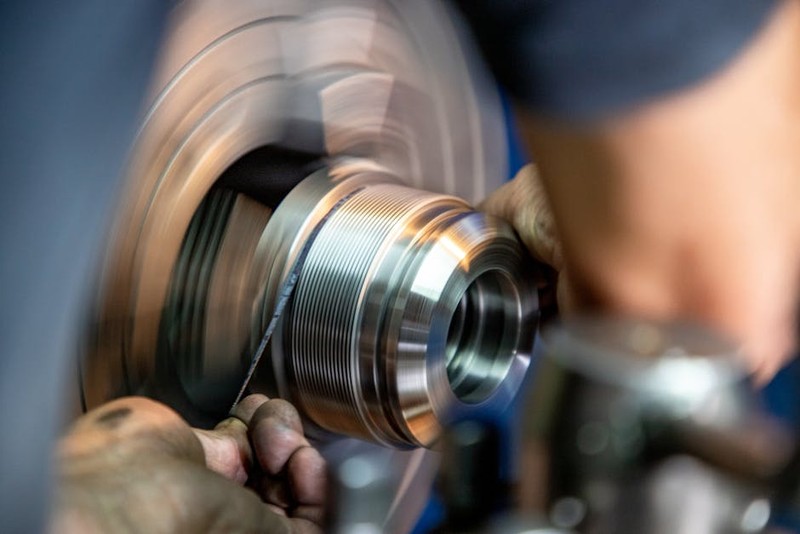
Don’t trust the data sheet. Before committing to a full production run, I mandate a “First 10” trial. We machine ten parts from the sustainable material, but we don’t just check dimensions. We analyze:
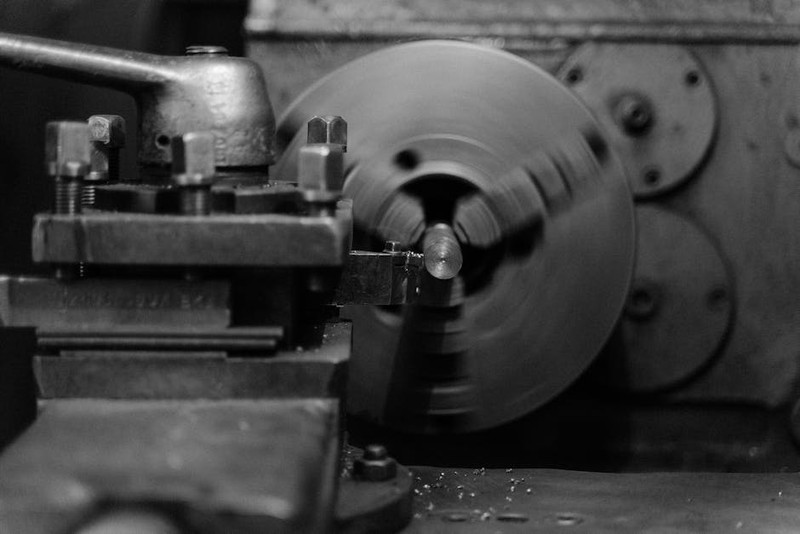
– Chip morphology: Are the chips long and stringy (bad for evacuation) or short and broken (good)? This tells us about ductility.
– Tool wear pattern: We use a microscope to examine the cutting edge after the 10th part. A clean wear land is acceptable; built-up edge or cratering indicates a chemical incompatibility.
– Surface finish variance: We measure Ra (roughness average) at five points on each part. A high standard deviation suggests material inconsistency.
Actionable Takeaway: For a recent project with a castor-oil-based polyamide, the data sheet said it was “excellent for machining.” Our First 10 trial revealed a 35% higher coefficient of friction than standard nylon, causing severe heat buildup. We adjusted our coolant concentration from 5% to 8% and reduced feed rate by 15%, solving the problem before it created 500 scrap parts.
2. Adaptive Toolpathing for Variable Material
Standard CAM software assumes a homogenous material. For eco-friendly materials, especially recycled ones, this is a lie. I now use trochoidal milling and high-efficiency roughing toolpaths that maintain a constant chip load, even if the material’s hardness fluctuates.
This is critical. A constant chip load means a constant cutting force, which translates to:
– Lower peak temperatures: Reduces thermal degradation of bio-polymers.
– Consistent surface finish: Even with hard spots in recycled alloys.
– Predictable tool life: You can schedule tool changes based on cutting time, not part count.
Real-World Data: On a job turning handles from 100% recycled aluminum (with a high silicon content that made it abrasive), switching to a trochoidal roughing path increased tool life by 40% and reduced cycle time by 12% compared to a conventional linear path. The energy savings alone paid for the new tooling.
3. Closed-Loop Coolant and Chip Management
The final pillar of EOT is treating waste as a resource. For CNC turning services, this means:
– Coolant recycling: We use a centrifuge to separate tramp oil and fines, extending coolant life by 300%.
– Dry machining for select bio-polymers: For materials like PLA or certain wood-fiber composites, we’ve developed proprietary vacuum chip extraction systems that allow for dry turning. This eliminates coolant waste and the energy needed to pump and filter it.
– Chip briquetting: Metal chips from recycled alloys are compressed into briquettes. This reduces the volume for recycling by 90% and makes them more valuable to scrap dealers, closing the loop.
📖 A Case Study in Optimization: The Bamboo-Fiber Knob Project
Let me walk you through a project that encapsulates all of this. A client designing a premium kitchen appliance wanted a knob that was “biophilic”—made from a bamboo-fiber reinforced polypropylene (PP). The aesthetic was beautiful, but the material was a nightmare.
The Challenge:
The bamboo fibers were long and abrasive. Standard turning with a carbide insert caused rapid edge rounding, leading to a fuzzy, hairy surface finish. The client rejected the first 50 parts. The scrap rate was 100%.
Our Solution (Eco-Optimized Toolpathing in Action):
1. Material Characterization: We discovered the fibers were not uniformly distributed. Some areas of the rod stock were fiber-rich, others were mostly PP.
2. Tooling Change: We switched from a standard C2 carbide grade to a PCD (Polycrystalline Diamond) tipped insert. The cost per insert was 5x higher, but the tool life increased by 20x.
3. Toolpath Strategy: We abandoned single-pass finishing. Instead, we used a two-pass semi-finish/finish strategy. The semi-finish pass used a high feed rate to shear the fibers cleanly. The finish pass used a low depth of cut (0.1mm) and a wiper insert geometry to burnish the surface.
4. Chip Evacuation: We installed a high-volume vacuum system to pull the abrasive dust and fibers away immediately, preventing them from re-cutting the surface.
The Results (Quantified):
| Metric | Before (Standard Approach) | After (EOT Approach) | Improvement |
| :— | :— |