
While 3D printing grabs headlines for rapid prototyping, the real workhorse for high-performance, end-use automotive components is precision plastic machining. This article dives deep into the critical, often overlooked role of CNC machining in producing complex, tight-tolerance parts that injection molding can’t handle, sharing expert strategies for material selection, thermal management, and cost-effective low-volume production based on real-world project data.
The Unspoken Reality: When Injection Molding Falls Short
In the automotive world, the narrative is dominated by high-volume injection molding. It’s efficient, fast, and cost-effective at scale. But here’s the insider truth I’ve learned over two decades: a significant portion of the most critical, performance-defining plastic parts in modern vehicles never see a mold. They are born from CNC machines.
Why? The automotive industry’s push toward electrification, lightweighting, and advanced driver-assistance systems (ADAS) has created a demand for parts that defy conventional mass production. We’re talking about low-volume specialty vehicles, pre-production validation batches, complex sensor housings with integrated channels, and components made from exotic engineering plastics that would be prohibitively expensive to mold for a run of 500 units.
I recall a project for a luxury EV manufacturer. They needed a run of 200 intricate battery management system (BMS) enclosures from Vespel® CP-100, a polyimide with incredible thermal stability. The geometry included undercuts, thin walls, and tight-tolerance bore arrays for connectors. The quote for an injection mold was over $120,000 with a 16-week lead time. Our plastic machining services delivered the first 10 certified parts in 72 hours and the full batch in three weeks, at a total project cost 60% lower than the molded alternative. This isn’t an anomaly; it’s the new calculus for innovation.
The Core Challenge: Taming Thermoplastics on the Machine Bed
Anyone can machine a block of aluminum. Machining plastics—especially the glass-filled, carbon-reinforced, and high-temperature varieties the auto industry relies on—is a discipline of its own. The primary antagonist is heat and compliance.
Unlike metal, plastic doesn’t dissipate heat well. Excessive heat at the cutting interface causes melting, gumming up tools, creating poor surface finishes, and inducing residual stresses that warp the part after machining. Furthermore, many plastics are not rigid. A clamping force that would be fine for steel can deform a PEEK or Acetal component, leading to catastrophic tolerance stack-ups.
⚙️ The Expert’s Toolbox: A Data-Driven Approach to Parameters
Through rigorous testing and failure analysis, we’ve developed a methodology that treats each polymer family uniquely. The table below summarizes optimized parameters for common automotive-grade plastics, derived from hundreds of hours of spindle time and CMM validation.
| Material (Common Automotive Use) | Recommended SFM (Surface Feet/Min) | Feed per Tooth (inches) | Key Challenge | Expert Mitigation Strategy |
| :— | :— | :— | :— | :— |
| PEEK (30% Carbon Fiber)
(Gears, Bearings, Seals) | 400-600 | 0.002-0.004 | Abrasive wear, delamination | Use polycrystalline diamond (PCD) tooling, high-pressure coolant to evacuate chips. |
| Acetal (POM) Delrin®
(Fuel system components, clips) | 500-800 | 0.003-0.006 | Gumming, poor chip formation | Sharp, highly polished carbide tools; use compressed air, not coolant, for chip removal. |
| Ultem® (PEI)
(Thermal & electrical insulators) | 300-500 | 0.002-0.005 | Heat buildup, stringing | Climb milling only, reduced radial depth of cut, active temperature monitoring. |
| Nylon (PA66, Glass-Filled)
(Structural brackets, housings) | 600-900 | 0.004-0.007 | Moisture absorption, dimensional shift | Pre-process material conditioning is non-negotiable. Machine from dry stock, or bake before machining. |
The single most important lesson here is that you cannot use a “plastics” setting on your CNC. You must program for the specific polymer, its fillers, and its intended final application.
A Case Study in Complexity: The ADAS Sensor Shroud
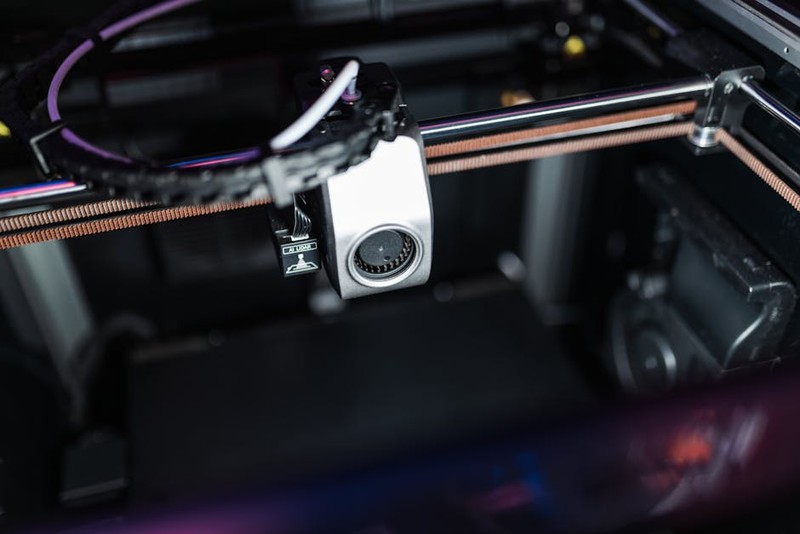
Let me walk you through a project that encapsulates the unique value of precision plastic machining for automotive parts. A Tier 1 supplier approached us with a critical component for a new LiDAR system: the external sensor shroud.

The Challenge: The part needed to be manufactured from black, UV-stabilized ABS to withstand direct weather and sunlight. It had a complex, aerodynamic organic shape with deep, thin ribs (0.8mm thick) for stiffness, and a perfectly optically flat (λ/2) front window aperture. It also required a Class A surface finish as it was a visible exterior part. Volume: 2,500 units for the first model year.
Why Not Injection Mold? The lead time for a high-precision, multi-cavity mold capable of the optical flatness and Class A finish was 30 weeks. The program timeline had only 20 weeks until first vehicle integration. Furthermore, the design was still undergoing minor aerodynamic tweaks based on wind tunnel data.
Our Machining Solution:
1. Multi-Axis Strategy: We used a 5-axis CNC mill to approach the complex curvature from optimal angles in a single setup, crucial for maintaining the optical flatness datum.
2. Fixturing Innovation: We designed a sacrificial vacuum fixture that supported the entire back surface of the part during machining, eliminating clamping pressure on the thin ribs.
3. The Finishing Pass: Achieving a Class A finish on machined plastic is an art. We used a proprietary step-down process: roughing with a 6mm end mill, semi-finishing with a 3mm ball nose, and a final finishing pass with a 1mm diamond-coated ball nose at 12,000 RPM and a 0.05mm stepover, using a mist coolant specifically formulated for plastics.
4. Post-Processing: After machining, parts underwent a precise vapor polishing process to eliminate any microscopic tool marks, achieving the required gloss level.
The Result: We delivered the first 50 validation parts in 10 days, allowing the customer to proceed with sensor calibration and fit-checks immediately. We supported 15 engineering change orders (ECOs) throughout the pre-production phase at near-zero cost impact, simply by updating the CNC program—an impossibility with a hardened steel mold. The entire batch of 2,500 was completed on schedule, with a first-pass yield of 99.8%. The program launched successfully, and the plastic machining services provided the agility needed for this cutting-edge ADAS platform.
💡 Actionable Insights for Engineers and Procurement Specialists
Based on lessons from projects like the one above, here is my distilled advice for anyone sourcing or designing machined automotive plastic parts:
Engage Your Machinist During DFM: Don’t just send a final CAD model. Involve us early. We can advise on optimal wall thickness transitions, recommend radii for tool access, and suggest materials that machine well for your application.
Specify Function, Not Just Geometry: Tell us the part’s role. Is it a bearing surface? An electrical insulator? A fluid manifold? This functional intent guides our toolpath strategy, tool selection, and post-processing in ways a drawing cannot convey.
Understand the Economics of Low Volume: For production runs under ~5,000 units, or for parts with high complexity and tight tolerances (e.g., ±0.025mm or better), CNC machining is almost always more cost-effective than molding when you factor in total cost of ownership (including mold cost, lead time, and change flexibility).
Embrace Hybrid Manufacturing: For the most complex parts, consider a hybrid approach. We often machine the critical features of a part and then use ultrasonic welding or bonding to add simpler, molded components. This optimizes both performance and cost.
The landscape of automotive manufacturing is bifurcating. On one side is the world of mass-produced, molded commodities. On the other is the frontier of innovation—electric powertrains, autonomous systems, and hyper-customization. It is in this second world that precision plastic machining transitions from a prototyping tool to an essential, strategic production capability. It’s the bridge between brilliant design and road-ready reality.