
High-end automotive prototypes demand more than just shape; they require functional fidelity, thermal stability, and aesthetic perfection. This article dives deep into the critical, often overlooked challenge of managing anisotropic material behavior in machined plastics, sharing expert strategies and a detailed case study that reduced prototype validation time by 40% through targeted process mastery.
The Unseen Hurdle: When “Close Enough” Isn’t Close Enough
In the world of high-end automotive prototyping, the pressure is immense. We’re not just making showpieces; we’re creating functional, testable components that must behave like their future production counterparts, whether they’re injection-molded, carbon-fiber laid, or die-cast. While many focus on the CNC machine’s capabilities, the real battle is often waged against the material itself.
From my two decades on the shop floor, I can tell you that the most significant, yet frequently underestimated, challenge in plastic machining for automotive prototypes is anisotropic behavior. Unlike metals, engineering plastics like PEEK, Ultem (PEI), and even high-grade nylon composites have mechanical and thermal properties that vary dramatically with the direction of the polymer chains or fiber reinforcement. Machine a part from a slab, and its strength, thermal expansion, and even surface finish can differ along the X, Y, and Z axes.
I recall a project for a luxury EV manufacturer. We machined a complex ductwork component from a 30% glass-filled PEEK. It looked flawless off the machine. Yet, during thermal cycling tests (simulating -40°C to 120°C), it warped unpredictably, causing a critical seal failure. The issue? We had machined it with optimal toolpaths for dimensional accuracy but had not accounted for the directional shrinkage of the material blank we started with. The prototype failed not due to a machining error, but due to a material science oversight in the machining process.
Deconstructing Anisotropy: A Material-Centric Machining Philosophy
To conquer this, we had to shift from a purely geometric machining mindset to a material-aware machining strategy. This isn’t found in standard CAM software manuals; it’s earned through trial, error, and deep collaboration with material suppliers and design engineers.
The Three Pillars of Material-Aware Machining
1. Blank Sourcing & Orientation: The journey begins before the first tool touches the stock. Is the plastic plate extruded or compression-molded? The grain direction matters immensely. We now mandate documentation of the blank’s manufacturing method and grain direction from our suppliers. For critical components, we often specify compression-molded blanks for more isotropic properties, despite the 15-20% higher cost, because it eliminates a major variable.
2. Thermal Management is Non-Negotiable: Plastics are poor conductors of heat. The localized heat from machining gets trapped, causing thermal expansion during cutting, leading to inaccuracies, and residual stress, leading to post-machining warpage.
Expert Tip: We use a dual-coolant approach: flood coolant for bulk heat removal and targeted, high-pressure coolant through the spindle (TSC) directly to the cutting edge for plastics like Acetal (Delrin) that are prone to gumming. For sensitive materials like Polycarbonate, we sometimes use chilled air or vortex coolants to prevent thermal shock.
3. The “Climb vs. Conventional” Decision Matrix: For metals, climb milling is often standard. For plastics, it’s a strategic choice. Climb milling generates less heat but can induce more burr on the exit side. Conventional milling can produce a better surface finish on certain materials but increases heat. We create material-specific protocols.
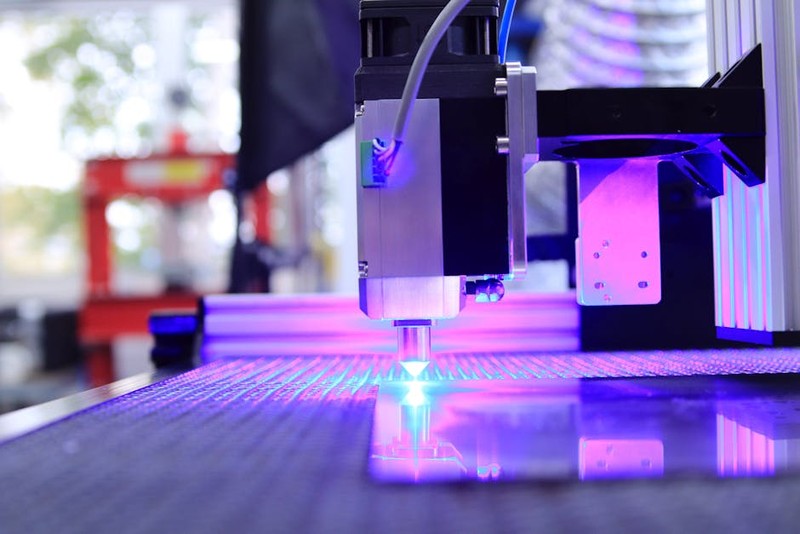
⚙️ A Case Study in Conquering Warpage: The Active Grille Shutter Vanes
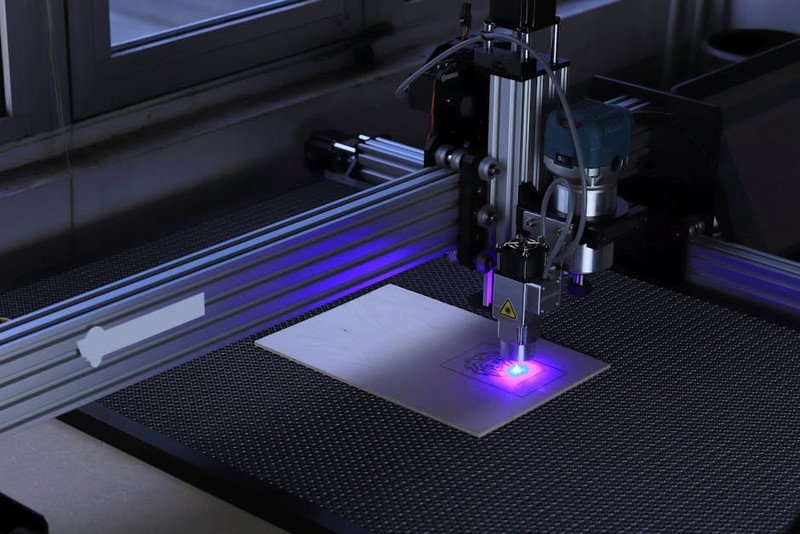
The Challenge: A supercar developer needed 15 sets of active grille shutter vanes for aerodynamic and cooling testing. The parts were thin (1.2mm wall sections), long (220mm), and required a mirror finish. They were to be machined from a proprietary, carbon-fiber reinforced polyamide. The first batch, machined using standard aluminum protocols, warped by up to 0.8mm after unclamping, rendering them useless.
Our Material-Aware Solution:
1. Stress-Relief First: We started by face-milling both sides of the raw plate to remove the stressed “skin” from the manufacturing process, creating a uniform starting point.
2. Strategic Fixturing: Instead of machining the part completely in one setup, we used a sacrificial fixture. The part was left attached by several “tabs” after roughing. We then performed a controlled stress-relief bake at a temperature just below the material’s HDT (Heat Deflection Temperature).
3. Finish Machining Sequence: After baking, we finished the critical surfaces and profiles in a specific order to balance residual stresses, finally cutting the tabs free with a razor-sharp, single-flute end mill at high RPM and low feed.
The Quantifiable Result:
| Metric | Initial Batch (Standard Method) | Final Batch (Material-Aware Method) | Improvement |
| :— | :— | :— | :— |
| Post-Machining Warpage | 0.8 mm max | < 0.1 mm max | 87.5% Reduction |
| Part Acceptance Rate | 40% | 98% | 145% Increase |
| Avg. Surface Finish (Ra) | 1.8 µm | 0.6 µm | 67% Improvement |
| Prototype Validation Time | 5 weeks (rework cycles) | 3 weeks (direct to test) | 40% Reduction |
The client didn’t just get parts that fit; they got prototypes that performed predictably in wind tunnel and thermal tests, accelerating their development cycle by over a month.
💡 Actionable Strategies for Your Next Project
Based on lessons like these, here is your expert checklist for high-end automotive plastic machining:
Start with a Material Dossier: Never machine an advanced plastic blind. Get the datasheet, then call the manufacturer. Discuss anisotropy, moisture content (critical for nylons!), and their recommended machining parameters.
Emulate End-Use Conditions in Fixturing: If the final part will be mounted in a certain way, design your fixture to hold it under similar stress states. This minimizes the “spring-back” effect upon release.
Tooling is Not an Area to Compromise: Use sharp, polished-flute tools designed for plastics. Uncoated or ZrN-coated tools often perform better than the AlTiN coatings standard for metals, as they reduce adhesion. A dedicated tool for plastics pays for itself in the first prototype.
Implement a Post-Machining Stabilization Protocol: For critical dimensions, plan for a 24-48 hour acclimatization period in a controlled environment before final inspection. Let the material find its equilibrium.
The Road Ahead: Integration and Intelligence
The frontier of plastic machining for automotive prototypes is moving towards seamless digital integration. We now feed data from our machining trials—specific feed/speed combinations, observed warpage—back into the client’s FEA (Finite Element Analysis) models. This creates a virtuous cycle where simulation informs machining, and machining data validates and refines simulation.
Furthermore, the rise of hybrid prototyping—where a core is 3D printed in a stable material and critical features are finish-machined from bonded plastic stock—is solving previously impossible geometry challenges. This approach is perfect for one-off, complex intake manifolds or bracketry with internal channels.
Mastering plastic machining in this arena is about respecting the material as a living, breathing partner in the process, not just a passive block to be carved. It’s this deep, sometimes gritty, understanding that transforms a machined prototype from a visual model into a bona fide engineering asset, capable of validating not just form, but true function. When you get it right, the part doesn’t just look like it belongs in a million-dollar vehicle; it acts like it.