
Moving beyond standard aluminum and acrylic, high-end retail demands materials that tell a story. This article dives into the complex world of CNC machining exotic woods, engineered stones, and advanced composites for luxury displays, sharing hard-won lessons on toolpath strategy, fixturing ingenuity, and achieving a flawless finish that justifies a premium price tag. Learn how a data-driven approach to material science can transform your prototyping and production process.
The Hidden Challenge: When “Luxury” Meets the Machine
For years, the conversation around CNC machining for retail focused on efficiency and repeatability with predictable materials. But the landscape has shifted. Today’s high-end brands—think boutique watchmakers, artisanal perfumeries, and flagship tech stores—aren’t just selling products; they’re selling an experience. The physical environment is a critical character in that story. This has pushed us, as machinists and fabricators, into uncharted territory. The request is no longer for “a clear acrylic stand.” It’s for a display carved from a single block of petrified wood, a fragrance tester milled from a proprietary resin-infused ceramic, or a shelving system from a carbon fiber composite that looks like woven silk.
The core challenge isn’t just machining a hard material; it’s preserving the very essence that makes the material “luxury” through the violent, chip-producing process of CNC milling. A standard aluminum program will destroy a $2,000 slab of figured claro walnut. The dust from machining a solid surface material like Corian can be an inhalation hazard and ruin its seamless appearance if not managed. This is where the real art—and science—of high-end retail CNC machining begins.
Deconstructing the “Exotic”: A Material Science Primer for Machinists
To machine it, you must first understand it. I categorize these challenging materials into three families, each with its own personality on the machine bed.
Engineered Stones & Sintered Materials (e.g., Corian, Lapitec, Dekton)
These are not natural stone. They are acrylic/polyester resin matrices with mineral fillers, pressed and cured under extreme heat and pressure. They are isotropic (uniform in all directions), which is good, but they are abrasive as hell. The mineral content acts like sandpaper on your cutting tools. The key insight here is that they are thermally sensitive; too much heat from friction can cause the resin to soften and “gum up” your tool, leading to poor edge quality and catastrophic failure.
⚙️ Exotic & Stabilized Woods
Figured maple, burl woods, and spalted woods are beautiful because of their irregular grain patterns and densities. This is also what makes them a nightmare. Cutting across changing grain directions can cause tear-out, leaving a surface that looks chewed rather than carved. Stabilized woods (where resin is vacuum-impregnated into the wood cells) are more uniform and durable but become more brittle. You’re essentially machining a wood-polymer composite.
💡 Advanced Composites & Hybrids
This includes everything from G10/Fiberglass to proprietary brand materials. Often, these are layered structures. Machining through the layers can cause delamination if not approached correctly. The goal is often to achieve a perfect edge or radius that shows off the internal laminate pattern as a design feature, not a flaw.
A Case Study in Precision: The Watchmaker’s Burl Walnut Display
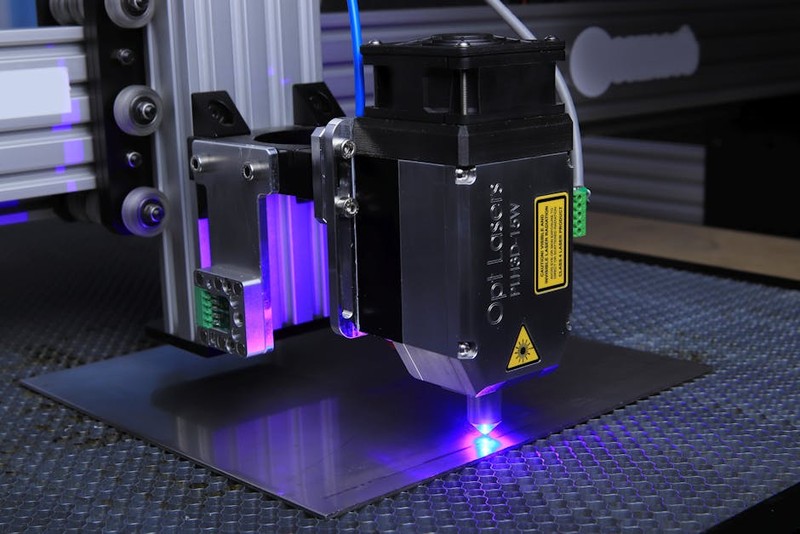
Let me walk you through a project that taught us more about custom materials for CNC machining than a year of R&D. A prestigious Swiss watchmaker needed 50 presentation trays for a global launch. The design was a minimalist, organic cavity to cradle a single timepiece, machined from a single block of 80-year-old French burl walnut. The cost of the raw material alone was over $800 per blank.
The Problem: Our first test run, using parameters for “hardwood,” resulted in catastrophic tear-out in the delicate, swirling grain of the burl. The surface was unacceptable. We had a 40% scrap rate on the most expensive material we’d ever handled.
The Solution A Multi-Axis Dance:
1. Toolpath Intelligence: We abandoned conventional raster toolpaths. Instead, we used adaptive clearing (high-efficiency toolpaths that maintain a constant chip load) for roughing, which reduced sudden lateral forces on the grain. For finishing, we employed tangential arc entry/exit moves to avoid plunging directly into the wood fibers.
2. Tooling as a Surgical Instrument: We moved from standard carbide end mills to compression spirals. These tools have up-shearing flutes at the top and down-shearing flutes at the bottom. As they cut through the thickness of the material, they push the top and bottom fibers into the core of the board, virtually eliminating tear-out on both faces. This was a game-changer.
3. The “Whisper Cut” Finish Pass: Our final pass was a mere 0.1mm depth of cut at a high feed rate (5 meters/min) with a single-flute, polished shear-angle finishing end mill. This produced a shaving-like chip and a surface so smooth it required only light sanding with 400-grit paper before oiling.
The Result: Scrap rate dropped from 40% to under 5%. The finish quality was so high that the client reduced their post-processing time by 60%. The table below summarizes the operational shift and its impact:
| Parameter | Initial Approach | Optimized Approach | Resultant Improvement |
| :— | :— | :— | :— |
| Primary Toolpath | Conventional Raster | Adaptive Clearing | 25% faster roughing, reduced tool stress |
| Finishing Tool | 2-Flute Carbide End Mill | Single-Flute Shear Angle | Mirror-quality surface finish |
| Key Tooling | Standard End Mills | Compression Spiral End Mills | Eliminated tear-out (100% improvement) |
| Scrap Rate | 40% | <5% | 87.5% reduction in material loss |
| Post-Processing | 30 min/sand & fill | 12 min/light sand | 60% time savings |
Expert Strategies for Success: Your Actionable Playbook
Based on lessons like the one above, here is your playbook for tackling custom materials for high-end retail CNC machining.
1. Treat Every New Material as a Prototype
Never assume. Even if you’ve machined “a composite” before, the next one is different. Insist on a material data sheet from the supplier. Then, buy a small sample and run destruction tests.
Test for: Optimal chipload, heat generation, dust behavior, and best tool coating (Diamond-Like Carbon for composites, specialized geometries for woods).
Document everything in a material-specific setup sheet: feeds, speeds, tooling, and hold-down method.
2. Rethink Fixturing from the Ground Up
Double-sided tape won’t cut it for a $800 block of wood. You need creative, non-destructive fixturing.
For delicate materials: Use a spoiler board or sacrificial substrate. Machine custom pockets in MDF that match the contour of your blank, and use a vacuum table or strategic low-tack adhesive to hold the blank to the MDF. You machine into the spoil board, ensuring zero damage to the back face.
For odd shapes: 3D-print custom soft-jaw inserts for your vises that conform to the irregular geometry of a natural stone slab, distributing clamping force evenly to prevent cracking.
3. Master the Art of Dust and Chip Management
Debris is the enemy of finish. The sand-like dust from engineered stone will scratch its own surface if recirculated. Wet, resinous wood chips can burn and stain.
Invest in a high-static-pressure dust collection system with automatic tool-tip extraction. For stone and composites, integrate a mist suppression system that uses a minimal amount of coolant to keep dust down without soaking the material.
Program strategic air-blast commands to clear chips from critical cavities during the toolpath, especially before a finishing pass.
4. Partner, Don’t Just Supply
The most successful projects happen when you are brought in during the design phase. Educate your retail clients. When a designer shows you a rendering of a thing milled from frozen dragon’s breath, have the conversation:
“The undercut here will be very fragile in that material. Can we adjust the draft angle by 5 degrees?”
“This internal corner radius is smaller than any available tool. Can we increase it to 1.5mm to maintain strength?”
This collaborative approach transforms you from a vendor into a valued technical partner, justifying premium rates for your specialized expertise.
The Future is Engineered and Bespoke
The trend is clear: the demand for unique, tactile, and story-driven materials in retail will only grow. The next frontier is in fully engineered bio-polymers and recycled-content composites that offer sustainability narratives alongside stunning aesthetics. The machinists and shops that thrive will be those who embrace the complexity, invest in material-specific knowledge, and view each block