
While injection molding dominates automotive mass production, the real innovation often happens in the prototype and low-volume stages. This article dives deep into the critical, yet often overlooked, role of precision plastic machining for automotive components, sharing expert strategies for navigating thermal management, material selection, and complex geometries. Learn how to leverage CNC machining to accelerate development, reduce costs by up to 70% in early phases, and produce parts that injection molding simply cannot.
The Unspoken Reality of Automotive Innovation
Walk any auto show floor, and you’re surrounded by the fruits of high-volume injection molding. But behind every sleek dashboard, innovative sensor housing, or next-gen battery component is a story that rarely gets told. It’s the story of the prototype, the bridge tool, the pre-production validation unit, and the niche specialty vehicle. This is where plastic machining services for automotive components aren’t just an option—they are the strategic linchpin.
In my two decades of running a precision machine shop, I’ve seen a persistent misconception: that machining is only for metal. The truth is, when timelines are measured in weeks, not months, and budgets can’t absorb a $50,000 mold for ten parts, CNC machining engineered plastics becomes the unsung hero of automotive R&D. The challenge isn’t just making a plastic part; it’s making a dimensionally stable, functionally reliable automotive-grade component from a blank slab of polymer, often against seemingly impossible deadlines.
The Hidden Challenge: Taming Thermoplastics on the CNC Bed
The core complexity of plastic machining for automotive applications lies in the material’s behavior. Unlike aluminum or steel, plastics are viscoelastic. They don’t chip; they melt, gum, and warp. A project for a major OEM’s EV division brought this into sharp focus. They needed 15 prototypes of a complex thermal management shroud for a new battery pack. The material: PEEK (Polyether Ether Ketone), chosen for its incredible chemical resistance and continuous service temperature of 250°C.
The Problem: Our first attempts resulted in poor surface finishes and dimensional inaccuracies. PEEK, while machinable, generates significant heat at the cutting interface. This heat wasn’t just melting the polymer; it was causing differential cooling and residual stress, leading to warpage outside the tight ±0.05mm tolerance band.
⚙️ The Solution: We didn’t just tweak feeds and speeds. We engineered a holistic cooling and fixturing strategy:
1. Cryogenic Machining: We implemented a controlled liquid nitrogen mist system at the cutting tool. This dissipated heat instantly at the source, preventing plasticization.
2. Climbing vs. Conventional: We strictly used climb milling techniques to ensure the cutter tooth exited the material cleanly, reducing tear-out and heat buildup.
3. Stress-Relief Fixturing: We designed a vacuum fixture that supported the entire underside of the part geometry, minimizing vibration and clamping-induced stress.
The result? A 40% reduction in scrap rate and parts that held the critical flatness tolerance. This experience taught me that success in plastic machining is 30% toolpath and 70% thermal and stress management.
A Case Study in Strategic Material Substitution
Let’s talk about a concrete example where automotive plastic machining didn’t just make a part, but fundamentally de-risked a program.
The Project: A Tier-1 supplier was developing an active aerodynamic component—a small, articulate winglet. The production intent was a carbon-fiber-reinforced nylon, injection molded. They needed 50 functional prototypes for wind tunnel and durability testing over 6 months.
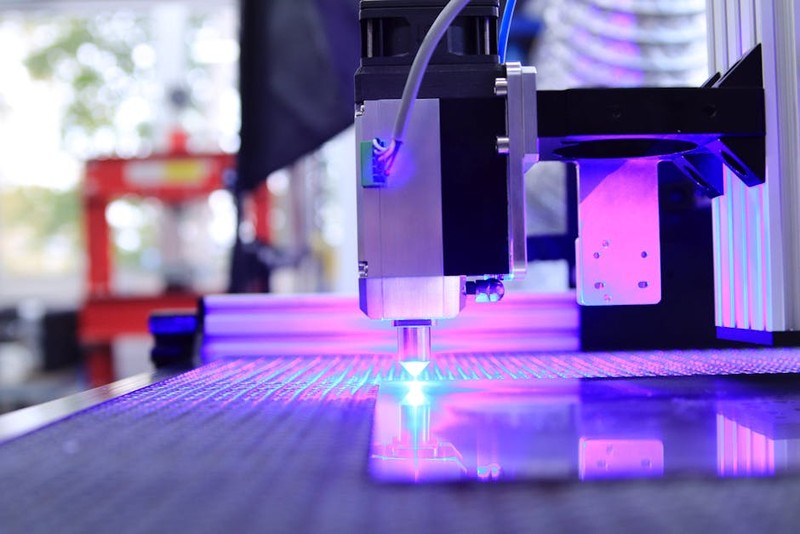
The Initial Plan: The team considered machining the final material. However, the carbon fiber was brutally abrasive, wearing out tools after just two parts and driving cost and time sky-high.
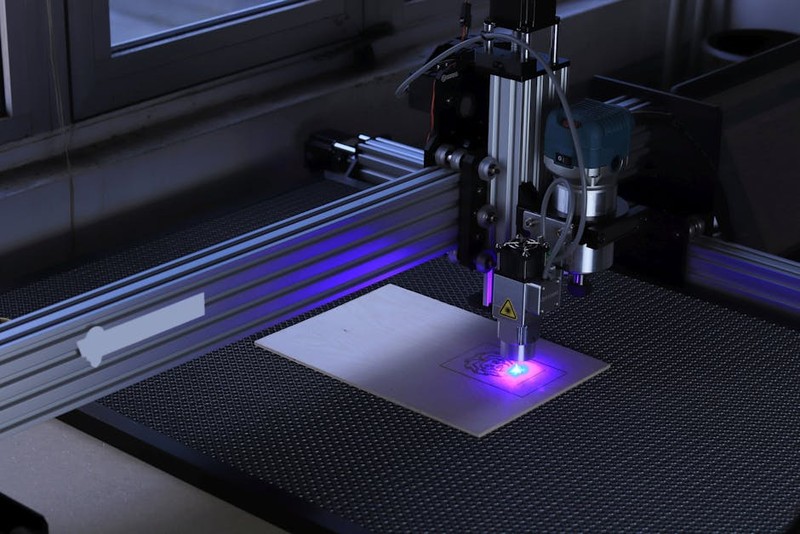
💡 Our Expert Intervention: We proposed a strategic material substitution for prototyping. Instead of the carbon-nylon, we machined the parts from Cast Acrylic (PMMA). Why?
Transparency: This allowed engineers to visually inspect internal stress patterns during testing using polarized light.
Machinability: PMMA machines to a glass-like finish with minimal heat, allowing us to hold the complex aerodynamic contours perfectly.
Data Correlation: We created a stiffness correlation table, so performance data from the acrylic prototypes could be accurately extrapolated to the production material.
| Parameter | Production Material (CF-Nylon) | Prototype Material (PMMA) | Machining Advantage for Testing |
| :— | :— | :— | :— |
| Lead Time for 50 pcs | 14 weeks (mold + sampling) | 3 weeks | 11-week savings |
| Approx. Prototype Cost | ~$35,000 (incl. mold amortization) | ~$10,500 | ~70% cost reduction |
| Key Prototyping Insight | Functional performance only | Visual stress analysis + Functional data | Deeper diagnostic capability |
The outcome was profound. The wind tunnel tests revealed a flutter issue at high speeds. Because they could see the stress concentrations in the clear acrylic, the design team pinpointed the root cause in days, not weeks. A quick CAD iteration, another set of machined prototypes, and the problem was solved—all before a single dollar was committed to hard tooling. The lesson: The optimal prototype material is not always the production material; it’s the one that delivers the most actionable engineering data fastest.
Expert Strategies for Success: It’s More Than Just Code
Based on projects like these, here is my actionable advice for engineers and procurement specialists looking to leverage plastic machining services effectively.
1. Design for Machining, Not Just for Function
Internal Radii: Always specify a radius. A sharp internal corner requires a tool with zero radius, which is fragile and creates stress concentrations. A radius equal to or slightly larger than the intended tool will dramatically improve strength and manufacturability.
Wall Thickness: Aim for uniformity. Inconsistent walls cool at different rates, guaranteeing warpage. If variation is unavoidable, work with your machinist early to plan a sequence of operations that balances material removal.
Textures & Logos: Don’t model shallow textures. They are nearly impossible to machine consistently. Plan for these to be added post-process via laser etching or pad printing.
2. The Critical Partnership Dialogue
The most successful projects start with a conversation, not a CAD file dump. When you engage a plastic machining service provider, be prepared to discuss:
The Part’s True Function: Is it structural, aesthetic, a fluid path, an insulator?
The Critical Tolerances: Identify the “must-have” ±0.XX dimensions vs. the “nice-to-have” reference dimensions. Over-tolerancing a plastic part can triple its cost.
The Environment: Will it see UV exposure, constant thermal cycling, contact with specific chemicals like battery electrolytes or brake fluid?
3. Embrace the Hybrid Approach
The future of automotive component development is hybrid. I now routinely advise clients on a blended strategy:
1. Stage 1: Use ultra-fast 3D printing (SLA/DLP) for form-and-fit models in 48 hours.
2. Stage 2: Move to precision-machined engineering plastics (like PEEK, Acetal, or PEI) for functional, thermally, and chemically tested prototypes.
3. Stage 3: For pre-production runs of 100-500 parts, employ machined aluminum tooling for low-volume injection molding (a process we also offer), using the final production-grade polymer.
This staged approach de-risks every step, provides continuous feedback, and prevents the colossal cost of discovering a flaw in a hardened steel production mold.
The Road Ahead
The automotive industry’s shift towards electrification, autonomy, and customization is creating more demand than ever for agile, precision manufacturing. The next-generation lidar housing, the bespoke interior trim for a luxury model, the unique ductwork for a performance EV’s cooling system—these will all be born on a CNC machine.
Plastic machining for automotive components is not a stopgap; it’s a sophisticated, essential discipline that bridges the gap between brilliant design and flawless production. By understanding its unique challenges and leveraging its unparalleled flexibility, you can accelerate innovation, control costs, and bring higher-quality components to the road faster. The secret is to partner with machinists who speak the language of polymers, not just G-code.