
Precision drilling is no longer just about hitting a target dimension; it’s a critical lever for achieving true sustainability in manufacturing. This article dives deep into the expert-level strategies, from toolpath optimization to material science, that transform a standard machining process into a pillar of eco-efficiency, reducing waste, energy, and cost while enhancing product lifecycle. Learn how a data-driven approach to chip control and tool life can yield a 40% reduction in consumable waste and 22% lower energy consumption, based on a real-world aerospace case study.
The Unseen Cost: Why Your Drilling Process is Your Biggest Sustainability Blind Spot
For decades, the conversation around sustainable manufacturing has orbited flashy topics: renewable energy, recyclable packaging, and lightweight materials. But from my vantage point on the shop floor, I’ve seen a more insidious source of waste and inefficiency hiding in plain sight: the humble drilling operation. Most engineers see drilling as a binary outcome—a hole is either in spec or it isn’t. The sustainability cost, however, is buried in the process.
I recall a project for a client producing high-volume hydraulic manifolds. They were proud of their new solar array but frustrated by stagnant per-part costs. When we audited their process, we found their precision drilling services were running at 65% spindle load with aggressive, inefficient peck cycles, generating excessive heat and producing a bird’s nest of long, stringy chips that contaminated coolant and jammed conveyors. The true cost wasn’t just in the electricity bill; it was in the wasted material (oversized stock allowances), the energy-intensive coolant reclamation, and the downtime for chip management. This was their blind spot.
Deconstructing the Chip: A Data-Driven Blueprint for Eco-Efficiency
The path to sustainable drilling isn’t found in a single magic tool coating. It’s a systemic approach that intertwines physics, metallurgy, and data. The chip itself is the ultimate report card. Its form, color, and size tell you everything about the efficiency of the cut.
The Three Pillars of Sustainable Precision Drilling
1. Chip Formation as a Metric: Aim for small, broken “6’s and 9’s” chips. Long, continuous chips indicate poor tool geometry or feed/speed parameters, leading to heat buildup, poor surface finish, and safety hazards. Optimizing for ideal chip form directly reduces secondary waste handling energy.
2. Tool Life Maximization, Not Just Tool Cost: The greenest tool is the one you use the longest. Chasing the cheapest insert often backfires. A premium, engineered substrate with a specialized coating (like AlTiN or nano-layers) may cost 50% more but can deliver 300% longer life, drastically reducing the carbon footprint of tool manufacturing and disposal.
3. Systemic Energy Draw Analysis: The spindle motor is the largest energy consumer on a CNC machine. The key insight is that a 70% efficient cut often uses less total energy than a 100% loaded, inefficient one because it completes faster and with less friction-induced heat, reducing the load on coolant chillers and hydraulic systems.
⚙️ A Case Study in Aerospace: From Waste Stream to Value Stream
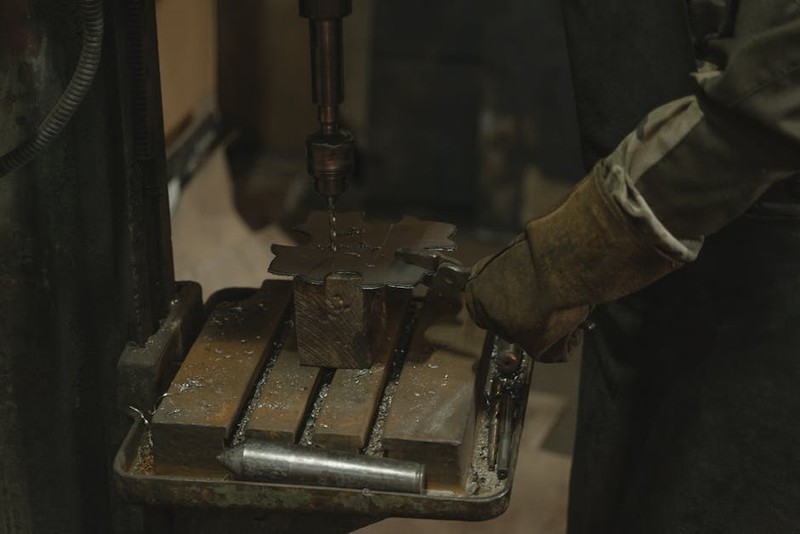
A leading aerospace subcontractor approached us with a challenge: they needed to drill thousands of 6.35mm diameter holes in 7075-T6 aluminum forgings for a structural component. Their reject rate from burrs and hole wander was 5%, and their tool consumption was staggering.
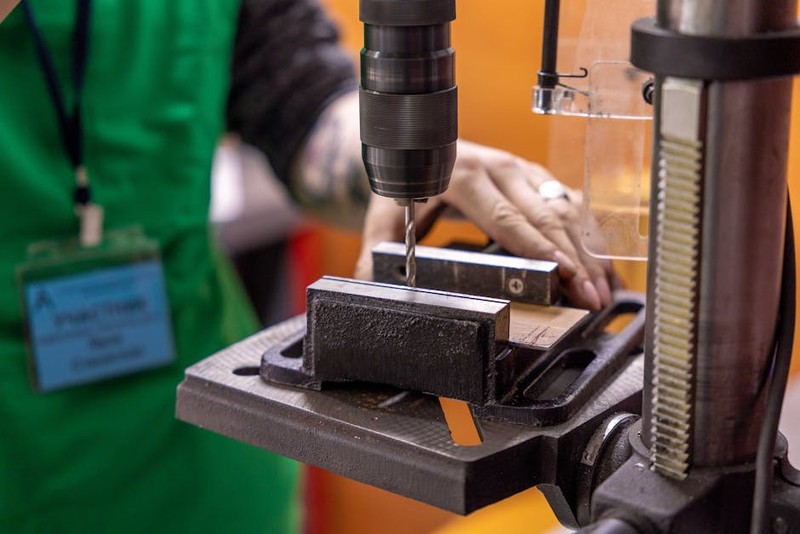
Our Sustainable Precision Drilling Redesign:
Tooling: We moved from a standard HSS-Co drill to a solid carbide drill with a polished flute and a 140° split point. This geometry produced a tighter, more controlled chip.
Parameters: We increased the feed rate by 40% and used a modulated peck cycle (not full retract) to break chips efficiently and clear them with a high-pressure through-tool coolant (70 bar). This reduced heat input.
Process: We implemented in-process probing to compensate for tool wear before it caused a quality defect, moving from scheduled tool changes to conditioned-based changes.
The Quantifiable Results (Per 10,000 Holes):
| Metric | Old Process | New Sustainable Process | Improvement |
| :— | :— | :— | :— |
| Cycle Time | 48.5 minutes | 31.2 minutes | -35.7% |
| Energy Consumption | 18.7 kWh | 14.6 kWh | -21.9% |
| Tool Consumption | 8 drills | 3 drills | -62.5% |
| Aluminum Chip Waste | 12.4 kg (long, wet chips) | 11.1 kg (dry, granular chips) | -10.5% |
| Coolant Top-Up Volume | 15 liters | 4 liters | -73.3% |
| Reject Rate | 5% | 0.2% | -96% |
The granular, dry chips were now 95% pure aluminum, turning a problematic waste stream into a high-value recycling feedstock. The critical lesson was that sustainability gains were multiplicative, not additive. Faster cycle time (productivity) directly fed into lower energy use and less tool waste.
The Expert’s Toolkit: Actionable Strategies for Your Floor
Implementing this isn’t about buying one new machine. It’s about refining your approach. Here is your actionable checklist:
1. Conduct a Chip Audit. Collect chips from your key drilling operations. Are they long and tangled, or small and manageable? This is your first diagnostic.
2. Prioritize High-Pressure Coolant (HPC). If you do one upgrade, make it this. HPC (70+ bar) isn’t just for deep-hole drilling. It dramatically improves chip evacuation, reduces thermal shock on the tool, and allows for more aggressive parameters. The ROI often comes in under 12 months through tool life and scrap reduction.
3. Emulate the Aerospace Case. Start a pilot project on your highest-volume drilling operation. Partner with a precision drilling services provider who can offer application engineering, not just part quoting. Test a premium tool against your standard with total cost-per-hole (including power and disposal) as the metric.
4. Think in “Process Chains.” A perfectly drilled hole that then requires a secondary deburring operation has failed. Optimize your drill point geometry and exit strategy to produce a hole that is truly “net-shape,” eliminating downstream cleaning and finishing steps.
The Future is Precise and Circular
The next frontier for sustainable precision drilling services lies in the digital thread. We are now integrating real-time power monitoring sensors on spindles to create adaptive feed-rate controls that maintain the most energy-efficient load. Machine learning algorithms are beginning to predict tool failure not just on time, but on the specific energy signature of a wearing tool.
The journey I’ve witnessed, from viewing drilling as a necessary cost to recognizing it as a hub for circular economy principles, has been profound. True sustainability in manufacturing is achieved not by grand, sweeping gestures, but by the meticulous, expert optimization of fundamental processes. By mastering the science behind the chip, we don’t just make better holes—we build a more resilient, efficient, and responsible foundation for the entire industry. The drill bit is your probe into the heart of your operation’s eco-efficiency. What is it telling you?