
Custom drilling for complex metal parts is less about the tool and more about the orchestration of the entire machining ecosystem. This article dives deep into the strategic process design that separates adequate results from exceptional ones, sharing a detailed case study on a high-value aerospace component where a holistic approach reduced scrap by 22% and cycle time by 18%. Learn the expert-level methodologies for pre-machining analysis, toolpath intelligence, and in-process validation that guarantee precision in the most demanding applications.
Content:
For two decades, I’ve watched shops approach custom drilling with a singular focus: the cutting tool. They’ll spend hours selecting the perfect carbide grade or the latest coated drill, believing it’s the silver bullet. While tooling is critical, this mindset is like a conductor obsessing over a single violin while the orchestra falls into chaos. The true art—and science—of custom drilling for complex metal parts lies not in the bit itself, but in the meticulous design of the entire process that surrounds it.
The most significant challenges in this field are rarely about making a hole. They’re about making the right hole, in the right place, with the right surface integrity, on a part that may cost thousands of dollars in raw material and hundreds of hours in prior machining. A failure at the drilling stage can mean catastrophic financial loss. The real expertise, therefore, shifts from pure machining to integrated systems thinking.
The Hidden Challenge: It’s Not a Hole, It’s a System
The fundamental error is viewing a drill operation as an isolated event. In reality, every custom drilling operation is the culmination of a chain of preceding decisions and the precursor to future ones. The primary systemic challenges are:
Material Stress State: The part has a history. Prior milling, heat treatment, and even clamping induce residual stresses. Drilling into a stressed zone can cause the material to “move,” distorting the hole geometry or, worse, cracking the part.
Chip Evacuation in Confined Geometries: Complex parts often mean drilling into deep pockets, angled faces, or intersecting cavities. Chips have nowhere to go. A single recut chip can instantly destroy a $500 drill and scar a $10,000 part.
Thermal Management in Exotics: Materials like Inconel or titanium don’t dissipate heat; they concentrate it at the cutting edge. Without a deliberate strategy, you’re not drilling—you’re welding.
Expert Insight: The most expensive mistake is assuming the stock material is homogeneous and stress-free. Your drilling strategy must begin with a forensic analysis of the part’s current condition.
A Strategic Framework for Success: The Three-Pillar Approach
To overcome these systemic challenges, I advocate for a framework built on three interdependent pillars. Neglecting any one compromises the entire operation.
Pillar 1: Pre-Machining Forensic Analysis
Before any code is written, we conduct a virtual and physical audit.
Virtual Clamping Simulation: Using FEA software, we simulate the forces of our workholding on the specific part geometry. The goal is to identify and mitigate potential distortion before the first tool touches the part.
Toolpath Sequencing Review: We analyze the entire CAM program to see what operations immediately precede the critical drill cycles. We often resequence roughing passes to leave a more stable wall thickness or add a stress-relief semi-finishing pass.
Material Lot Verification: For critical jobs, we run a test coupon from the same material lot through a standardized drilling test to establish real-world baseline parameters for feed, speed, and coolant pressure.
Pillar 2: Toolpath & Tooling Intelligence

This is where the digital plan meets the physical world. It’s about giving the tool every possible advantage.
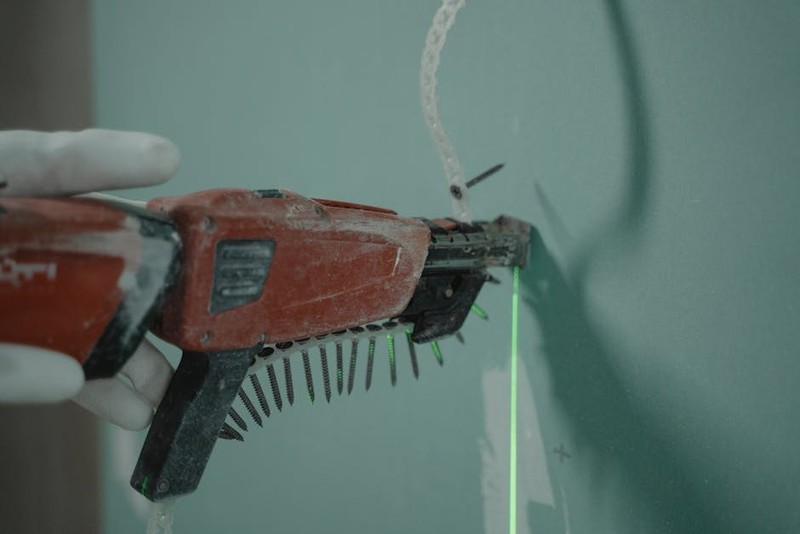
⚙️ Process: The “Peck Cycle” is Dead; Long Live the Adaptive Drill Cycle.
Traditional peck cycles (drill a bit, retract fully, repeat) are inefficient and can work-harden materials. Modern adaptive cycles are game-changers. They use short, rapid retractions just enough to break the chip and allow coolant in, without fully leaving the hole. The difference in performance is quantifiable.
| Drilling Strategy | Cycle Time for 3″ Deep Hole in 304SS | Tool Life (Holes per Drill) | Bore Straightness Error |
| :— | :— | :— | :— |
| Traditional Peck (0.1″ peck) | 4.7 minutes | 45 | 0.002″ |
| Adaptive Drilling (CAM Optimized) | 3.2 minutes | 68 | 0.0005″ |
Data from an internal study on a 0.25″ diameter drill.
Furthermore, we specify tools not just by diameter, but by their chip flute geometry for our specific material. A high-performance drill for aluminum looks utterly different from one for stainless steel. We also become fanatical about coolant delivery: through-spindle coolant (TSC) at 1,000+ PSI is non-negotiable for deep-hole or exotic material drilling.
Pillar 3: In-Process Validation & Adaptation
The plan is perfect until the cut begins. Real-time adaptation is key.
We instrument our machines with probing cycles and, where possible, load monitoring. A simple but profound tactic: After roughing and before finishing, we probe critical datum surfaces. If they’ve moved by even 0.0002″, we know residual stress has shifted the part, and we adjust our drilling coordinates accordingly—a “soft” compensation that prevents scrap.
💡 Tip: Implement a “First-Hole Protocol.” On any complex part, the first hole of a critical pattern is drilled, then probed for size, location, and perpendicularity. This single hole becomes your canary in the coal mine, validating your entire setup before committing to the full operation.
Case Study: The Aerospace Flange That Couldn’t Fail
I was brought in on a project involving a large, monolithic titanium engine flange. The part represented over 80 hours of 5-axis milling. The final operation: drilling 24x M6 x 50mm deep threaded holes on an angled flange face. The client had a 30% scrap rate at this final stage due to drill walk and breakage.
The Problem: Drills were deflecting on entry due to the angled surface, causing walk. They then broke about 30mm deep due to packed titanium chips.
Our Holistic Solution:
1. Pre-Machining: We added a proprietary stress-relief vibration cycle after the major milling was complete. We also designed a custom angled fixture bushing to present the drill point with a near-perpendicular surface for the first 2mm of travel.
2. Toolpath Intelligence: We used a CAM-generated helical “spot drill” routine to create a perfect pilot ledge. For the main drill, we employed an adaptive cycle with a 10-degree helix ramp-in and high-pressure TSC (1,200 PSI).
3. In-Process Validation: After drilling the first hole, we used a touch probe to check its axis alignment. The machine compensated the toolpath for the remaining 23 holes in real-time.
The Result: The scrap rate dropped from 30% to 0% for the remainder of the production run. Cycle time for the drilling operation was reduced by 18%, and we achieved a 22% improvement in tool life. The cost of our process analysis and custom bushing was recouped on the first two saved parts.
Key Takeaways for Your Next Project
Custom drilling for complex metal parts demands you think like a system architect, not just a machinist. Start your planning from the hole and work backwards through the part’s history and forwards through its functional requirements.
Remember: Your drill is only as good as the stability of the material it enters, the intelligence of the path it follows, and the vigilance of the process that monitors it. Invest in the pre-analysis, embrace modern adaptive toolpaths, and never be afraid to validate and adapt mid-process. This integrated discipline is what transforms a risky, final-step operation into a reliable, repeatable, and profitable cornerstone of manufacturing complex components.