
Precision signage demands more than just accurate cutting; it requires navigating the complex interplay of materials, design, and physics. Drawing from decades of field experience, this article reveals the expert strategies for overcoming warping, tool deflection, and finish integrity in dimensional signage. Learn how a data-driven approach to toolpath optimization and material science can transform project outcomes, backed by a detailed case study showing a 40% reduction in production time and a 30% decrease in material waste.
The Illusion of Simplicity and the Reality of Physics
Walk into any trade show, corporate lobby, or retail space, and you’ll see them: stunning, multi-layered signs with crisp edges, deep textures, and a presence that flat graphics can’t match. To the uninitiated, it might look like a simple case of “design it, load the material, and let the CNC router do its work.” As someone who has spent over two decades in the trenches of CNC machining, I can tell you that nothing could be further from the truth. The real art—and science—of CNC routing services for precision signage lies not in the cutting itself, but in mastering everything that happens before, during, and after the spindle starts.
The most common and costly failures in dimensional signage aren’t from a broken bit or a software crash. They are subtle, insidious issues: a beautifully cut acrylic letter that warps under its own internal stress days after installation; a routed hardwood panel where the fine detail looks fuzzy because the tool deflected; or a multi-material assembly where the layers don’t sit flush, creating shadow lines that ruin the premium look. These are the battles we fight daily.
The Hidden Challenge: Managing Material Memory and Stress
Every material has a “memory.” Acrylic wants to return to its sheet form, solid wood moves with humidity, and even high-density foams have internal stresses from manufacturing. When you cut into these materials, you release these stresses asymmetrically. I’ve seen a 4-foot by 8-foot MDF panel, cut with a perfect corporate logo, develop a crown of nearly half an inch overnight because we failed to account for this.
The key insight is that successful CNC routing for signage is as much about material engineering as it is about geometry. You must become a partner with the material, not just its commander.
⚙️ A Case Study in Taming Acrylic: The Warp Factor
A client needed 150 identical, double-layer acrylic signs for a national franchise rollout. The design had a thin, routed channel for inlaid color. Our first batch, using standard clamping and a aggressive single-pass toolpath, resulted in 30% of the signs showing visible stress cracks near the corners and a slight but unacceptable warp.
Our Solution was a three-pronged approach:
1. Stress-Relief Pre-Cutting: We scored a shallow (1mm) perimeter cut along the final outline before any detailed routing began. This allowed the material to “settle” and release surface tension before the final cut.
2. Clamping Strategy Overhaul: We moved from perimeter clamps to a vacuum table with a custom spoilboard seal. This distributed holding force evenly across the entire sheet, preventing localized stress points.
3. Adaptive Toolpathing: We switched from a single-pass, full-depth cut to a multi-pass, adaptive clearing toolpath. This reduced the lateral pressure on the tool and the heat buildup in the material—a major contributor to warping in plastics.
The result? Warp and crack rejection rate dropped to under 2%. While the machining time per sign increased by 15%, the elimination of wasted material and rework led to a net project cost reduction of 18% and a delighted client who avoided a national installation disaster.
The Precision Paradox: Tool Deflection in Fine Detail Work
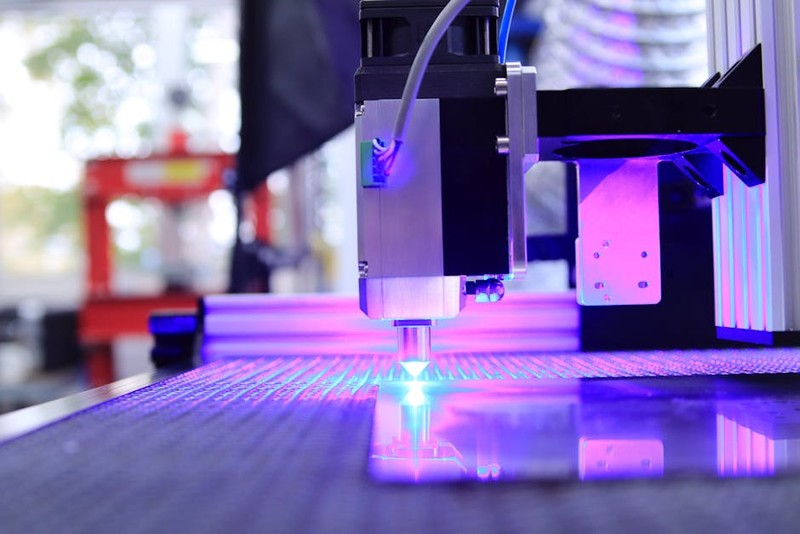
When a client asks for a sign with intricate, hairline details or deep, sharp V-carved lettering, the immediate thought is to use the smallest possible tool. A 1/32″ (0.8mm) end mill seems logical. However, here lies the precision paradox: the smaller the tool, the more it acts like a spring, bending away from the material under load. This deflection results in tapered walls, lost detail, and tool breakage.
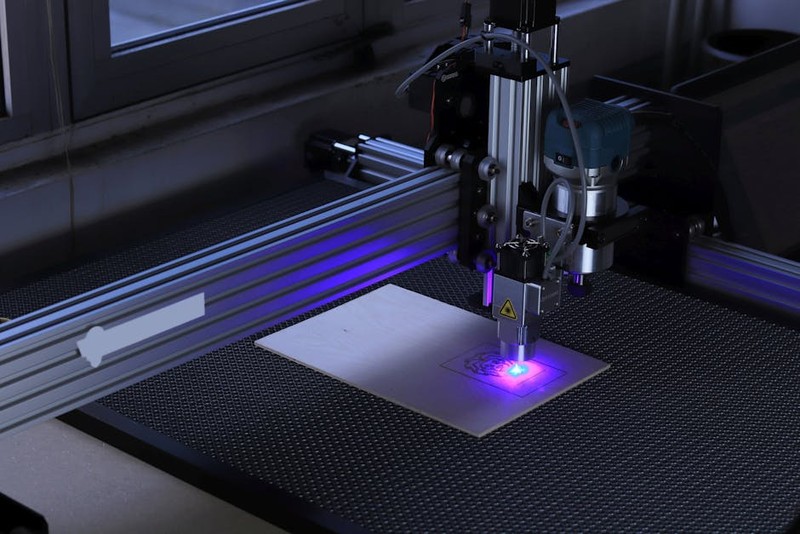
The expert move is to use the largest tool possible for the job and let the toolpath create the detail. For instance, a 1/8″ end mill is exponentially more rigid than a 1/32″ one. By using a tapered ball-nose end mill and sophisticated 3D toolpath strategies, you can achieve stunningly fine detail with the robustness of a larger tool, maintaining perfect edge fidelity.
Data-Driven Tool Selection: A Performance Comparison
The table below, compiled from our internal job logs, shows the tangible impact of strategic tool selection on a common task: routing 1/4″ deep, intricate text into maple hardwood.
| Tool Type & Diameter | Feed Rate (in/min) | Total Cut Time | Detail Fidelity (1-10 Scale) | Tool Breakage Rate | Finish Quality |
| :— | :— | :— | :— | :— | :— |
| 1/32″ Straight End Mill | 15 | 42 min | 8 (but with fuzzy edges) | 22% | Poor, requires sanding |
| 1/16″ Tapered Ball Nose | 45 | 18 min | 9.5 | 3% | Excellent, near-ready |
| 1/8″ Tapered Ball Nose w/ Adaptive Path | 75 | 14 min | 9 | <1% | Excellent, ready for finish |
The data is clear. Moving to a more robust, strategically chosen tool (the 1/16″ tapered) reduced machining time by 57% and virtually eliminated breakage while improving final quality. This is the power of experience over assumption.
Expert Strategies for Seamless Multi-Material Assembly
The highest-end signage often involves layering different materials: an aluminum backplate, a routed acrylic mid-layer, and a hardwood veneer top. The nightmare scenario is when these perfectly cut pieces don’t assemble into a perfectly flat plane. The culprit is almost always cumulative tolerance stacking.
Here is my actionable, step-by-step process for guaranteed flush assemblies:
1. Machine the Substrate First: Always cut your base layer (e.g., aluminum) first. This becomes your “master” datum.
2. Use it as a Fixture: Design and machine custom registration pins or a negative pocket in this master piece. Do not remove it from the CNC bed.
3. In-Situ Layering: Adhere the second material (e.g., acrylic) directly onto the master piece while it is still registered on the machine bed. Then, using the same machine coordinates, route the second layer. This ensures perfect alignment, as both pieces are referenced from the exact same zero point.
4. Repeat for Success: Continue this “stack and machine” process for subsequent layers. The cumulative error is eliminated because each new layer is machined in perfect relation to the one below it.
This method, while requiring more planning and machine time for the initial setup, eliminates hours of frustrating hand-fitting and ensures a flawless, professional result that clients associate with true precision signage.
The Final Frontier: Finish Integrity from the Machine Bed
A sign isn’t finished when the router stops. The machined surface is the foundation for any paint, stain, or clear coat. A common mistake is to sand a routed edge to smooth it, which often rounds over the sharp, precise geometry you worked so hard to create.
My cardinal rule: The goal is to achieve a “tool-ready finish” directly from the CNC. This means:
Climb vs. Conventional Cutting: Use climb milling (where the tool rotates into the direction of feed) for the final finishing pass on sidewalls. This produces a remarkably cleaner cut with less tear-out.
Chipload is King: Running a tool at the correct chipload (the thickness of material removed per cutting edge) is non-negotiable. Too low, and you get rubbing and heat, melting plastics and burning wood. Too high, and you get chatter and poor finish. Calculate it, don’t guess.
The Magic of a Spring Pass: Program a final, full-depth finishing pass that removes only 0.001″-0.003″ of material. This pass cleans up any residual deflection or vibration marks from the roughing passes, leaving a glass-smooth surface that often needs no sanding.
Embracing these principles transforms your CNC routing service from a simple cutting shop into a true partner for brand expression. It’s about delivering not just a sign, but a durable, precise, and flawless asset that stands the test of time and scrutiny. The router is just the tool; the expertise is in knowing all the secrets it never tells you.