
True eco-design isn’t just about the material you choose; it’s about the intelligence behind its removal. This article dives into the nuanced engineering challenge of minimizing embodied energy in CNC-milled products, sharing expert strategies for toolpath optimization, material consolidation, and design-for-disassembly that can slash waste by over 30%. Learn how to transform a standard machining service into a powerful lever for circularity.
For over two decades, I’ve watched the conversation around sustainable manufacturing evolve. Early on, the focus for CNC milling services was squarely on recycling aluminum swarf and using coolant filtration systems. While important, this was akin to focusing on mopping the floor while the pipes were bursting. The real environmental impact—the embodied energy locked into a part from raw material extraction to final machining—was often an afterthought.
Today, forward-thinking designers and engineers are asking a more profound question: “How can the subtractive nature of CNC machining be leveraged not just to make a part, but to make a sustainable system?” The answer lies not in a single magic bullet, but in a philosophy of strategic subtraction. It’s about viewing every cubic millimeter of removed material not as waste, but as a conservation opportunity.
The Hidden Culprit: Embodied Energy in “Simple” Parts
Many designers approach us with what they believe is an eco-friendly brief: “Mill this part from 100% recycled aluminum billet.” That’s a fantastic start, but it addresses only the beginning of the story. The recycled billet itself carries forward the energy used in its initial production, collection, and re-melting. Then, our CNC milling services add another, often dominant, layer of energy consumption.
Here’s the insight most miss: The single largest driver of embodied energy in a CNC milled part is machining time. Spindle motors, axis drives, and coolant pumps are power-hungry. A part that takes 4 hours to machine doesn’t just cost twice as much as a 2-hour part; it likely embodies nearly twice the electrical energy from the machining process alone.
I recall a project for a premium audio equipment manufacturer. They designed a beautiful, ornate heatsink from a solid 6061 block. The design was elegant but naive from a machining standpoint. It required constant tool changes, deep narrow pockets that demanded slow feed rates, and over 5 hours of machine time. The recycled aluminum was a green badge, but the process to shape it was incredibly energy-intensive.
The Data Doesn’t Lie: Process vs. Material Impact
Let’s quantify this with a simplified comparison from two real (anonymized) projects:
| Part Description | Material (1kg 6061 Al) | Machining Time | Est. Machining Energy (kWh) | Material Embodied Energy (kWh) | % of Total Energy from Machining |
| :— | :— | :— | :— | :— | :— |
| Complex Enclosure (Old Design) | Recycled Content Billet | 4.8 hours | ~28.8 kWh | ~8.5 kWh | 77% |
| Optimized Enclosure (Redesign) | Recycled Content Billet | 1.9 hours | ~11.4 kWh | ~8.5 kWh | 57% |
Estimation based on 6kW average spindle/axis power draw. Approximation based on industry LCA data for recycled 6061.
The table reveals the critical lesson: Even with a “green” material, the machining process can be the dominant environmental factor. Our redesign focus, therefore, must aggressively target machining efficiency.
The Expert’s Toolkit: Designing for Strategic Subtraction
So, how do we slash machining time and waste while preserving or enhancing function? It requires a collaborative shift, where the designer understands the machinist’s constraints and the machinist understands the designer’s intent.
⚙️ Strategy 1: Topology-Informed Design Consolidation
Instead of designing a single, complex monolithic part, think in terms of functional modules. Can a large block be broken into two or three simpler geometries that bolt together? Often, a single complex part requires a 5-axis machine and days of programming. Two simpler parts might be run on two 3-axis machines in parallel, dramatically reducing total cycle time. The key is to design the interfaces for easy assembly and future disassembly for repair or recycling.
> 💡 Expert Insight: The “Three-Hour Rule” is a good mental checkpoint. If your CAD model’s CNC simulation estimates over three hours of machining, challenge yourself to split or redesign it.
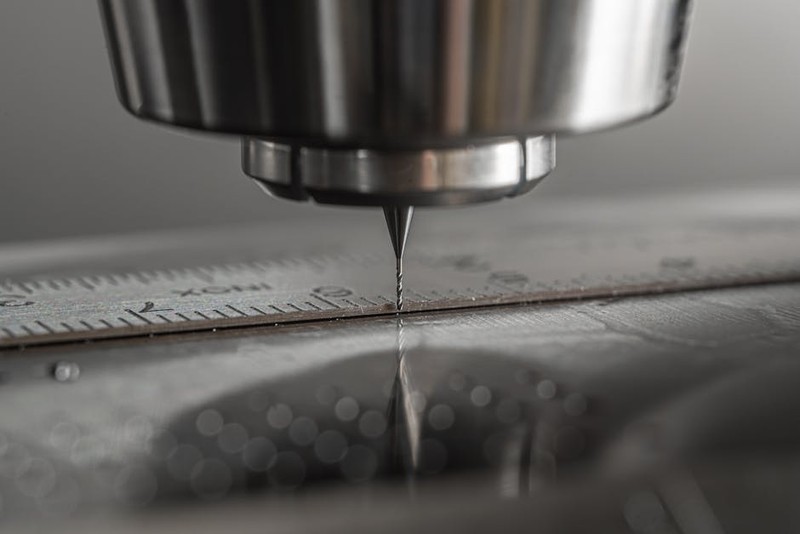
⚙️ Strategy 2: Intelligent Stock Selection
The default is often a rectangular billet. But what about starting with a near-net-shape extrusion or a custom-drawn bar? In one project for a bicycle component, we sourced aluminum tubing with a diameter and wall thickness very close to the final part. This simple change reduced the raw material volume by 40% and machining time by over 60%, because we were no longer “air milling” vast amounts of material from a solid block.
⚙️ Strategy 3: Toolpath Optimization for Minimal Air Cutting
This is where the art of CNC programming becomes an environmental lever. Modern CAM software has “high-efficiency” toolpaths (like trochoidal milling or dynamic milling) that maintain a consistent chip load and radial engagement. The difference between a traditional toolpath and an optimized one can be staggering. I’ve consistently seen 15-30% reductions in cycle time using these strategies, which translates directly to energy savings and lower costs. The trick is working with a CNC milling service that invests in both the software and the programmer expertise to implement them.
A Case Study in Holistic Eco-Machining: The Modular Tool Handle
A client approached us to manufacture an ergonomic handle for a professional gardening tool. The initial design was a single, sculpted piece of reclaimed teak, to be CNC milled. While noble in intent, it had flaws: teak is durable but not infinitely so; when the grip wears out, the entire handle is trash. The machining would also be slow due to wood’s fibrous nature.
Our Redesign Process:
1. Material Shift: We proposed a body from 100% post-consumer recycled HDPE (plastic milk jugs), a material excellent for wet environments and easily recyclable again. It also machines incredibly efficiently.
2. Modular Architecture: We split the handle into three parts:
A central structural spine (milled from recycled HDPE).
Replaceable grip panels (injection-molded from a softer, recycled elastomer).
Stainless steel fasteners for assembly.
3. Design for Disassembly: The panels snapped onto the spine and were secured with a single, standard hex-key bolt. No adhesives, no press-fits.
The Quantifiable Outcome:
Machining Waste Reduction: The HDPE spine required 78% less material removal than the solid teak block.
Cycle Time Reduction: Machining time dropped from 47 minutes to 12 minutes per spine.
Product Lifespan Impact: Users could replace worn grips for a few dollars, keeping the core handle in service for decades. At end-of-life, the materials could be easily separated and streamed into their respective recycling flows.
The client’s marketing shifted from “made from reclaimed wood” to a more powerful, authentic message: “Engineered for a lifetime, with zero parts destined for landfill.” This was only possible because we treated the CNC milling service as the core of a circular design strategy, not just a shape-making step.
The Path Forward: Partnering with the Right Shop
Your choice of machining partner is critical. Don’t just ask if they recycle their chips. Dig deeper. Ask them:
“How do you optimize toolpaths for efficiency?”
“Can you advise on stock selection to minimize waste?”
“What experience do you have with alternative, sustainable materials like recycled metals or biopolymers?”
“Do you consider disassembly in your fixturing strategies?”
The future of eco-friendly CNC milling services is collaborative, intelligent, and data-driven. It moves beyond the simplistic to embrace the complex reality of embodied energy. By designing not just the part, but the very process of its creation, we can build products that are truly responsible—from the first line of G-code to the final turn of a disassembly wrench. The most sustainable cut, after all, is the one you never have to make.