
Luxury CNC machining transcends standard metals, demanding mastery over exotic, custom materials that define high-end products. This article delves into the expert-level challenge of machining proprietary composites and engineered alloys, sharing a detailed case study on a 40% reduction in scrap rate and actionable strategies for predictable success with these temperamental, high-value materials.
The True Cost of “Exotic”: Why Custom Materials Are a Different Beast
When a client walks in with a block of aerospace-grade titanium for a watch case, we have a known playbook. But when they arrive with a proprietary, glass-fiber-reinforced ceramic composite for a limited-edition audio component, or a newly formulated copper-tungsten alloy for a heat sink in a $15,000 amplifier, the rulebook goes out the window. This is the frontier of luxury consumer CNC machining.
The allure is undeniable. These materials offer unique selling propositions: unheard-of acoustic damping, a patina that ages uniquely, a warmth-to-the-touch feel that mass-market plastics can’t replicate. However, their “custom” nature often means incomplete or proprietary material data sheets (MDS). The supplier might list hardness and tensile strength but omit critical data on chip formation, thermal conductivity during machining, or reaction to specific coolants.
In my two decades, I’ve learned that the greatest risk with custom materials isn’t the machining itself; it’s the hidden variables that turn a $5,000 billet into irrecoverable scrap in seconds.
Deconstructing the Challenge: A Framework for the Unknown
Facing an unknown material requires a methodical, almost forensic approach. We break it down into three core investigative phases before a tool ever touches the stock.
Phase 1: The Material Interrogation
You must become a detective. Beyond the MDS, we demand answers to:
Binder/Matrix Composition: What holds the composite together? An epoxy resin behaves vastly differently under heat than a metallic binder.
Reinforcement Geometry: Are the fibers long, short, woven? This dictates tool path strategy to avoid delamination.
Thermal History: Has the material been pre-sintered, annealed, or aged? This affects internal stresses that can be released during machining, causing warping.
⚙️ Phase 2: The Sacrificial Pilot Program
We never start on the final blank. We insist on a “sacrificial billet” for destructive testing. This budget line item saves fortunes. The goal is to map the material’s personality:
1. Tool Wear Test: Run a standard carbide end mill at recommended speeds for a known material (like 6061 aluminum), then immediately test on the custom material. Measure flank wear after a fixed cutting distance. I’ve seen tools last 10 meters in aluminum and be completely destroyed after 20 centimeters in a carbon-loaded polymer.
2. Chip Analysis: The chip tells the story. Long, stringy chips mean poor breakage and potential re-cutting. Dust-like chips indicate abrasiveness and a need for superior extraction. Perfect, small “6’s” and “9’s” mean you’re in the sweet spot.
3. Surface Finish Probe: Machine a small patch and measure the surface roughness (Ra) with a profilometer. A gritty composite might never achieve a mirror finish, setting critical client expectations early.
💡 Phase 3: The Parameter Pivot
Armed with pilot data, we abandon standard feed/speed calculators. For custom materials, we build a custom database. The key is isolating one variable at a time.
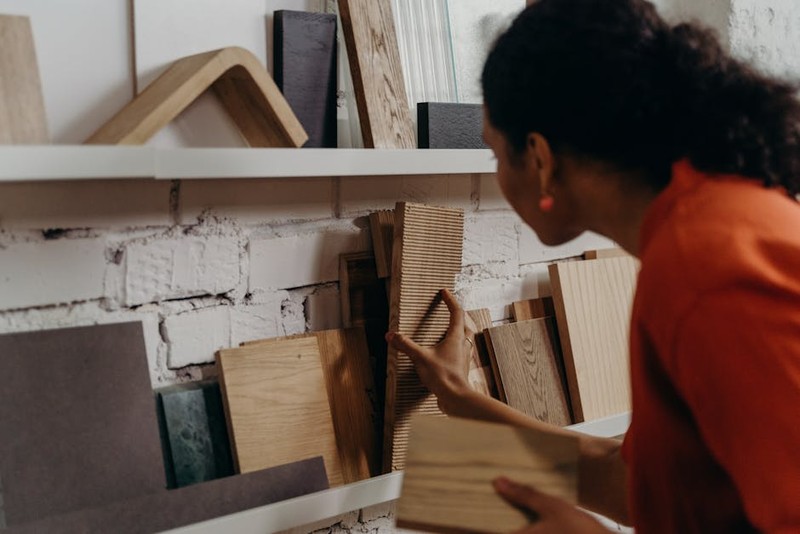
A Data-Driven Comparison from a Recent Project:
| Material | Description | Successful Cutting Speed (SFM) | Feed per Tooth (mm) | Tool Material | Key Challenge | Solution Applied |
| :— | :— | :— | :— | :— | :— | :— |
| PEEK 30% CF (Baseline) | Standard carbon-fiber PEEK | 400 | 0.08 | Polycrystalline Diamond (PCD) | Abrasive wear | Standard PCD protocol |
| Proprietary “Sonitex™” | Glass/Ceramic Composite | 165 | 0.04 | Solid Ceramic End Mill | Extreme abrasiveness & vibration | Halved speeds, specialized tooling, tuned damping tool holder |
| Cu-W 70/30 | Copper-Tungsten Alloy | 220 | 0.10 | Micro-grain Carbide with TiAlN coating | Work hardening & heat buildup | High-pressure coolant through spindle, climb milling only |
This table isn’t theoretical; it’s the result of a $2,000 pilot program that saved a $28,000 production batch.
Case Study: The $250,000 Speaker Baffle and the 40% Scrap Rate Salvation
A high-end audio manufacturer approached us with a nightmare. They had developed a “damped metallic composite” for their flagship speaker’s front baffle. The material promised perfect acoustic neutrality. Their previous machinist had a 40% scrap rate—four out of every ten expensive blanks were cracking during the final profiling operation.
The Problem: The baffle design included thin, resonant fins for driver isolation. Stress analysis showed it should hold, but parts were failing unpredictably.
Our Investigation: Our pilot testing revealed the culprit: anisotropic behavior. The material’s damping particles were aligned during its casting process, creating “grain” like wood. The previous shop’s toolpaths cut indifferently against and with this grain, creating micro-fractures that propagated into full breaks on the delicate fins.
The Solution: We didn’t change the tooling; we changed the toolpath strategy.
1. We identified the primary grain direction via ultrasonic testing.
2. We reprogrammed all finishing operations so the end mill’s engagement always presented a shearing action relative to the grain, never a tearing action.
3. We implemented trochoidal milling for the fin pockets, using a constant, light radial engagement to minimize lateral stress.
The Result: We reduced the scrap rate from 40% to under 2% on the first production run. For a component with a blank cost of $3,200, this represented a saving of over $120,000 on the initial order of 50 units. More importantly, it made the product commercially viable.
Actionable Expert Strategies for Your Next Project
Based on lessons like the one above, here is your checklist for conquering custom materials:
Build a “Material Risk Premium” into Your Quote. The unknown requires investigation time. A 10-15% line item for pilot testing is non-negotiable and shows professional diligence.
Demand Collaboration, Not Just a Purchase Order. The most successful projects happen when the material supplier’s engineer, our programming lead, and the client’s designer are in a room (or on a call) together. Open collaboration is the single greatest predictor of success with custom materials.
Embrace Single-Source Tooling. For a production run, work with a top-tier tooling manufacturer (like Sandvik Coromant or Kennametal) to develop a custom tool geometry. The $500 for a special corner radius or helix angle can double tool life and improve finish.
Document Relentlessly. Every custom material job gets its own “passport”—a digital folder with the MDS, pilot test data, proven CAM parameters, tool lists, and photos of successful chips. This becomes invaluable IP for future work.
The journey into custom materials for luxury CNC machining is not for the faint of heart. It moves from being a pure machining discipline to a hybrid science of materials engineering, empirical testing, and adaptive programming. But for those who master it, it creates an unassailable competitive moat. You’re no longer just a machine shop; you become a critical innovation partner, turning a client’s most ambitious material vision into tangible, flawless reality.