
Architectural CNC routing transcends simple cutting; it’s a dialogue between digital precision and material reality. This article delves into the expert-level challenge of material intelligence, sharing hard-won strategies for predicting and controlling wood movement, composite behavior, and finish integrity to ensure flawless, lasting installations. Learn how a data-driven approach to toolpath strategy and moisture management saved a major museum project from costly failures.
Content:
For years, I’ve watched architects and designers fall in love with the promise of custom CNC routing for architectural designs. They bring us breathtaking, complex models—sweeping organic facades, intricate screens, and textured wall panels that seem to defy traditional construction. The initial excitement is palpable. Yet, the chasm between a perfect digital model and a perfect physical installation is vast, and it’s filled not with code, but with the unpredictable soul of the material itself.
Too many shops treat the CNC router as a giant, obedient printer. Feed it a file, press go, and out pops a part. This approach works for sign foam and some plastics, but it is a recipe for disaster in high-stakes architectural work. The real artistry, and where true expertise separates the contenders from the masters, lies in material intelligence.
The Hidden Challenge: When Your Material Has a Mind of Its Own
The core challenge in architectural CNC work isn’t cutting shapes; it’s anticipating how those shapes will behave after they leave the machine. We are not carving inert blocks. We are negotiating with living, breathing materials.
Wood’s Hydraulic Dance: Solid wood expands and contracts across its grain with changes in relative humidity (RH). A beautifully routed 8-foot oak panel, machined in a shop at 40% RH, can swell or shrink by over 1/4 inch when installed in a climate-controlled lobby at 50% RH. That’s enough to cause buckling, joint failure, or unsightly gaps.
The Composite Conundrum: Engineered materials like MDF, plywood, and acrylics offer dimensional stability but introduce their own demons. MDF is homogenous but brutally abrasive, burning through standard tooling. Multi-layered plywoods can have wildly different densities between face veneers and core layers, causing tear-out or inconsistent edge quality.
The Finish Line is a Minefield: A machined surface is not a finished surface. The chosen toolpath, stepover, and spindle speed directly dictate the surface texture, which in turn dictates how stains, paints, and clear coats will adhere and appear. A microscopic fuzz left by a dull tool will become a glaring flaw under a translucent stain.
The pivotal insight is this: Your CNC programming must begin not with the CAD file, but with a deep understanding of the material’s final destination and lifecycle.
Expert Strategy: Building a Framework of Material Intelligence
To bridge this gap, we’ve developed a rigorous, four-pillar framework. This isn’t just theory; it’s a battle-tested process born from costly mistakes and glorious recoveries.
Pillar 1: The Pre-Machining Interrogation
Before a single tool is loaded, we demand answers to a specific set of questions from the design and installation teams:
What is the annual range of temperature and relative humidity at the installation site?
What is the substrate? (e.g., concrete, steel studs, existing wall)
What is the method of attachment? (Mechanical fasteners, adhesives, both?)
What is the expected lighting? (Harsh raking light will expose every tooling mark)
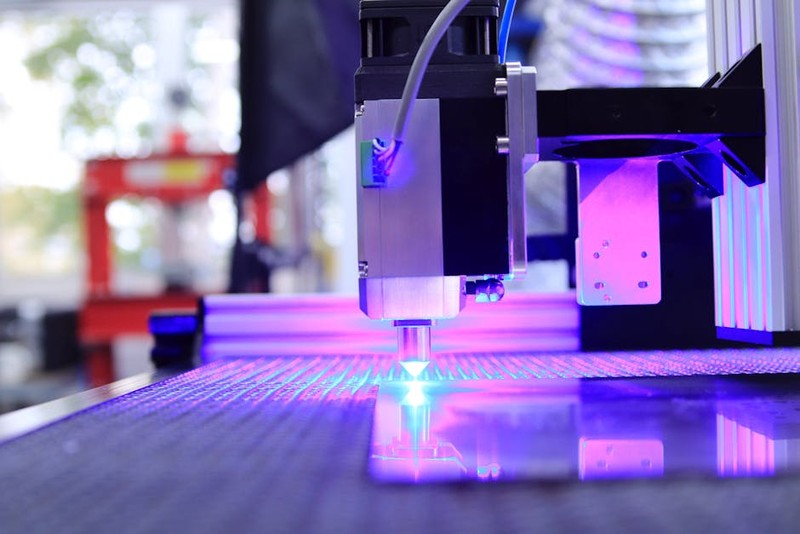
This conversation shifts the relationship from vendor to collaborator. It often leads to design refinements that are both more beautiful and more buildable.
⚙️ Pillar 2: Toolpath Strategy as a Design Tool
We don’t just use toolpaths to remove material; we use them to prepare the material for its future. For a recent project involving large-scale, rift-sawn white oak wall panels, we employed a multi-stage strategy:
1. Stress-Relief Roughing: We used a large-diameter compression spiral bit to remove the bulk of material, but we left a 0.5mm “skin.” This step relieves internal stresses in the wood without letting the final profile distort.
2. Climatic Acclimation Pause: The “skinned” blanks were moved to a humidity-controlled staging area matching the installation environment for 7-10 days. We monitored them with moisture meters until their moisture content stabilized.
3. Final Finishing Pass: Only after stabilization did we run the final, full-depth finishing pass. This ensured the final dimensions were machined in the state they would largely remain.
💡 Pillar 3: The Quantifiable Advantage of Data-Driven Tooling
Tool selection is often based on habit or price. We base it on data. For a high-volume project using premium bamboo plywood (notoriously hard and glue-rich), we ran a controlled test to optimize cost and quality.
| Tool Type (All 1/2″ Diameter) | Cost per Tool | Linear Feet Cut Before Quality Degradation | Cost per Linear Foot | Notes |
| :— | :— | :— | :— | :— |
| Standard Carbide 2-Flute Upcut | $38 | ~250 ft | $0.152 | Acceptable, but required frequent cleaning due to chip welding. |
| Carbide Compression Spiral | $85 | ~1,200 ft | $0.071 | Superior edge quality on both faces, less heat buildup. |
| Solid Carbide Upcut with AlTiN Coating | $110 | ~1,500 ft | $0.073 | Excellent life, but marginal quality improvement over compression. |
The data was clear: The more expensive compression bit reduced our effective tooling cost by over 50% and virtually eliminated tear-out, saving hours of post-processing labor. This quantitative approach is now standard for all new materials.
A Case Study in Predictive Machining: The Maritime Museum Canopy
Perhaps no project illustrates the power of this framework better than a commission for a maritime museum’s entrance canopy. The design called for a massive, undulating structure of laminated African Mahogany, resembling a wave. It was a stunning piece of custom CNC routing for architectural design.
The Crisis: During initial prototyping, perfect parts machined in our shop developed visible surface checking (small cracks) within weeks. The problem wasn’t our machining; it was our failure to model the part’s post-machining stress state. The complex, thin curvatures were locking in stresses that the wood later relieved by cracking.
The Solution: We partnered with a naval architect (experts in wooden structures under stress) to analyze the laminate stack and curvature. The solution was threefold:
1. We redesigned the laminate schedule, alternating grain orientation in specific layers to balance internal forces.
2. We modified the CNC routing program to include a final, very light “scalloping” pass on the concave side of each piece. This removed the hyper-taut surface fibers that were most prone to checking.
3. We specified and applied a penetrating, moisture-regulating finish before shipment, sealing the wood in its stable state.
The Result: The installed canopy has now weathered four full years of coastal seasons with zero structural issues and only minimal, expected aesthetic patina. By investing in predictive material analysis, we avoided a six-figure failure and delivered a legacy piece. The client’s trust, and the subsequent referrals, were worth far more.
Actionable Takeaways for Your Next Project
1. Treat Moisture Content as a Critical Dimension. Specify the required MC for delivered stock (e.g., 6-8% for interior work) and validate it upon receipt. Acclimatize before final machining.
2. Design for Movement. For large solid wood panels, never design a rigid, perimeter-fixed frame. Work with the designer to integrate slotted fastener holes, floating tenons, or strategic gaps disguised as shadow lines.
3. Prototype the Entire Process, Not Just the Shape. Machine a sample, apply the exact finish, and subject it to a accelerated aging test (like a few days in a humidified space). This reveals problems while they are still cheap to solve.
4. Your CNC Operator is a Material Scientist. Empower them to question designs that defy material logic. The best toolpath is sometimes a conversation that leads to a better, more durable design.
The future of architectural CNC routing lies not in faster spindles or more axes, but in smarter, more empathetic interaction with our materials. It’s a craft where G-code meets grain, and where the most important program we write is the one that accounts for the inevitable, beautiful change in the world our creations will inhabit.