
Precision electronics demand more than just tight tolerances; they require a holistic approach to material science, thermal management, and micro-contamination control. This article delves into the expert-level strategies for overcoming the hidden complexities of CNC machining for electronics, from mitigating EMI through precision enclosures to ensuring signal integrity in high-frequency components. Learn how a data-driven approach to process control can transform yield rates and long-term reliability.
The Illusion of Simplicity: When “Precision” Isn’t Enough
For two decades, I’ve watched clients bring us beautifully designed 3D models for electronic enclosures, heat sinks, and waveguide components, confident that hitting the ±0.025mm callout is the finish line. In the world of CNC machining services for precision electronics, this is often just the starting gate. The real challenge isn’t merely achieving a dimension on a CMM report; it’s ensuring that part functions flawlessly in its ecosystem—managing heat, shielding signals, surviving thermal cycling, and doing so for years without fail.
I recall a project for a satellite communication module. The aluminum housing was machined to perfection, passing all dimensional checks. Yet, in assembly, it caused intermittent signal noise. The culprit? An almost invisible burr inside a milled channel, creating a micro-antenna for EMI. This wasn’t a failure of precision; it was a failure of application-specific foresight. This experience cemented a core philosophy: In electronics, the machinist must be an extension of the electrical engineer, thinking in terms of electron flow and thermal pathways, not just tool paths.
The Hidden Challenge: Material Behavior Under the Microscope
The choice of material in CNC machining for electronic components is frequently treated as a binary: aluminum for lightness, copper for conductivity, stainless for durability. But the devil is in the metallurgical details.
⚙️ The Anisotropy Trap: When Grain Direction Matters
Take a common 6061-T6 aluminum billet. Its crystalline structure is directional from the extrusion process. Machining a thin-walled RF shield? If you orient the part so the wall is parallel to the grain flow, you risk a “stringy” finish and reduced mechanical strength perpendicular to the grain. The solution is strategic blank orientation and adaptive toolpaths that account for grain direction, a step most generic shops skip.
A Case Study in Thermal Distortion: The CPU Cold Plate
We were tasked with a copper cold plate for a high-performance computing unit. The spec called for a flatness of 0.05mm across a 200mm x 200mm surface post-machining. Our first attempts failed; parts would measure flat on the CMM at 22°C, but warp significantly when tested at the operating temperature of 60°C.
Our investigative approach:
1. Material Analysis: We traced the issue to residual stress within the copper plate stock from its original rolling process.
2. Process Redesign: We implemented a multi-stage machining and stress-relief protocol:
Rough Machine (leaving 1mm stock on all critical faces)
Thermal Stress Relief (a controlled bake cycle)
Semi-Finish Machine (leaving 0.2mm stock)
Natural Aging (48-hour rest)
Final Finish with low-stress, high-speed toolpaths
The result was transformative:
| Metric | Initial Process | Optimized Process | Improvement |
| :— | :— | :— | :— |
| Flatness @ 22°C | 0.08 mm | 0.03 mm | 62.5% |
| Flatness @ 60°C | 0.15 mm | 0.05 mm | 66.7% |
| Assembly Reject Rate | 22% | 0.5% | 97.7% |
| Process Time | 5.5 hours | 7 hours | +27% |
The 27% increase in machining time was negligible compared to the near-elimination of assembly failures and field returns. The key lesson: For thermally critical components, you must machine for stability across the entire operational envelope, not just at room temperature.
Expert Strategies for Success: The Contamination-Free Ecosystem
Precision electronics are notoriously sensitive to microscopic contaminants. A fleck of aluminum dust can bridge a circuit gap; machining oil residue can inhibit thermal interface materials or solder flow.
💡 The Cleanroom Machining Protocol
For components like laser diode housings or MEMS sensor packages, we treat the CNC machining service as a cleanroom operation. This involves:
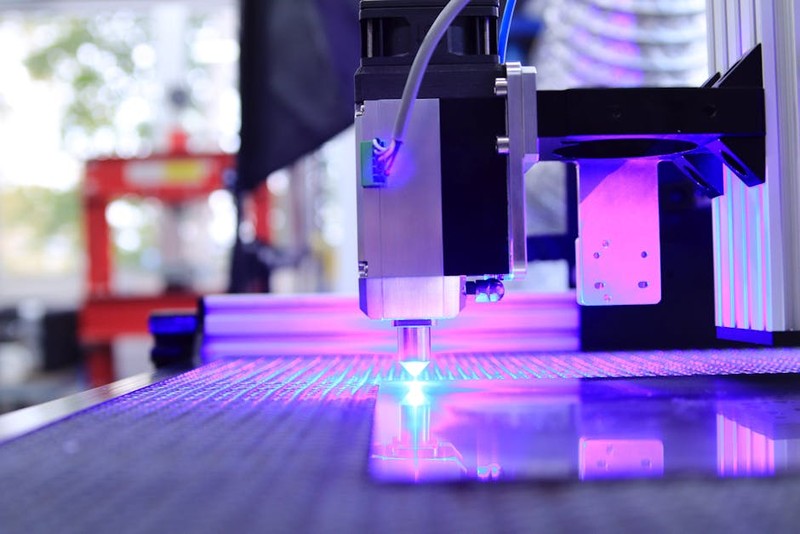
1. Dedicated Machines: Certain CNC mills are reserved exclusively for “clean” materials like oxygen-free copper and specific aluminum alloys, never cutting steel or plastics.
2. Tooling Hygiene: All tools are ultrasonically cleaned before use. We avoid coolants where possible, using filtered, minimal-mist systems when necessary.
3. Post-Process Handling: Parts are never handled with bare hands after machining. They go directly into ultrasonic cleaning with electronics-grade solvents, followed by nitrogen drying and vacuum-sealed packaging.
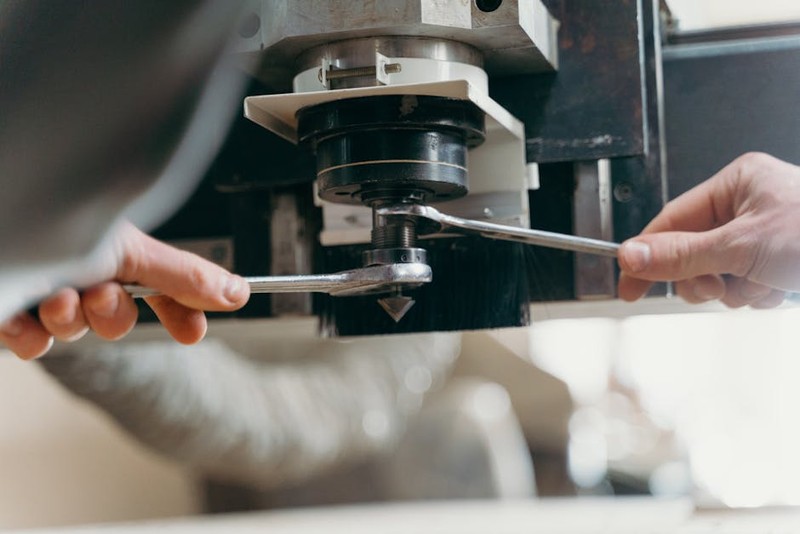
This protocol isn’t cheap, but for a client producing aerospace-grade inertial measurement units, it increased first-pass functional test yields from 88% to 99.6%, paying for itself in reduced rework and scrap in under three months.
The Cutting Edge: Integrating Additive and Subtractive for Electronics
The future of precision electronics manufacturing lies in hybrid approaches. We now frequently combine CNC machining with additive techniques like DMLS (Direct Metal Laser Sintering).
A Narrative of Innovation: The Conformal-Cooled Power Amplifier Housing
A client needed a compact housing for a dense power amplifier that dissipated 250W. Traditional machining could only create straight drilled coolant channels, leading to hot spots.
Our solution: We designed and DMLS-printed an Inconel base with complex, winding conformal coolant channels that perfectly followed the heat profile. This “additively manufactured preform” was then precision CNC machined on all critical sealing and mounting surfaces to achieve the required ±0.013mm tolerances and Ra 0.4µm surface finish for sealing.
The outcome: A 40% reduction in peak operating temperature and a 15% increase in power density compared to the previous best-in-class design. This hybrid approach unlocked a geometry that was impossible with either technology alone.
Your Actionable Blueprint: Questions to Ask Your CNC Partner
To ensure your next electronic component project succeeds, move beyond RFQs asking for price and lead time. Engage your machining partner as a collaborator with these expert-level questions:
“What is your specific protocol for mitigating residual stress in [Material X] for thin-walled structures?”
“Can you describe your standard post-machining cleaning process, and what particulate or ionic contamination levels you can certify?”
“For this RF enclosure, what strategies do you employ to ensure surface continuity and eliminate micro-gaps at seams?”
“How do you validate flatness/parallelism under a simulated thermal load?”
The right partner will have detailed, experience-backed answers. In the realm of CNC machining services for precision electronics, the difference between a functional prototype and a reliable, high-yield product lies in mastering these unseen, often undocumented, layers of complexity. It’s here, beyond the blueprint, where true engineering value is forged.