
CNC turning for rapid prototyping is often reduced to just “making a part fast,” but the real challenge lies in creating functional, test-ready prototypes that accelerate development, not just production. This article dives into the expert-level strategies for designing for manufacturability from day one, selecting the right materials and tolerances, and leveraging CNC turning to de-risk your entire product development cycle, based on hard-won lessons from the shop floor.
The Prototyping Paradox: Speed vs. Substance
We’ve all been there. A client rushes in with a brilliant CAD model, demanding a “rapid prototype” for a critical design review next week. The pressure is on to turn it around. The easy path? Throw it on the fastest machine, use the cheapest stock, and deliver a shape that looks like the design. This is where many go wrong. You get a part in 48 hours, but it’s untestable, dimensionally unstable, or made from a material that behaves nothing like the final production intent. You’ve saved time in machining, but you’ve wasted the entire purpose of the prototype.
The true value of CNC turning for rapid prototyping isn’t just velocity; it’s validation. A prototype’s job is to fail informatively in testing, not on the engineer’s desk. My philosophy, forged over hundreds of projects, is this: A rapid prototype should be a functional subset of your final product, not just a visual aid.
The Hidden Cost of “Looks-Like” Prototypes
I recall a startup developing a novel fluid control valve. Their first “rapid” prototypes were turned from free-machining brass for speed and cost. They looked perfect. However, when they went to test pressure ratings and corrosion resistance, the data was useless. The brass had different thermal expansion and galling characteristics than their specified stainless steel. This led to a costly three-week delay to re-make the core components from the correct material, ultimately slowing their funding round. The initial “speed” was an illusion.
The Expert’s Framework: Designing for Prototype-ability
To avoid this trap, you must design with the prototyping process as a core constraint. This is different from Design for Manufacturing (DFM) for mass production. This is Design for Prototype-ability (DFP).
⚙️ Strategic Material Selection: The First Critical Decision
Your material choice is the single biggest lever for prototype utility. Don’t default to 6061 aluminum or Delrin without thought.
For Functional Testing: If you’re testing strength, fatigue, or thermal performance, you must prototype with the production-grade material or the closest available analog. Machining 17-4 PH stainless or PEEK might be slower and more expensive than aluminum, but the data you get is priceless.
For Form & Fit: If you’re checking assembly clearances and basic kinematics, then machinable plastics (Acetal, Nylon) or easy metals (6061, 12L14 steel) are perfect. The key is to document the differences for the team.
For Hybrid Approaches: I often recommend strategic material substitution. Machine the housing from aluminum for speed, but the critical wear sleeve or seal interface from the exact production material. This focuses cost and time where validation matters most.
Table: Prototype Material Decision Matrix
| Prototype Goal | Recommended Material | Machining Consideration | Compromise Alert |
| :— | :— | :— | :— |
| High-Stress Structural Test | 4140 Steel, 7075-T6 Al | Higher tool wear, slower SFM. Use rigid tooling. | Avoid 6061; strength data will be non-representative. |
| Corrosion/Chemical Testing | 316 Stainless, PVDF | Stringy chips, work hardening. Sharp tools, high feed. | Using CRES here is non-negotiable. |
| High-Temperature Cycling | Inconel 718, Titanium | Extremely slow, specialized tooling required. Budget & time spike. | Consider a lower-grade nickel alloy for first-pass tests. |
| Form, Fit, & Assembly Check | 6061 Aluminum, Acetal | Fast, low cost, excellent surface finish. | Perfect for this goal. Document it’s not for load testing. |
💡 The Tolerance Tango: Knowing What to Tighten and What to Loosen
Another common mistake is copying all the tight tolerances from the production drawing onto the prototype request. This balloons cost and lead time unnecessarily.
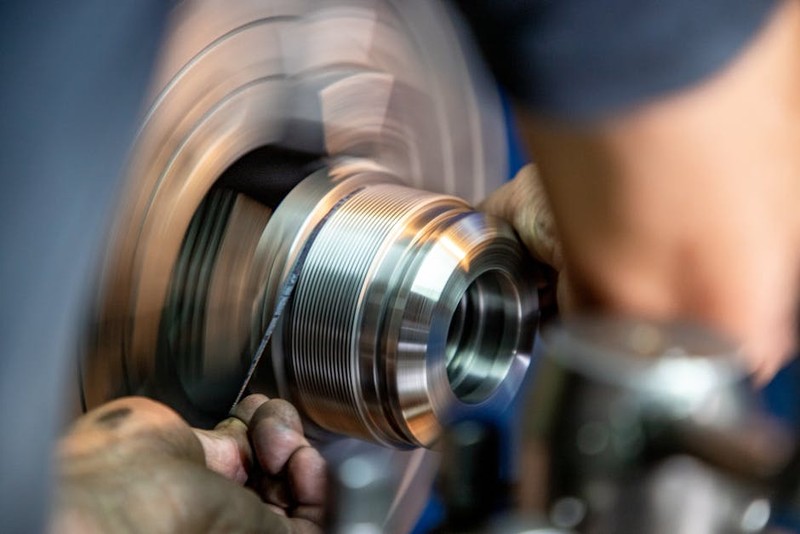
Tighten Only Critical Interfaces: Identify the two or three features that are truly under investigation. Is it the interference fit of a bearing seat? The sealing surface of a taper? Apply the tight tolerance (±0.0005″ or better) only there.
Liberally Loosen the Rest: For non-critical features, open up tolerances to ±0.005″ or even ±0.010″. This allows the machinist to use faster feed rates, deeper cuts, and fewer finishing passes. On a recent medical device shaft prototype, we loosened 12 non-critical dimensions from ±0.001″ to ±0.005″. This reduced machining time by 35% with zero impact on test results.
A Case Study in Strategic Prototyping: The Multi-Material Impeller
Let me walk you through a project that encapsulates this mindset. A client was developing a high-RPM centrifugal impeller for a diagnostic device. The final part was to be injection-molded from a glass-filled polymer.
The Challenge: They needed to validate aerodynamic performance (balance, airflow) and structural integrity (burst speed) before committing to a $80k mold.
The Old Way (What They Initially Requested): Machine the entire complex, thin-bladed impeller from solid PEEK. This was a 15-hour machining marathon per piece, extremely fragile, and cost over $2,500 per prototype. One crash, and it’s gone.
Our Expert Solution (What We Proposed and Executed):
1. Deconstructed the Problem: We separated the validation goals. Aerodynamics required the precise blade geometry. Structural testing required the material properties.
2. Hybrid Prototype Build:
For Aero Testing (4 pieces): We turned and milled the impeller hubs from aluminum for rigidity and CNC turned the blade profile masters with extreme precision. We then used these masters to create room-temperature vulcanizing (RTV) silicone molds and cast the blades from a rigid urethane. This gave us four, geometrically perfect, lightweight prototypes for wind tunnel testing in one week for less than the cost of one PEEK part.
For Burst Testing (2 pieces): We CNC turned the hub from 316 stainless for strength and directly milled the blades from solid PEEK blanks. This was expensive and slow, but we only needed two. These units provided valid material failure data.
The Outcome: The client discovered a blade resonance issue in the aero tests (using the cheap, fast urethane parts) and a material weakness at the hub-blade junction in the burst tests. They iterated the design twice using our hybrid approach. Final result: They achieved a validated design ready for molding in 5 weeks instead of a projected 12, and saved an estimated $45,000 in prototype costs and potential mold rework. The key was using CNC turning not as a monolithic production step, but as a flexible tool to create specific, functional elements of the test plan.
Actionable Takeaways for Your Next Project
1. Start with the Test Plan, Not the CAD File. Before you send out a model, write down: “What must this prototype prove?” Every design and machining decision should flow from that answer.
2. Embrace the Hybrid. Your prototype doesn’t have to be monolithic. Use CNC turning for critical diameters and threads, combine with 3D printing for housings, or use cast urethanes for complex geometries. Leverage the strength of each process.
3. Communicate with Your Machinist as a Partner. Share your end goals. A good machinist will look at your model and say, “I can hold ±0.001″ on that bore, but if you can live with ±0.003″, I can run it twice as fast and save you a day.” That conversation is gold.
4. Budget for Iteration, Not Perfection. Plan for at least two prototype cycles. The first round will reveal flaws. The value is in learning from them quickly. A fast, slightly “wrong” prototype that teaches you something is infinitely more valuable than a perfect prototype that took too long to make.
By shifting your mindset from CNC turning for rapid prototyping as a mere service to viewing it as a strategic development tool, you transform your prototyping phase from a cost center into the most valuable stage of your product’s journey. It’s where you find the problems that matter, on your terms, before they find you in the market.