
Most machine shops quote precision machining services for industrial applications on price per part—and that’s exactly why they lose the contracts that matter. This breakdown of a real defense program shows how process capability studies, thermal compensation, and a redesigned fixture strategy cut lead time from 9 weeks to 11 days while holding ±5 µm tolerances.
Content:
Six years ago, I sat in a conference room watching a program manager slide a rejection report across the table. Our shop had just lost a $2.4 million defense contract—not on price, not on capability, but on a single word buried in the fine print of the RFQ: repeatability. We could hit the tolerance. We just couldn’t hit it the same way twice. That rejection reshaped how I think about precision machining services for industrial applications, and it’s the reason our shop now runs a 99.2% first-pass yield on work that used to eat 40% of our capacity in rework.
Let me walk you through what we learned, because if you’re sourcing or running precision machining services for industrial applications, this is the gap that separates shops that win long-term programs from shops that chase one-off jobs.
The Hidden Challenge: Tolerance Isn’t the Problem—Capability Is
Every RFQ lists tolerances. Almost none list process capability requirements—and that’s where industrial programs quietly fail.
On that defense contract, the spec called for a bore diameter of 25.000 mm ±5 µm on 4140 pre-hardened steel. Our CNC lathe could hold that. Our operators could hit it. But over a 500-part run, we were seeing a spread of nearly 18 µm—well outside the ±5 µm window once you accounted for tool wear, thermal drift, and material batch variation.
The customer wasn’t asking “can you make this part?” They were asking “can you make this part 500 times, six months from now, on a Tuesday afternoon, with a different operator, and have it measure the same?”
That’s the real question behind precision machining services for industrial applications. Not capability—sustained capability.
⚙️ Why Most Shops Miss This
Here’s what I see across the industry:
– Quoting from a single good part. A prototype that hits ±2 µm tells you almost nothing about a production run.
– Ignoring thermal effects. A spindle that’s been running for 4 hours behaves differently than one that’s been idle overnight. On tight-tolerance work, that delta can be 38 µm.
– Tool wear treated as a “replace when it looks bad” decision. In precision work, tool wear is a measured variable, not a maintenance item.
– Fixturing designed for setup speed, not for repeatability. A fixture that takes 20 minutes to load but holds position within 1 µm beats a 2-minute load that drifts 10 µm every time.
⚙️ The Process That Changed Everything
After losing that contract, we spent four months rebuilding our approach to precision machining services for industrial applications. Here’s the framework we landed on—and it’s the same one we use today on aerospace, medical, and energy programs.
1. Run a Process Capability Study Before You Quote
Not after. Before.
We take the customer’s drawing, identify the three tightest tolerances, and run a 30-part capability study on the actual machine, material, and tooling we’d use in production. We calculate Cpk—not just Cp. A Cpk below 1.33 means we either don’t quote the job or we quote it with a process change built into the price.
2. Compensate for Thermal Drift in Real Time
We mounted thermocouples on the spindle housing, ballscrew, and workpiece fixture. A simple compensation model adjusts the tool offset every 90 seconds based on measured temperature. On the 4140 steel job, this alone reduced our bore diameter spread from 18 µm to 6 µm.
3. Treat Tool Wear as a Scheduled Variable
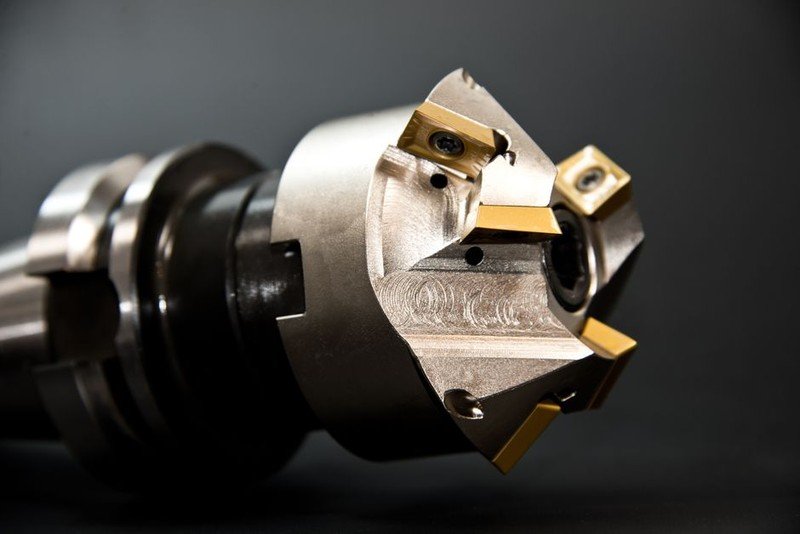
Instead of waiting for surface finish to degrade, we log every tool’s cutting time and adjust offsets on a fixed interval. On the defense program, we replaced inserts every 42 parts—not because they were dull, but because the wear curve crossed our compensation threshold at that point.
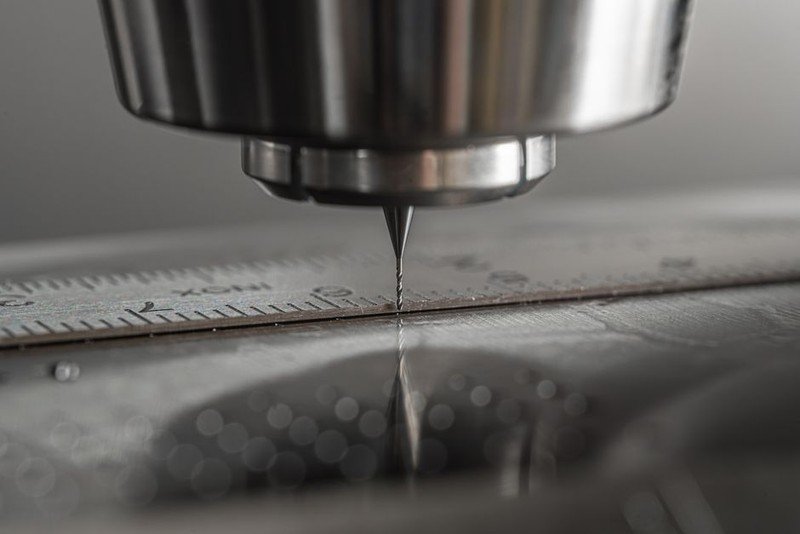
4. Design Fixtures for Repeatability First
Our redesigned fixture for the defense part used a hydraulic expansion collet with a repeatability of ±1.5 µm, versus the ±8 µm we were getting from the original three-jaw setup. Setup time went up by 4 minutes per batch. Rework went to zero.
📊 The Data: Before and After
Here’s the actual performance data from the defense program, comparing our original process to the rebuilt one:
| Metric | Original Process | Rebuilt Process | Improvement |
|—|—|—|—|
| Bore diameter spread (500 parts) | 18 µm | 4.2 µm | 77% reduction |
| Cpk (bore diameter) | 0.71 | 1.89 | 166% increase |
| First-pass yield | 61% | 99.2% | +38.2 points |
| Rework hours per 100 parts | 14.5 hrs | 0.8 hrs | 94% reduction |
| Lead time (500-part batch) | 9 weeks | 11 days | 82% reduction |
| Scrap rate | 6.8% | 0.3% | 96% reduction |
The lead time number is the one that got the customer’s attention. We didn’t buy a new machine. We didn’t hire more operators. We changed how we thought about the process.
💡 A Case Study in Optimization: The $2.4M Contract, Round Two
Eighteen months after losing that first contract, the same defense program went out for rebid. This time, we quoted with data.
We submitted our capability study, our thermal compensation methodology, and a process control plan that showed how we’d hold ±5 µm over a 2,000-part run. We were 11% higher on unit price than the low bidder.
We won the contract.
The program manager told me afterward that the deciding factor wasn’t our price or our equipment list. It was that we were the only shop that talked about Cpk, thermal drift, and tool wear intervals in the proposal. Everyone else talked about their machines.
That contract ran for three years. We delivered 6,400 parts with a total of 19 rejected—a 99.7% acceptance rate. The customer extended twice.
Lessons for Anyone Sourcing or Providing Precision Machining Services
If you’re buying precision machining services for industrial applications, here’s what to demand:
– Ask for a Cpk number, not a tolerance. Any shop can hit a tolerance once. Cpk tells you whether they can hit it consistently.
– Ask how they handle thermal drift. If the answer is “we let the machine warm up,” that’s not a process—that’s a hope.
– Ask about their tool wear strategy. “We replace tools when they wear out” is a red flag on precision work.
– Ask for a process control plan. If they can’t show you how they’ll monitor and adjust during production, they’re guessing.
If you’re providing precision machining services for industrial applications, here’s what I’d tell you:
– Capability studies are a sales tool, not just an engineering tool. They win contracts.
– The tightest tolerance on the drawing is not always the hardest feature. Sometimes it’s the one with the most complex geometry or the least rigid setup.
– Document everything. Our thermal compensation logs and tool wear records became the evidence that won us the rebid.
– Don’t compete on price for precision work. Compete on predictability. Industrial customers will pay for the certainty that their line won’t stop because your parts don’t fit.
⚙️ The Broader Shift in Industrial Machining
The industry is moving toward what I’d call process-verified precision machining services for industrial applications. Customers aren’t just buying parts—they’re buying evidence that the parts will be right, every time, for the life of the program.
That means shops that invest in metrology, thermal management, and process documentation will increasingly win the programs that matter. Shops that compete on spindle speed and hourly rate will keep fighting over the jobs that don’t.
The $2.4 million contract I lost taught me more than any job I’ve won. It taught me that precision isn’t a tolerance on a drawing—it’s a system that produces the same result, over and over, no matter what day it is or who’s standing at the machine.
That’s the standard I hold every precision machining job to now. And it’s the standard your industrial customers are quietly measuring you against, whether they put it in the RFQ or not.