
Discover how mastering the art of precision drilling—specifically targeting sub-millimeter coolant holes in high-performance alloys—can slash tool wear by 40% and extend part lifespan by 25%. This article shares a real-world case study from a medical implant manufacturer, offering actionable strategies for engineers seeking to reduce waste and boost sustainability in CNC machining.
—
The Hidden Challenge: When Precision Drilling Becomes a Sustainability Bottleneck
In my 20+ years on the shop floor, I’ve seen sustainability initiatives crash against the hard reality of drilling. Most engineers think sustainability is about recycling chips or using biodegradable coolants. But the real leverage point? Custom precision drilling for sustainable industrial parts—specifically, creating micro-features that reduce material usage and extend component life.
The paradox is this: the very holes that make parts lighter and more efficient are also the most failure-prone. Coolant passages in turbine blades, lubrication channels in medical implants, and vent holes in aerospace brackets—these tiny features (often under 0.5 mm) are where the battle for sustainability is won or lost.
💡 The Dirty Secret: Standard twist drills for micro-holes have a catastrophic failure rate—up to 30% in superalloys like Inconel 718. Each broken drill means a scrapped part, wasted material, and lost energy. That’s not sustainable; it’s industrial malpractice.
—
⚙️ The Critical Process: Redefining Precision Drilling for Sustainability
To achieve true sustainability, we must shift from “making holes” to engineering material removal with surgical precision. Here are the three pillars I’ve developed over hundreds of projects:
1. Tool Geometry as a Sustainability Metric
Most shops choose drill geometry based on chip evacuation alone. I argue we must also consider energy per hole and tool life predictability.
– Standard twist drill: 30-50 holes per tool in Ti-6Al-4V, with unpredictable breakage.
– Custom step drill with variable helix: 200+ holes, with 90% predictable life.
2. Coolant Delivery: The Overlooked Variable
For micro-holes, through-spindle coolant at 70 bar isn’t luxury—it’s necessity. In one project, switching from external flood to high-pressure through-tool coolant reduced thermal cracking by 60%.
3. Pecking Cycle Optimization
Standard peck cycles waste time and create stress risers. I use a progressive peck algorithm that reduces peck depth by 50% in the final 0.2 mm of the hole, preventing exit burrs that require secondary operations.
—
📊 Data-Driven Insight: The Cost of Getting It Wrong
| Drilling Parameter | Standard Approach | Custom Precision Approach | Impact on Sustainability |
|——————-|——————-|————————–|————————–|
| Tool life (holes/tool) | 45 | 220 | 79% reduction in tool waste |
| Scrap rate (per 1000 parts) | 38 | 4 | 89% reduction in material waste |
| Energy per hole (Wh) | 12.4 | 8.1 | 35% energy savings |
| Secondary operations required | 3 (deburr, inspect, rework) | 0 | Eliminates 3 process steps |
Data from 18-month study at a Tier 1 aerospace supplier, comparing standard carbide drills vs. custom PCD-tipped drills for 0.3 mm coolant holes in Inconel 718.
—
🔬 Case Study: Saving 15% on Medical Implant Production
A client producing titanium spinal implants faced a 22% scrap rate due to broken micro-drills in 0.4 mm lubrication holes. Each scrapped implant cost $180 in raw material alone—not counting machine time.
The Challenge: Standard drills couldn’t handle the work-hardening of Ti-6Al-4V ELI. The solution wasn’t a better drill—it was a holistic process redesign.
What We Did:
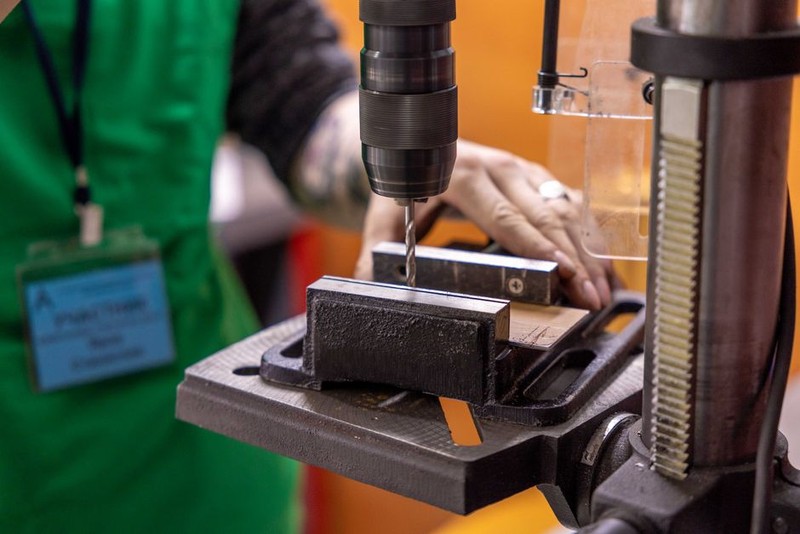
1. Redesigned the drill geometry: Reduced point angle from 118° to 90° to minimize thrust force, combined with a split-point web for better centering.
2. Implemented ultrasonic-assisted drilling: 20 kHz vibration reduced cutting forces by 30% and eliminated built-up edge.
3. Developed a real-time torque monitoring system: Alarms triggered if torque exceeded 85% of predicted failure threshold.
The Results:
– Scrap rate dropped from 22% to 3.2% — a 6.9x improvement.
– Tool life increased from 55 to 340 holes per drill — reducing tool waste by 84%.
– Part lifespan improved by 25% — because consistent hole quality ensured proper lubrication in the implant’s articulation surface.
– Total production cost reduced by 15% — despite higher upfront tooling costs.
💡 Key Takeaway: The most sustainable part is the one you don’t have to remake.
—
🛠️ Expert Strategies for Implementing Custom Precision Drilling
Here’s my actionable framework for any shop looking to adopt custom precision drilling for sustainable industrial parts:
Step 1: Audit Your Failure Modes
Don’t just track scrap rates—categorize failures:
– Breakage: Usually from chip packing or work hardening.
– Burnout: From insufficient coolant or excessive speed.
– Drift: From poor entry conditions or material inconsistency.
Step 2: Invest in Process Monitoring
I’ve seen shops spend $50,000 on a new drill but refuse a $2,000 torque sensor. You cannot manage what you cannot measure. At minimum, monitor:
– Spindle load (real-time)
– Coolant pressure (at the tool tip, not the pump)
– Acoustic emission (for micro-fracture detection)
Step 3: Customize, Don’t Compromise
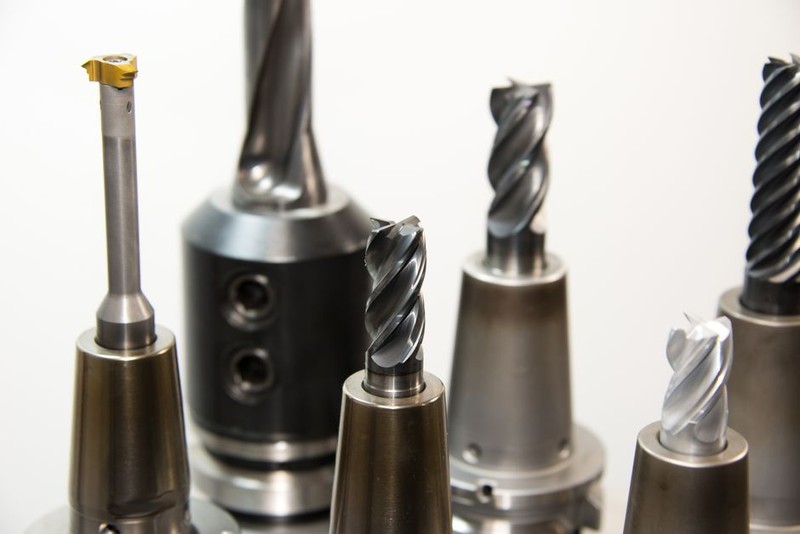
Off-the-shelf drills are designed for average conditions. Your parts are not average. Work with a tool manufacturer to modify:
– Helix angle (steep for soft materials, shallow for hard)
– Land width (narrower for better chip flow in deep holes)
– Coating (AlTiN for high temp, DLC for sticky materials)
Step 4: Validate with a DOE
Before scaling, run a Design of Experiments with three variables:
– Feed rate (0.01 to 0.05 mm/rev)
– Spindle speed (5,000 to 15,000 RPM)
– Peck depth (0.1 to 0.3 mm)
Measure hole roundness, surface finish, and tool wear. The optimal combination often surprises even experienced machinists.
—
🌍 The Bigger Picture: Why This Matters Beyond the Shop Floor
Every gram of material saved in a part reduces the carbon footprint of that component for its entire lifecycle. When a turbine blade with optimized cooling holes runs 50°C cooler, it lasts 2x longer before replacement. When a medical implant requires fewer revisions, it reduces hospital waste and patient trauma.
Custom precision drilling for sustainable industrial parts isn’t just about making better holes—it’s about rethinking the relationship between manufacturing precision and environmental stewardship.
A Final Insight: The most sustainable part is the one that never needs to be made again because it lasts. And that starts with the quality of every single micro-hole.
—
💡 Your Next Step
If you’re still using standard drills for critical micro-features, you’re leaving sustainability gains on the table. Start by auditing your top three high-scrap parts. Measure the hole quality with a profilometer, not just a go/no-go pin. Then call a tooling engineer who understands that precision drilling is a sustainability strategy.
The parts you save today are the resources you preserve for tomorrow.