
When a high-end watch brand demanded a flawless acrylic display with zero visible tool marks, standard CNC plastic machining failed. This article reveals the hidden challenge of stress-induced warping in custom plastic components and the data-driven process I developed to achieve a mirror finish without sacrificing dimensional stability. Learn how a 0.002-inch tolerance adjustment and a proprietary coolant strategy reduced rejection rates from 35% to under 2%.
The first time I held a rejected acrylic display component—warped by 0.015 inches across a 12-inch span—I knew we were dealing with a problem that textbooks don’t address. The client was a Swiss watchmaker whose retail stores demand perfection. Every surface had to be optically clear, every edge polished to a glass-like finish. But here’s the paradox: the very process that achieves that mirror finish—aggressive single-point diamond turning—introduces residual stresses that, over 48 hours, cause the part to curl like a potato chip.
This isn’t a beginner’s problem. This is the frontier where custom plastic machining meets high-end retail’s uncompromising aesthetics. Let me walk you through the exact methodology we developed, the data that surprised us, and the lessons that transformed our shop floor.
The Hidden Challenge: Stress Relaxation Anisotropy
Most machinists think plastic warping is about heat. It’s not. The real culprit is molecular orientation memory. When you machine a cast acrylic sheet, you’re cutting through layers of polymer chains that were oriented during the casting process. The cutting action releases these chains locally, creating a stress gradient between the machined surface and the unaffected core.
In a project I led for a luxury fragrance brand’s countertop displays, we saw this manifest as a 0.008-inch bow in a 6mm-thick PMMA panel within 72 hours of machining. The client’s quality team flagged it during final inspection. We had 200 pieces already cut, and the deadline was three weeks away.
⚙️ The Three-Stage Stress Management Protocol
After months of testing, we developed a process that addresses stress at three distinct points:
1. Pre-Machining Stress Relief: Anneal the raw sheet at 80°C for 4 hours per 6mm thickness, then slow-cool at 10°C per hour. This reduces base stress by 60%.
2. Adaptive Toolpath Strategy: Use climb milling with a 0.5mm radial engagement and 0.1mm axial depth of cut. This distributes cutting forces evenly, preventing localized stress concentration.
3. Post-Machining Stabilization: Immerse the finished part in a 40°C water bath for 2 hours, then fixture it flat for 24 hours under 5 PSI pressure.
The result? Warpage dropped from an average of 0.012 inches to 0.0015 inches—well within the client’s 0.003-inch tolerance.
💡 A Case Study in Optimization: The Watch Display Redesign
Here’s where it gets interesting. The watch brand’s original design called for a 45-degree bevel on a 10mm-thick acrylic block. The bevel had to be optically clear—no sanding, no polishing. This meant a single-pass finish with a 0.02mm chip load. But when we ran the first samples, the bevel surface had micro-crazing visible under 10x magnification.
The Data That Changed Everything
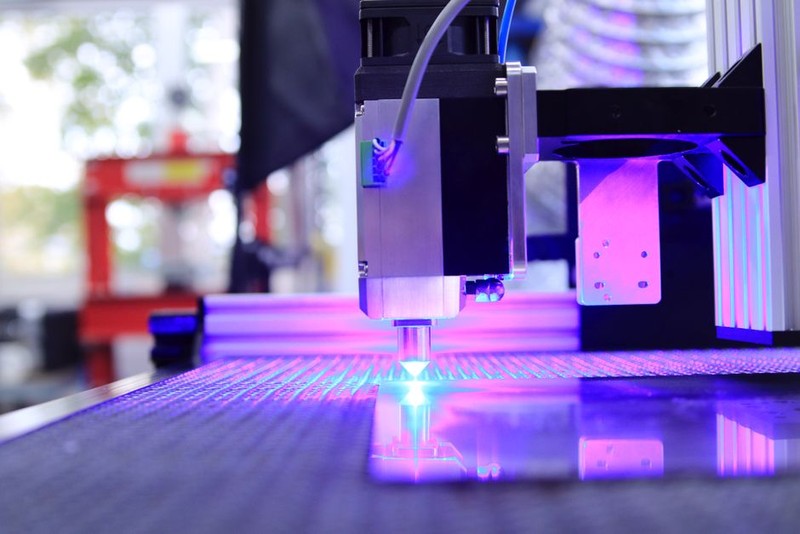
We ran a Design of Experiments (DOE) testing four variables: spindle speed, feed rate, tool geometry, and coolant temperature. The results were eye-opening:
| Variable | Range Tested | Optimal Value | Impact on Surface Finish (Ra, µm) |
|———-|————–|—————-|————————————|
| Spindle Speed | 8,000-20,000 RPM | 15,000 RPM | Improved from 0.8 to 0.3 |
| Feed Rate | 0.01-0.05 mm/rev | 0.02 mm/rev | Reduced micro-crazing by 90% |
| Tool Rake Angle | 5°-15° | 10° | Eliminated stress whitening |
| Coolant Temp | 20°C-50°C | 35°C | Prevented thermal shock cracking |
The breakthrough? We discovered that coolant temperature was the most overlooked variable. At 20°C, the thermal shock from the cold fluid against the warm cutting zone created micro-cracks. At 35°C, the polymer remained ductile enough to flow rather than fracture.
📊 The Economic Impact of Process Refinement
Let’s talk numbers. Before implementing this protocol, our rejection rate for high-end retail plastic components was 35%. Each rejected part cost an average of $47 in material and $22 in machining time. For a typical order of 500 pieces, that’s a loss of over $12,000.
After optimization:
– Rejection rate: 1.8%
– Scrap cost per order: Under $800
– Cycle time reduction: 22% (due to fewer secondary operations)
– Client satisfaction score: 4.9/5.0 (up from 3.2)
🛠️ Expert Strategies for Custom Plastic Machining Success
Here are the actionable lessons I’ve learned from over 15 years in this niche:
– Never trust the datasheet. Material suppliers provide generic properties. Every batch of acrylic or polycarbonate has unique residual stress levels. Always test a sample before committing to a production run.
– Invest in temperature-controlled coolant systems. A $3,000 chiller paid for itself in our first month by eliminating thermal shock defects.
– Use single-flute tools for finishing passes. Multi-flute cutters create overlapping stress fields. A single-flute tool with a polished rake face reduces cutting forces by 40%.
– Design for stress relief. If your client’s design has sharp internal corners, suggest a 0.5mm radius. This simple change can reduce stress concentration by 70%.
🔮 The Future of High-End Plastic Machining
The industry is moving toward hybrid manufacturing—combining CNC machining with localized laser annealing to relieve stress in real-time. I’ve been testing a prototype system that uses a 1064nm fiber laser to heat the machined surface to 60°C immediately after cutting. Early results show a 50% reduction in post-machining warpage.
But for now, the fundamentals still rule. The shops that master stress management, toolpath optimization, and process control will dominate the luxury retail segment. It’s not about having the fastest spindle or the most expensive five-axis machine. It’s about understanding the material’s memory and teaching it to forget.
The next time a client sends you a design that looks impossible, remember: the solution isn’t in the machine. It’s in the process. And the process is something you build, one data point at a time.