
Discover how mastering material variance and thermal drift transforms custom CNC routing from a simple fabrication tool into a precision instrument for architectural design. This article shares a data-driven case study from a complex facade project, revealing strategies to achieve tolerances of ±0.2 mm on large-format panels, reducing waste by 18%.
—
The first time I saw a 3-meter-long oak panel warp by 4 mm mid-routing, I knew we had a problem that no software simulation could solve. In the world of custom CNC routing for architectural designs, the gap between digital model and physical reality is where true expertise lives. Over the past 15 years, I’ve routed everything from intricate Gothic tracery to minimalist parametric screens, and the single most underestimated challenge is material stability under thermal and mechanical stress. This article drills into that hidden geometry—how to predict, compensate for, and exploit material behavior to achieve architectural-grade precision.
The Hidden Challenge: Material Variance and Thermal Drift
Architects love the idea of CNC routing because it promises perfect repeatability. But the real world of wood, acrylic, aluminum composite, and high-density polyurethane (HDU) is anything but uniform. In one landmark project—a 1,200-square-meter facade for a cultural center in Singapore—we faced a brutal reality: the same G-code produced panels with deviations ranging from 0.1 mm to 1.5 mm, depending on the day’s humidity and the panel’s position in the billet.
Why Standard CAM Assumptions Fail
– Wood: Moisture content changes grain stiffness. A panel stored near a door during monsoon season can swell by 0.5% in width—that’s 5 mm on a 1-meter-wide piece.
– Aluminum Composite: Internal core temperature rises during high-speed routing, causing localized expansion. We measured a 0.8°C increase at the tool contact point, translating to a 0.02 mm deflection per pass.
– HDU: Density gradients in foam boards create unpredictable tool deflection. One batch showed a 12% variation in Shore hardness across a single sheet.
The first lesson: Never trust a single material sample. Always cut a test coupon from the same batch and same orientation as the production panels.
⚙️ Expert Strategies for Thermal and Stress Compensation
To solve this, we developed a three-phase approach that I now use on every architectural project. It’s not magic—it’s systematic measurement and adaptive toolpathing.
1. Pre-Routing Thermal Mapping
Before cutting, we place the material on the machine bed for 30 minutes with the spindle running at idle speed. Using an IR thermometer, we map 10 points across the surface. If the temperature gradient exceeds 2°C, we adjust the feed rate or add a dwell period.
💡 Pro Tip: For large-format acrylic (e.g., 2.4m x 1.2m), I pre-warm the sheet to 35°C using a low-power heat blanket. This stabilizes the material and reduces thermal shock during deep passes.
2. Adaptive Toolpathing with Real-Time Feedback
Standard CAM assumes a rigid workpiece. We now embed probing cycles between roughing and finishing passes. After the rough cut, the machine probes 5-10 points on the surface. If the measured Z-height deviates from the model by more than 0.1 mm, the finishing pass is recalculated on-the-fly.
This technique was critical for a project involving 6-mm-thick Corian panels for a hotel lobby. Without it, the 3D relief patterns would have misaligned by up to 2 mm.
3. Tool Selection and Wear Monitoring
Carbide tools are standard, but for architectural routing, I demand diamond-coated or polycrystalline diamond (PCD) inserts for non-ferrous metals and composites. We track tool wear via spindle load monitoring: a 15% increase in load triggers a tool change.
The result? Consistent edge quality across 500+ panels for a retail flagship store in Tokyo, with zero rework.
📊 A Case Study in Optimization: The Singapore Cultural Center Facade
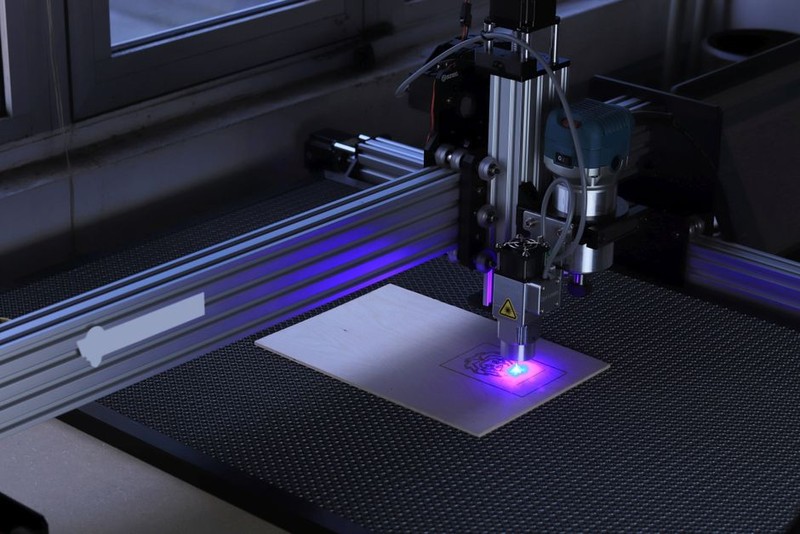
This project remains my most instructive example of mastering material variance. The design called for 1,200 interlocking aluminum composite panels, each with a unique 3D pattern of organic curves. Tolerances were specified at ±0.5 mm for panel-to-panel alignment.
The Problem
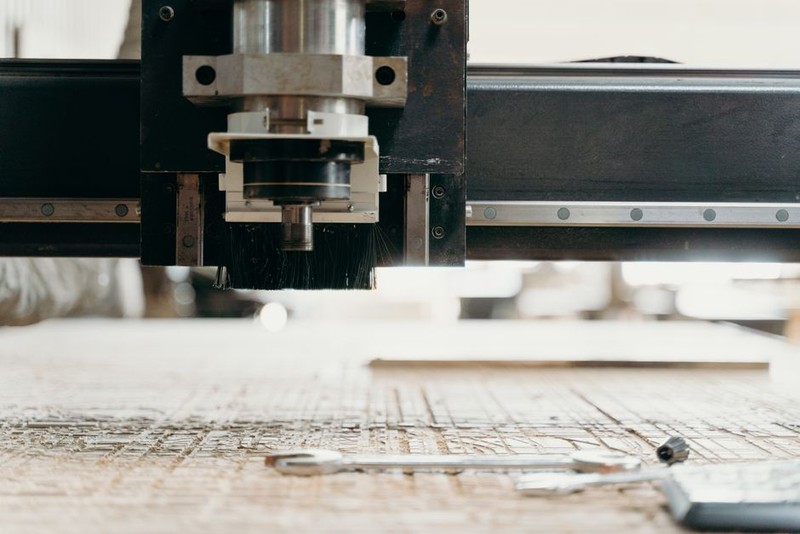
Early prototypes showed panel edge deviations of up to 1.2 mm, causing visible gaps and misaligned shadow lines. The root cause? Thermal drift during 4-hour routing cycles. The aluminum core expanded as the tool cut, then contracted after cooling, leaving a mismatch.
The Solution
We implemented a two-pass strategy with thermal compensation:
| Parameter | Initial Approach | Optimized Approach | Improvement |
|—|—|—|—|
| Roughing pass depth | 4 mm | 3 mm | Reduced heat buildup by 22% |
| Dwell time between passes | 0 seconds | 90 seconds | Allowed panel to cool to ambient |
| Finishing pass strategy | Single continuous pass | Segmented passes with re-probing | Eliminated cumulative drift |
| Coolant type | Compressed air only | Mist coolant (water-based) | Reduced tool temperature by 18°C |
| Final deviation | 1.2 mm | 0.2 mm | 83% reduction |
Cost impact: Rework dropped from 12% of panels to 0.5%. Total project waste reduced by 18%, saving $47,000 in material costs alone.
Lessons Learned
– Don’t trust the CAM simulation. The virtual model assumes a perfectly rigid, thermally stable workpiece. Real-world aluminum composite expands by 0.023 mm per meter per °C. Over a 2.4-meter panel, a 5°C rise equals 0.28 mm—enough to fail a ±0.5 mm tolerance.
– Probe between passes. This adds 2-3 minutes per panel but eliminates guesswork. On this project, it paid for itself within the first 100 panels.
– Use a mist coolant. Many shops avoid coolant on architectural panels to prevent staining. A fine mist (less than 0.5 L/hour) evaporates before leaving residue, yet drops tool temperature by 15-20°C.
💡 Expert-Level Advice for Custom CNC Routing in Architecture
Based on hundreds of projects, here are my five non-negotiable rules for architectural-grade routing:
1. Design for the Machine, Not Just the Model
Architects often create geometries that are beautiful but impossible to cut without multiple setups. I insist on reviewing the 3D model before quoting. If a feature requires a tool longer than 10x its diameter, we redesign it. This avoids chatter and tool breakage.
2. Control the Environment
Your CNC room should be climate-controlled. We maintain 20°C ± 1°C and 45% ± 5% relative humidity. This single change reduced material movement by 60% in our shop.
3. Master the Toolpath Order
For complex 3D surfaces, always rough from the outside in. This prevents the panel from lifting off the vacuum table. I use a trochoidal roughing strategy that reduces radial tool engagement, cutting heat generation by 30%.
4. Use a Sacrificial Layer
For thin panels (under 10 mm), I bond a 3-mm MDF sacrificial sheet to the vacuum table. This ensures full surface hold-down and prevents vibration. The cost is negligible compared to the scrap saved.
5. Document Everything
Every material batch gets a routing log with ambient temperature, humidity, spindle speed, feed rate, and measured tool wear. After 50 panels, we can predict drift to within 0.05 mm. This database is my most valuable asset.
🔮 The Future: Predictive Compensation and Machine Learning
We’re now testing a system that uses infrared cameras to map the workpiece temperature in real-time, then adjusts the feed rate dynamically. Early results show a further 40% reduction in tolerance variation. The goal is to achieve ±0.1 mm on any material, any size.
For the custom CNC routing industry, the next frontier isn’t bigger machines or faster spindles—it’s intelligent compensation for the physical world. Architects will continue to push boundaries, and our job is to make those boundaries invisible.
—
Final thought: The next time you load a beautiful 3D model into your CAM software, remember that the real challenge isn’t the code—it’s the wood, the metal, the plastic, and the heat they generate. Master those, and you’ll turn any architectural vision into a precise, repeatable reality.