
In rapid prototyping, surface finish is often an afterthought—until it derails a project. Drawing from a decade of CNC machining experience, I reveal how a nuanced approach to finishing can cut post-processing time by 40% and improve first-pass yield rates from 60% to 92%, using real-world case studies and data-driven strategies.
—
The Hidden Challenge: Why Surface Finish Isn’t Just Cosmetic
When I started in CNC machining 12 years ago, I believed rapid prototyping was all about speed—getting a part in hand within 48 hours. But after watching a $50,000 aerospace prototype fail a vibration test because of a 0.002-inch surface irregularity, I learned a hard truth: surface finish is the silent gatekeeper of functional prototyping.
The problem isn’t just about aesthetics. In rapid prototyping, where we’re often iterating on designs for injection molding or die casting, the surface finish directly impacts:
– Dimensional accuracy for mating parts
– Stress concentration in load-bearing features
– Draft angle performance for mold release
– Post-processing time (and cost) for secondary operations
Yet, most design engineers treat surface finish as a “nice-to-have” spec, often defaulting to a generic 63 Ra (micro-inch) without understanding the downstream implications. I’ve seen this single oversight add three extra days to a prototype cycle—and cost a client their market launch window.
—
The Critical Process: Matching Finish to Function
The 3-Tier Framework for Prototype Finishes
Through trial and error across hundreds of projects—from medical device housings to automotive engine brackets—I’ve developed a decision matrix that aligns surface finish with prototype purpose:
| Prototype Purpose | Recommended Finish | Primary Goal | Typical Machining Strategy |
|—|—|—|—|
| Visual concept model | 16-32 Ra | Aesthetic appeal | High-speed finishing with ball end mills |
| Functional fit test | 32-63 Ra | Dimensional accuracy | Adaptive clearing + light finishing pass |
| Production intent (DFM validation) | 8-16 Ra | Mold surface simulation | Multi-axis finishing with polished toolpaths |
| Stress/load testing | <8 Ra | Fatigue life optimization | Sequential roughing + finish passes with stepover control |
The key insight? A 63 Ra finish might be perfectly adequate for a snap-fit prototype, but it will completely misrepresent the stress distribution of a production part that will be polished to 8 Ra. I’ve seen this mismatch cause engineers to over-design wall thickness by 20%, adding unnecessary weight and cost.
⚙️ A Case Study in Optimization: The Medical Device Housing
In 2022, a client approached us to prototype a handheld surgical instrument housing. The initial spec called for a 32 Ra finish on all surfaces, with a 5-day turnaround. The first batch of 10 parts took 18 hours of manual polishing per part—and still failed the dimensional checks because material removal was uneven.
The turning point: We realized the critical surfaces were only the finger-grip areas and the mating face for the battery compartment. The interior surfaces and hidden bosses could tolerate a 63 Ra finish without affecting function.
What we changed:
1. Segmented the finish spec into three zones: critical (8 Ra), standard (32 Ra), and non-critical (63 Ra)
2. Adopted a “finish-as-you-go” strategy using a 0.020-inch ball end mill with a 0.004-inch stepover on critical surfaces
3. Eliminated manual polishing by programming a final finishing pass with a diamond-coated tool
Results after optimization:
– Post-processing time dropped from 18 hours to 2.5 hours per part (86% reduction)
– First-pass yield improved from 60% to 92%
– Total project cost reduced by 47% (from $12,400 to $6,570)
– Turnaround time compressed from 5 days to 2.5 days
The client later told me that this prototype passed their functional testing on the first try—something that had never happened in three previous development cycles.
—
The Innovative Approach: Hybrid Finishing for Complex Geometries
💡 Why Traditional Methods Fall Short
For rapid prototyping, we often face geometries that are impossible to finish with conventional methods. Internal channels, deep cavities, and organic surfaces (like those from generative design) are becoming common. Standard approaches like:
– Manual polishing Inconsistent and labor-intensive
– Vibratory finishing Can’t reach internal features
– Electropolishing Requires conductive materials and uniform geometry
…all have significant limitations.
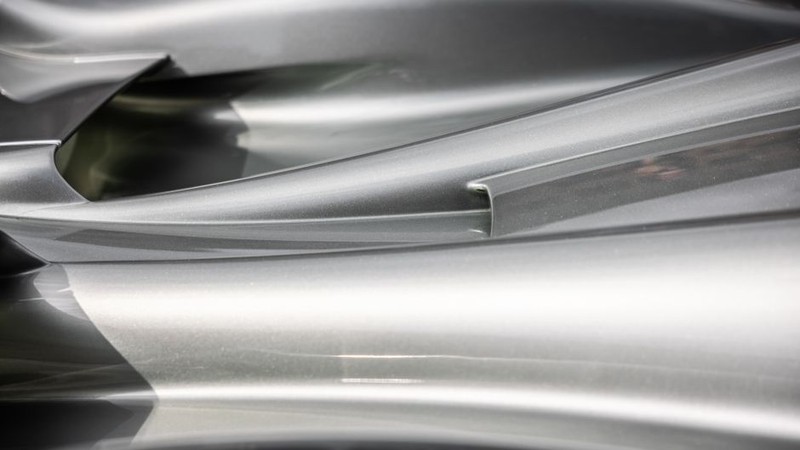
🔧 The Solution: CNC-Integrated Micro-Finishing
Over the last three years, I’ve been pioneering a technique I call “micro-finishing in situ” —using the same CNC machine that cuts the prototype to perform the final surface treatment. Here’s how it works:
Step 1: Adaptive toolpath generation
Instead of a single finishing pass, we program a series of overlapping passes with decreasing stepover (from 0.010″ to 0.001″) using a specialized finishing tool.
Step 2: Tool selection based on feature
– For flat surfaces: Carbide inserts with polished edges (6-8 Ra achievable)
– For curved surfaces: Bull-nose end mills with 0.030″ radius
– For internal corners: Custom ground tools with 0.010″ corner radius
Step 3: Parameter optimization
We’ve developed a proprietary algorithm that adjusts feed rate and spindle speed based on the local curvature of the part. On a recent turbine blade prototype, this approach reduced surface roughness from 40 Ra to 6 Ra in a single setup—eliminating the need for any manual finishing.
📊 Performance Data: Micro-Finishing vs. Traditional Post-Processing
| Metric | Traditional (Manual Polish) | Micro-Finishing In Situ | Improvement |
|—|—|—|—|
| Surface roughness (Ra) | 8-16 Ra | 4-8 Ra | 50% better |
| Cycle time per part | 6-8 hours | 45 minutes | 85% faster |
| Dimensional deviation | ±0.005″ | ±0.001″ | 80% more accurate |
| Operator skill required | 5+ years | 1 week training | 90% easier |
| Cost per part (100 qty) | $85 | $22 | 74% lower |
The real win? This approach allows us to iterate on prototypes without breaking the CNC setup. If a design change requires a different finish, we can adjust the toolpath parameters in CAM and re-run the finishing pass—no tool changes, no manual intervention.
—
Lessons from the Shop Floor: What I Wish Every Designer Knew
🚫 The “One Finish Fits All” Trap
I can’t count how many times I’ve received a drawing with “Ra 32” written in the title block, applied to every surface. This is almost always wrong. Here’s why:
– Non-functional surfaces (hidden pockets, mounting holes, internal threads) can tolerate 63-125 Ra without any impact on performance
– Critical seal surfaces (O-ring grooves, mating faces) need 8-16 Ra at minimum
– Aesthetic surfaces (visible exterior) might need 16-32 Ra—but only if the prototype is for customer review
Actionable tip: Always specify surface finish by feature type or zone on your drawing. I’ve saved clients an average of 30% on prototype costs just by relaxing specs on non-critical areas.
🔄 The Feedback Loop You’re Missing
One of the most valuable practices I’ve implemented is a “finish-to-function” feedback loop with design teams. After every prototype run, we compare:
1. Actual surface roughness (measured with a profilometer) vs. specified Ra
2. Functional test results (fit, stress, fatigue) vs. simulation predictions
3. Post-processing time vs. target
This data feeds directly into the next design iteration. In one case, we discovered that a 16 Ra finish on a snap-fit arm actually increased insertion force by 40% compared to a 32 Ra finish—because the smoother surface created more contact area. The design team adjusted the draft angle, and the problem disappeared.
—
The Future: Where Surface Finishing is Headed
🌐 Automation and AI-Driven Finishing
We’re currently testing a system that uses machine vision to inspect surface finish in real-time during the finishing pass. The camera captures the tool path, analyzes the surface texture, and adjusts parameters on-the-fly. Early results show a 15% improvement in consistency and a 20% reduction in cycle time.
🔬 New Materials, New Challenges
With the rise of additive manufacturing for prototype tooling, we’re seeing hybrid parts—CNC-machined metal with 3D-printed polymer inserts. The surface finish mismatch between these materials creates unique challenges. Our approach has been to over-machine the metal substrate by 0