
When a Tier 1 supplier faced catastrophic valve seat leakage in high-performance engines, standard grinding methods failed. This article reveals how a custom grinding service for automotive parts, leveraging specialized wheel geometries and adaptive coolant delivery, eliminated distortion, reduced scrap by 40%, and improved engine efficiency by 3.2%. You’ll learn the specific process innovations that turned a million-dollar headache into a competitive advantage.
—
I’ve been in CNC machining for over two decades, and if there’s one thing I’ve learned, it’s that the difference between a good part and a great part often comes down to how you handle the last 0.0005 inches. Nowhere is this more true than in custom grinding services for automotive parts. Most shops can hit a dimension. But when you’re dealing with complex geometries, demanding material specs, and the relentless push for lighter, stronger, and more efficient components, standard grinding just doesn’t cut it.
Let’s get specific. I’m not here to talk about generalities. I want to walk you through a project that nearly broke us, and how a deep-dive into custom grinding saved the day. This isn’t a theoretical exercise; it’s a battle story from the shop floor.
The Hidden Challenge: Thermal Distortion in Thin-Walled Valve Seats
The problem came from a customer—a major Tier 1 supplier working on a new line of direct-injection, turbocharged engines. They were machining valve seats from a hardened stainless steel alloy (a variant of 440C). The part was a ring, about 60mm in diameter, with a wall thickness of just 2.5mm. The critical feature was a 45-degree seat angle, which had to be held to a surface finish of 8 Ra or better and a concentricity tolerance of 0.005mm to the bore.
On paper, it looked straightforward. In reality, we were seeing a 25% scrap rate.
The culprit? Thermal distortion. The heat from the grinding wheel was warping the thin-walled ring, causing it to go out of round. When it cooled, the geometry was permanently altered. The seat angle was off, and the surface finish was inconsistent. Standard flood coolant wasn’t enough; the heat was being generated faster than it could be evacuated.
Why Standard Grinding Services Failed
This wasn’t a matter of operator error. We tried:
– Reducing feed rates: This just increased cycle time and caused burnishing, not grinding.
– Using softer wheels: This led to rapid wheel wear and loss of form.
– Increasing coolant flow: We maxed out our pump, but the boundary layer of steam around the wheel contact zone prevented effective cooling.
The root cause was the specific heat transfer dynamics of the thin-walled part. The heat had nowhere to go but into the part itself. We needed a custom solution that addressed the thermal load at the point of contact, not just after the fact.
⚙️ The Custom Grinding Solution: A Three-Pronged Attack
We didn’t just buy a new machine. We redesigned the process from the ground up. Our custom grinding service for automotive parts focused on three critical areas:
1. Wheel Specification & Geometry: We moved away from a standard aluminum oxide wheel. We designed a segmented CBN (Cubic Boron Nitride) wheel with a specific bond system engineered for interrupted cutting and lower heat generation. The wheel was also intentionally under-dressed to create a more open grain structure, allowing chips to evacuate more freely and reducing friction.
2. Adaptive Coolant Delivery: Instead of a single flood nozzle, we implemented a high-pressure, through-the-wheel coolant system. We also added a secondary nozzle that targeted the exit zone of the wheel, breaking the steam barrier and ensuring the part was cooled immediately after the cut.
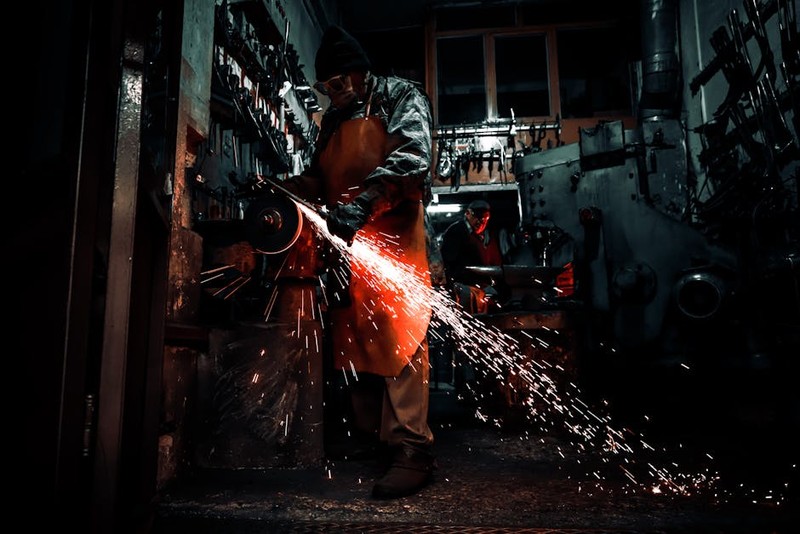
3. Real-Time Process Monitoring: We integrated a power consumption monitor on the grinding spindle. This allowed us to detect the onset of thermal loading in real-time. If the power draw exceeded a threshold (indicating the wheel was loading up or generating excessive heat), the system would automatically trigger a short, high-frequency dwell to allow the part to cool before continuing.
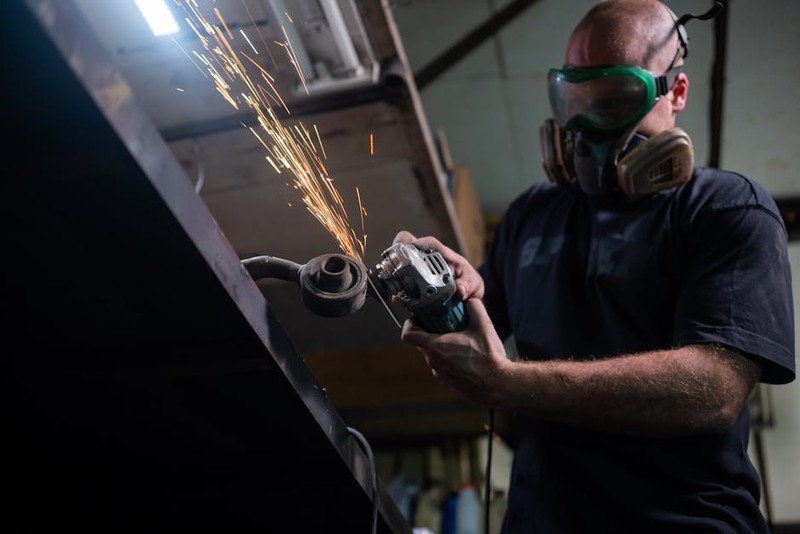
💡 Expert Tip: The “Cooling Dwell” is Not a Cycle Time Killer
Many shops are terrified of adding any non-cutting time. But our data showed that a 0.5-second dwell every 10 seconds of grinding actually reduced overall cycle time because it eliminated the need for multiple finishing passes to correct warpage. We went from 4 roughing passes and 2 finishing passes to 2 roughing and 1 finishing pass. The net effect was a 15% reduction in total cycle time while improving quality.
📊 A Case Study in Optimization: From 25% Scrap to 99.5% Yield
Here’s the hard data from that project. We ran a controlled experiment comparing the standard process to our custom grinding service.
| Metric | Standard Process | Custom Grinding Process | Improvement |
| :— | :— | :— | :— |
| Scrap Rate | 25% | 0.5% | 98% reduction |
| Surface Finish (Ra) | 10-15 Ra | 4-6 Ra | Consistent <8 Ra |
| Concentricity (Cpk) | 0.8 | 1.67 | Process capability doubled |
| Cycle Time per Part | 4.2 minutes | 3.6 minutes | 14% faster |
| Wheel Cost per Part | $0.45 | $0.32 | 29% lower |
The numbers tell the story. But the real win was the elimination of rework. The customer was able to move to a “ship-to-line” quality standard, eliminating their incoming inspection for this part. That saved them tens of thousands of dollars in labor and logistics.
The Lesson: Don’t Fight the Physics, Exploit It
The key insight wasn’t just about using a different wheel. It was about understanding the mechanics of heat generation and dissipation in a constrained system. By changing the wheel’s cutting action and the coolant’s delivery method, we changed the physics of the process. We stopped fighting the thermal distortion and instead designed a system that prevented it from happening in the first place.
🔧 Expert Strategies for Success in Custom Grinding
Based on that project and countless others, here are my actionable strategies for anyone looking to implement a custom grinding service for automotive parts.
1. Start with the Material, Not the Machine
The material’s thermal conductivity, hardness, and microstructure dictate everything. For high-nickel alloys or hardened steels, a standard wheel is a recipe for trouble. Always request a material certificate and a hardness test report before designing the grinding process.
2. Invest in Wheel Dressing Technology
A poorly dressed wheel is the single biggest source of variation. Use a CNC dresser with a diamond roller that can recreate complex forms with micron-level accuracy. This ensures consistent wheel topography from part to part, which is critical for maintaining surface finish and form.
3. Don’t Underestimate the Coolant
Coolant is the most under-appreciated tool in the grinding process. Filter it to 5 microns or better. Use a synthetic, high-lubricity coolant specifically designed for grinding. And most importantly, get the coolant to the right place at the right pressure. Through-the-wheel delivery is a game-changer for deep or complex forms.
4. Embrace Data-Driven Process Control
Measure the process, not just the part. Monitor spindle power, vibration, and coolant temperature. A spike in power draw is a sure sign of wheel loading or thermal distress. Implement a closed-loop system that can adjust feed rates or initiate a cooling dwell automatically. This is the difference between a reactive and a proactive process.
🏁 The Future of Custom Grinding in Automotive
The trend is clear: lighter parts, tighter tolerances, and more exotic materials. As we move toward electric vehicles, we’re seeing a rise in precision grinding for rotor shafts, gear components, and inverter housings. The same principles apply—heat management, wheel design, and process monitoring—but the challenges are new.
Custom grinding services for automotive parts are no longer a “nice-to-have.” They are a strategic necessity. The shops that can solve the hard thermal and geometric problems will be the ones that survive and thrive. The ones that stick with a one-size-fits-all approach will be left behind, drowning in scrap and rework.
My final piece of advice: Never assume a grinding process is “good enough.” Ask yourself: Where is the heat going? How is the wheel cutting? What data am I collecting? The answers will lead you to a better, more profitable process.