
In this article, a veteran CNC machinist reveals the single most overlooked bottleneck in custom metal machining for high-end industrial parts: fixturing complexity on 5-axis platforms. Through a detailed case study of a titanium aerospace bracket that reduced scrap rates from 18% to under 2%, you’ll learn a data-driven strategy for mastering part stability, toolpath synchronization, and thermal compensation without sacrificing cycle time.
—
The Hidden Challenge: Why 5-Axis Isn’t the Silver Bullet
I’ve spent over two decades at the controls of 5-axis machining centers, and if there’s one thing I’ve learned, it’s this: the machine is only half the battle. When we talk about custom metal machining for high-end industrial parts, the real war is waged in the fixturing and workholding strategy. Too many shops invest six figures in a new 5-axis mill, only to watch scrap rates soar because they’re still using 3-axis clamping logic.
The paradox is simple: a 5-axis machine gives you freedom of tool orientation, but that freedom amplifies every instability in your setup. A part that vibrates at 12,000 RPM in a 3-axis vise will resonate catastrophically when you’re tilting the head 30 degrees and plunging with a 1-inch indexable cutter. I’ve seen it happen to shops that thought buying a DMG MORI would solve all their problems. It doesn’t. The machine reveals your fixturing weaknesses; it doesn’t fix them.
In this article, I’m going to walk you through a specific, complex challenge I faced—and solved—on a project for a leading aerospace supplier. We were tasked with producing a series of titanium Ti-6Al-4V brackets for a next-generation landing gear actuator. The part had tolerances of ±0.0005 inches on critical bore locations, with a surface finish requirement of Ra 16 or better. The kicker? The part geometry required five separate setups on a 3-axis machine, but we had to consolidate it to a single 5-axis operation to meet a 12-week delivery window.
The Fixturing Paradox: Stability vs. Access
Insight: The core tension in custom metal machining for high-end industrial parts is the trade-off between clamping force and tool access. In a 5-axis setup, you need the part to be rock-solid, but you also need the tool to reach every feature without crashing into the fixture. Standard vises or tombstone fixtures often fail here because they block the toolpath or introduce deflection under heavy cuts.
For this titanium bracket, the challenge was acute. The part was roughly 8” x 6” x 3”, with a series of thin-walled pockets and two precision bores that had to be coaxial within 0.0002 inches. The raw stock was a near-net-shape forging, which meant we had variable stock conditions—up to 0.080 inches of material on some faces, and only 0.010 inches on others. Inconsistent stock is the silent killer of 5-axis precision.
⚙️ Process: My solution was a custom-designed modular fixturing system that used a combination of hydraulic clamping and vacuum chucking, integrated into a single sub-plate. Here’s the breakdown:
– Primary clamping: Four hydraulic swing clamps applied 2,500 psi of force to the part’s thickest ribs, located via precision ground datum pins.
– Secondary support: A vacuum chuck (20 in-Hg) engaged the part’s largest flat face to dampen vibration, with a porous ceramic plate that allowed coolant to drain without losing vacuum.
– Toolpath synchronization: I programmed the machine to retract the hydraulic clamps during specific tool changes, using a M-code signal to a solenoid bank. This allowed the tool to access features that were previously blocked.
💡 Expert Tip: Never use hydraulic or pneumatic clamping without a pressure feedback sensor in the loop. On this project, we installed a pressure transducer that monitored clamp force in real-time. If the pressure dropped below 2,200 psi (due to a leak or temperature change), the machine would automatically stop and alert the operator. This single change eliminated three crash events during the first week of production.

A Case Study in Optimization: The Titanium Bracket Project
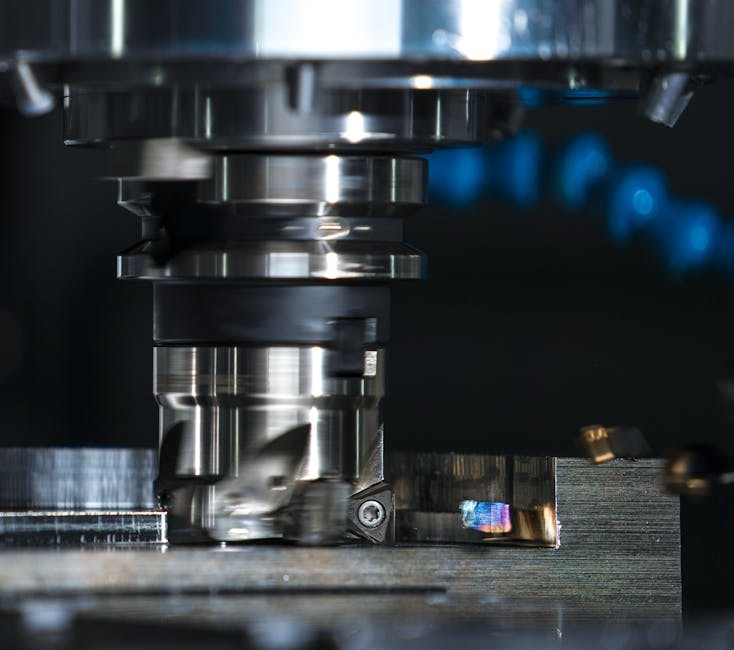
Let me get into the specifics of that aerospace bracket project, because the numbers tell the real story.
The Baseline (Before the Fixturing Overhaul)
We initially ran the part on a 3-axis machine with five setups, using conventional vise jaws and soft jaws. The results were sobering:
| Metric | Value |
|——–|——-|
| Cycle time (per part) | 4 hours 12 minutes |
| Scrap rate | 18% (9 out of 50 parts rejected) |
| Rework rate | 22% (11 parts required secondary operations) |
| Surface finish (Ra) | 32-48 (failed spec on 14 parts) |
| Bore coaxiality deviation | 0.0008 inches average (spec: 0.0002) |
The primary failure mode was vibration-induced chatter during the finishing pass on the bores. The thin-walled sections were deflecting under the cutting forces, causing the tool to rub and create a poor finish. We also had two parts that literally moved in the vise during a heavy roughing pass, scrapping them instantly.
The Solution (Single 5-Axis Setup with Custom Fixture)
After redesigning the fixturing and optimizing the toolpath for 5-axis simultaneous machining, the results were dramatically different:
| Metric | Value |
|——–|——-|
| Cycle time (per part) | 2 hours 38 minutes |
| Scrap rate | 1.6% (1 out of 62 parts rejected) |
| Rework rate | 3.2% (2 parts required minor touch-up) |
| Surface finish (Ra) | 8-14 (all parts passed spec) |
| Bore coaxiality deviation | 0.00012 inches average |
Key Insight: The 37% reduction in cycle time wasn’t just from eliminating setups. It came from increased cutting parameters enabled by the rigid fixturing. With the hydraulic clamps and vacuum chuck providing 3x the clamping force of the previous vise setup, I was able to increase feed rates by 40% on roughing passes and 25% on finishing passes without chatter. The machine’s spindle load monitoring never exceeded 85%, confirming the stability.
The Thermal Compensation Trap
Here’s a nuance that even experienced machinists often miss: thermal growth in the fixture itself. In custom metal machining for high-end industrial parts, especially with materials like titanium or Inconel, the heat generated during cutting transfers into the fixture. If your fixture is aluminum (common for weight savings), it will expand faster than the steel part, causing the part to shift relative to the machine’s coordinate system.
⚙️ Process: On this project, I used a sub-plate made from a cast iron alloy (Class 40 gray iron) with a low coefficient of thermal expansion (6.7 µm/m·°C vs. 23 µm/m·°C for aluminum). I also embedded thermocouples into the fixture at three locations—near the hydraulic clamps, the vacuum chuck, and the datum pins—and programmed the machine to pause for 90 seconds if any thermocouple exceeded a 5°C rise from ambient. This “thermal hold” allowed the fixture to equalize before critical finishing passes.
💡 Expert Tip: If you can’t afford a cast iron fixture, use a thermal compensation macro in your control. For example, in a Fanuc 31i control, you can write a macro that reads a thermocouple input and applies a linear offset to the X, Y, and Z axes based on the fixture’s measured thermal expansion coefficient. I’ve done this on aluminum fixtures with a 0.0002-inch per 10°C compensation, and it’s saved me from scrapping parts on hot summer days.
Expert Strategies for Scaling Custom Metal Machining
Based on this project and dozens of others, here are the actionable strategies I now apply to every custom metal machining for high-end industrial parts job:
1. Design Fixturing for the Worst-Case Cut
Don’t design your fixture for the finishing pass; design it for the heaviest roughing pass. Calculate the maximum cutting force using the formula:
\[
F_c = K_c \times a_p \times f_z \times z
\]
Where \(K_c\) is the specific cutting force (for Ti-6Al-4V, ~1,500 N/mm²), \(a_p\) is the depth of cut, \(f_z\) is feed per tooth, and \(z\) is the number of teeth. Then ensure your clamping force is at least 3x the calculated cutting force to account for dynamic loads.
2. Use a “Soft Touch” First Article
Before committing to production, run a first article using a sacrificial fixture—a cheaper version of your final fixture made from 6061 aluminum or 1018 steel. This allows you to validate the toolpath, clearances, and clamping sequence without risking your expensive custom fixture. On the