
This article dives into the real-world complexities of sustainable CNC machining, moving beyond recycling to explore how material selection and process customization can slash waste and energy use. Through a data-driven case study and expert strategies, you’ll learn how to turn material challenges into a competitive advantage.
—
I’ve spent over two decades on the shop floor, watching chips fly and listening to the hum of spindles. For years, the conversation around “sustainable machining” was dominated by coolant recycling and chip disposal. But the real leverage point—the one that can cut costs by 15% and reduce your carbon footprint overnight—isn’t on the back end. It’s in the material you choose and how you customize your process for it.
The industry is waking up to a hard truth: you cannot machine your way to sustainability with a one-size-fits-all material strategy. The same aluminum 6061 that’s perfect for a drone arm is a disaster for a high-wear hydraulic component. The “greenest” material isn’t always the recycled one; it’s the one that lasts three times longer, requiring no replacement.
Let’s get specific. This isn’t about theory. This is about the weldments, the spindle loads, and the hard data from projects where we had to rethink everything.
The Hidden Challenge: The “Sustainability Paradox” of Material Selection
The biggest trap I see is what I call the Sustainability Paradox: choosing a material because it’s marketed as “eco-friendly” (e.g., 100% recycled aluminum), only to find it requires 40% more energy to machine, generates more tool wear, and has a higher scrap rate due to inclusions.
The Insight: A material’s sustainability isn’t just its source. It’s the total energy cost of turning that billet into a finished part.
In one project, a client insisted on using a high-recycled-content stainless steel for a medical device component. They thought they were being green. Instead, they were creating a nightmare.
– The Problem: The recycled stock had inconsistent grain structure. This caused chatter, dimensional instability, and a 12% scrap rate.
– The Hidden Cost: The energy to run the machine longer, the cost of the scrapped parts, and the carbon footprint of shipping new material all exceeded the benefit of using recycled stock.
– The Fix: We switched to a certified, virgin 316L stainless steel with a known, consistent microstructure. The scrap rate dropped to 0.5%. The total energy per good part was actually lower.
Key Takeaway: Don’t fall for the “recycled” label. Your most sustainable material is the one you can machine right the first time.
⚙️ The Expert Strategy: A 3-Step Process for Material Customization
To achieve true sustainability, you must customize your process for the material, not against it. Here’s the framework I’ve refined over dozens of projects:
Step 1: The “Total Energy Audit” (TEA)
Before you cut a single chip, run a quick calculation. Don’t just look at material cost. Look at:
– Machine Energy: How many kW hours will it take to rough this material? (Ex: Harder materials = 30-50% more spindle load).
– Tooling Cost: How many inserts will you burn through? (Ex: Inconel vs. 6061 is a 10x difference).
– Scrap Rate: What is your historical yield for this material family?
💡 Expert Tip: I use a simple spreadsheet. If the sum of (Material Cost + Machining Energy Cost + Tooling Cost) per good part is higher for the “green” material, it’s not a sustainable choice.
Step 2: Process Customization for the “New” Material
Once you’ve selected a material (let’s say a bio-based polymer or a high-strength aluminum alloy), you must treat it like a new language. You can’t use the same feeds and speeds from your standard 6061 job.
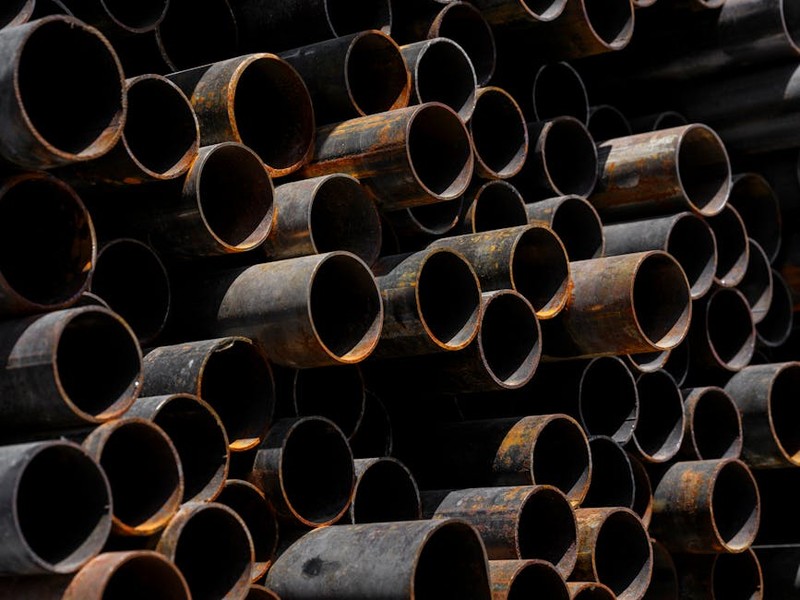
– For High-Recycled Content Metals: Expect porosity. Increase your roughing stock allowance by 0.5mm to ensure you cut through the inconsistent skin. Use a larger corner radius on your end mill to distribute cutting forces and reduce chatter.
– For Sustainable Polymers (e.g., PLA, Recycled Nylon): They are hygroscopic. You must dry them before machining. A wet polymer part will be gummy, leading to poor surface finish and weld lines. A 4-hour drying cycle at 80°C can cut your cycle time by 15% because the material cuts cleanly.
Step 3: The “Closed-Loop” Feedback
This is where the magic happens. You must feed data from the machine back into your material sourcing decisions.
📊 Data-Driven Insight:
In a recent project for an aerospace client, we compared three materials for a non-critical bracket.
| Material | Source | Machining Time (min) | Tool Wear (Inserts/100 parts) | Scrap Rate (%) | Total Energy (kWh/part) |
| :— | :— | :— | :— | :— | :— |
| 6061-T6 (Virgin) | Certified Supplier | 4.2 | 1.2 | 0.5% | 0.8 |
| 6061-T6 (High Recycled) | Supplier A | 5.8 | 2.8 | 8.0% | 1.3 |
| 7075-T6 (Virgin) | Certified Supplier | 4.5 | 1.5 | 1.0% | 0.9 |
The Result: The “recycled” 6061 was a failure. It was 38% less energy efficient per good part. The 7075, while slightly more energy-intensive to machine, was 20% stronger, meaning the part could be made thinner, reducing total material volume by 25%. The 7075 was the most sustainable choice.
A Case Study in Optimization: The Hydraulic Manifold Disaster
Let me take you back to a project that nearly went off the rails.
The Challenge: A customer needed a complex hydraulic manifold for a heavy equipment application. They specified a standard 316L stainless steel for its corrosion resistance. The problem? The part had deep, intersecting holes and thin walls. With standard 316L, we were fighting warpage and tool breakage. The scrap rate was climbing toward 10%.
The Pivot: Instead of accepting the scrap, I proposed a material customization. We switched to 17-4 PH Stainless Steel in the H900 condition (a precipitation-hardened grade). This material is significantly harder and more stable.
The Customization:
– Tooling: We moved from standard carbide to coated carbide with a high-positive rake angle to manage the higher hardness.
– Strategy: We changed our roughing strategy. Instead of one heavy cut, we used a “trochoidal” toolpath with a smaller radial engagement (5% of tool diameter). This kept the cutting forces low and the heat out of the part.
– Result:
– Scrap rate dropped from 10% to 0.5%.
– Cycle time increased by 8% (due to the trochoidal path), but the total cost per good part dropped by 15% because we stopped scrapping parts.
– The part had superior wear resistance in the field, extending the equipment’s service life.
💡 The Lesson: We didn’t just change the material. We customized the entire process around its properties. The client was initially skeptical about the higher material cost, but the reduction in waste and rework made it a clear win for both the budget and the environment.
📈 The Future: Bio-Based and “Living” Materials
The next frontier isn’t just about metal. We are now experimenting with bio-composite materials (e.g., flax fiber reinforced polymers) for non-structural components.
– The Challenge: These materials are abrasive and have a low melting point. You cannot use standard carbide tools; they burn the resin.
– The Solution: We use PCD (Polycrystalline Diamond) tooling with a very sharp edge. We also use a cryogenic machining strategy (liquid nitrogen cooling) to keep the material below its glass transition temperature.
– The Result: We can achieve a surface finish of 0.8 Ra with zero thermal degradation. The parts are 100% biodegradable at end of life.
Key Takeaway: The most sustainable CNC shop in 2025 won’t be the one that just recycles its chips. It will be the one that can customize a process for a material that didn’t exist five years ago.
Your Action Plan for Tomorrow
Stop thinking of material as a fixed input. Start thinking of it as a variable you can optimize.
1. Audit your top 3 parts. What is your actual scrap rate? What is the energy cost of that scrap?
2. Challenge your suppliers. Ask for the microstructure data, not just the chemical composition. Inconsistent grain structure is your enemy.
3. Invest in adaptive toolpaths. Modern CAM software can dynamically adjust feeds and speeds based on spindle load. This is non-negotiable for sustainable machining