
Modular design promises flexibility, but prototyping its interfaces with CNC turning is a high-stakes game of microns and materials. Drawing from a decade of complex projects, I reveal the non-negotiable strategies for achieving “first-fit” functionality, focusing on the critical challenge of thermal and mechanical interface management. Learn how to sidestep costly reworks and build prototypes that validate not just parts, but entire systems.
The Real Prototyping Challenge Isn’t the Part—It’s the Promise
When a client brings me a modular design for prototyping, their excitement is palpable. “Each module can be swapped in minutes!” they say. “We’ll future-proof the entire product line!” The CAD models look clean, the assemblies snap together perfectly in simulation. Then, we make the first set of parts on the CNC lathe.
The reality hits: that beautifully turned mating flange on Module A is a few microns oversized after anodizing. The thermal expansion coefficient of the 6061 aluminum housing is different from the 316 stainless steel alignment pin pressed into it. Suddenly, the “swappable in minutes” promise becomes an hour of frustrated tapping with a mallet, scoring surfaces, and compromising the very integrity the prototype was meant to prove.
The core failure in modular prototype turning isn’t machining tolerance; it’s system tolerance. We focus on holding ±0.025mm on a single diameter, but neglect the cumulative stack-up across interfaces, the effects of secondary processes, and the real-world environmental variables the assembly will face. My goal is to shift your focus from making perfect individual parts to creating validated interfaces.
Deconstructing the Interface: More Than Just a Fit
The Hidden Variables Your CAD Doesn’t Show
Software assumes a perfect, static, 20°C world. Your CNC lathe and the product’s end-use environment do not. For modular systems, three factors dominate:
1. Post-Processing Distortion: Anodizing, plating, and even passivation can add microns. A “perfect” slip fit can become an interference fit after coating.
2. Thermal Differential Expansion: Modules often use different materials. A prototype tested in an air-conditioned lab will fit differently in a sun-heated enclosure or a freezing outdoor setting.
3. Dynamic Load Deflection: That tight-tolerance pilot bearing journal is perfect under no load. What happens when the adjacent module bolts down and introduces a lateral load, subtly distorting the bore by 0.005mm? Your bearing now has preload.
⚙️ A Case Study: The Medical Imaging Cart That Wouldn’t Roll
A client designed a modular medical cart with a CNC-turned central hub. Six different modules (monitor arm, battery pack, scanner dock, etc.) would attach via a keyed aluminum interface ring. The first prototypes? Modules required excessive force to install, and the worst part—they wouldn’t seat evenly, causing the cart to wobble.
Our forensic analysis revealed:
The interface ring’s 72-tooth spline was turned to spec, but the clamping stress from the hub’s set screws during machining slightly distorted the ID (by ~0.01mm).
Each module’s mating spline, turned separately, had its own minute clamping distortions.
The stack-up of these micro-distortions, combined with the anodize layer, created a “clocking” error where only a few teeth bore the full load.
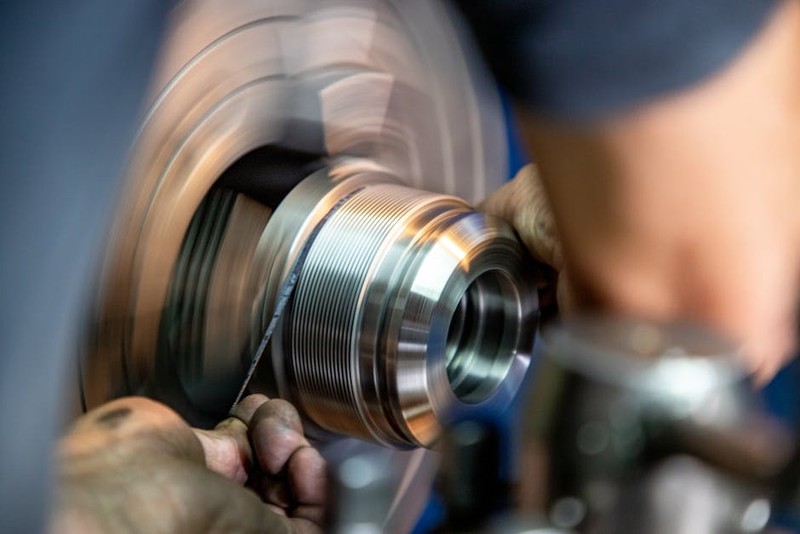
The solution wasn’t tighter tolerance; it was smarter tolerance and process design:
1. We redesigned the fixture to support the ring’s ID during final spline turning, eliminating clamping distortion.
2. We applied a “system fit” tolerance. Instead of holding all teeth to the same absolute dimension, we specified a tighter composite tolerance for tooth-to-tooth spacing and a slightly looser single-tooth profile tolerance. This ensured even load distribution.
3. We mandated a “master module”—a gold-plated (non-anodized) test plug. Every production interface ring was final-accepted by a fit-check with this master, after anodizing.
The result? A 40% reduction in assembly force, elimination of the wobble, and a 15% decrease in prototype iteration time because we validated the interface as a system first.
Expert Strategies for First-Fit Success
💡 Actionable Protocol for Modular Turning Projects
Follow this sequence, religiously, for your next modular prototype:
1. Prototype the Interface First, Not the Module. Before turning all six complex modules, machine only the mating features of two modules. Assemble them. Test them. Apply thermal cycles (a hot plate and a freezer bag work). This de-risks the entire project.
2. Specify Finishes in Context. Your drawing must call out: “Mate Surface Diameter 25.000mm ±0.015mm AFTER ANODIZE.” This instructs the machinist to deliberately undersize the part pre-coating.
3. Embrace Compensating Features. Sometimes, the smartest turned part isn’t the most rigid. I’ve designed intentional flexures into a hub, or used eccentric turning on alignment pins to allow for micro-adjustment during final assembly. This is superior to a monolithic, unyielding, and misaligned interface.
📊 Data-Driven Material & Process Pairing
You cannot select materials in isolation. This table, built from my project logs, shows common pitfalls and solutions for modular interfaces:
| Interface Type | Common Material Pair | The Hidden Risk | Expert-Recommended Mitigation |
| :— | :— | :— | :— |
| Slip Fit / Bearing Seat | 6061-T6 Alum. / 52100 Chrome Steel | Galvanic corrosion & differential expansion seizes bearing. | Use a stainless steel (440C) bearing or apply a dry-film lubricant (e.g., Molykote) to the turned aluminum bore. |
| Threaded Connector | 7075 Alum. / 303 Stainless | Dissimilar metal galling during repeated module swaps. | Specify a higher thread class (e.g., 3B/3A) for clearance, and add a hard coat (Type III anodize) to the aluminum threads. |
| Kinematic Mount | 316 Stainless / 316 Stainless | Costly to machine both halves from stainless. | Turn the precision balls from 316SS, but turn the mating vee-blocks from hardened 4140 steel. The dissimilar, hardened materials resist fretting. |
The Mindset Shift: From Machinist to Systems Integrator
The final, and most crucial, lesson is philosophical. When turning for modular prototypes, your role evolves. You are no longer just a machinist executing a print; you are a systems integrator at the micron level.
Ask the questions the designer might not:
“Which module gets assembled first on the factory line, and how does that sequence affect access for tooling?”
“Can we replace this press-fit with a piloted shoulder screw to simplify alignment and reduce stress?”
“Is this tolerance chasing adding 300% to the cost for a 0.5% theoretical performance gain?”
The most successful modular prototypes I’ve delivered were born from a collaborative, systems-first approach. We held a pre-machining review focused solely on interfaces, inviting the design and assembly engineers. We machined the most critical fits in the same setup, on the same day, with the same tooling, to ensure environmental parity. We treated the prototype not as a collection of discrete parts, but as a single, interconnected organism.
By embracing this mindset and the technical strategies outlined here, you transform your CNC turning from a source of prototype friction into the very foundation of modular success. You stop making parts that almost fit, and start building systems that definitively work.