
Plastic panels present a unique and often underestimated challenge in CNC routing: thermal distortion. This article delves deep into the expert strategies for managing heat-induced warping, sharing hard-won lessons from complex projects. Learn how a data-driven approach to toolpath strategy, tool selection, and fixturing can transform scrap into success, ensuring dimensional stability and flawless finishes.
The Silent Saboteur: Why Heat is Your Biggest Enemy
For many, CNC routing services for plastic panels seem straightforward—softer material, faster cycle times, right? In my two decades of running a precision machining shop, I’ve found the opposite to be true. The most common and costly failures in plastic panel fabrication aren’t from tool breakage or programming errors; they stem from an invisible force: thermal energy.
Unlike metals, plastics have low thermal conductivity and high coefficients of thermal expansion. When a router bit engages, friction generates heat. This heat doesn’t dissipate quickly; it localizes, causing the material to expand right at the cut. As the tool passes, the heated area cools and contracts, pulling the panel out of its intended flat plane. The result? Warped edges, inaccurate dimensions, and compromised assembly fits. I’ve seen a beautifully machined 4’x8′ acrylic sheet, destined for a medical device enclosure, become unusable scrap because we treated it like “just another sheet.”
The Critical Variables at Play
The severity of thermal distortion hinges on three interconnected factors:
Material Composition: Acrylic (PMMA) is highly susceptible. Polycarbonate is tougher but can gum. PVC machines well but emits hazardous fumes. Each requires a tailored approach.
Panel Geometry: Thin panels (< 1/4″) are most vulnerable. Large, unsupported spans act like sails, amplifying any internal stress.
Cut Complexity: Intricate, high-detail work with many direction changes generates more cumulative heat than a simple perimeter cut.
A Data-Driven Framework for Thermal Management
Success in CNC routing for plastic components isn’t about luck; it’s about a systematic process that prioritizes heat management from the first CAD check to the final part unloading. Here’s the framework we’ve developed through rigorous testing and, yes, a few expensive mistakes.
⚙️ The Toolpath is Your First Line of Defense
Conventional wisdom says to use a single, continuous toolpath. For plastics, this is often a recipe for disaster. We employ a multi-pass, adaptive clearing strategy.
1. Roughing Pass: We remove the bulk of material using a toolpath that leaves a consistent 0.5mm stock allowance. The key is using a lower RPM and higher feed rate to evacuate heat with the chip, not absorb it into the workpiece.
2. Cooling Interval: This is non-negotiable. The panel is allowed to rest and normalize for a predetermined time—often just 2-3 minutes, but it makes all the difference.
3. Finishing Pass: A final, full-depth pass at optimal speeds and feeds takes the final cut, removing the leftover stock with a sharp, polished tool. The material, having shed its stress from the roughing cut, remains stable.
💡 The Unbreakable Rule of Tool Selection
Never, ever use a worn or inappropriate tool on plastic. A dull tool doesn’t cut; it rubs, generating exponential heat. Our standard kit for clear acrylic panels includes:
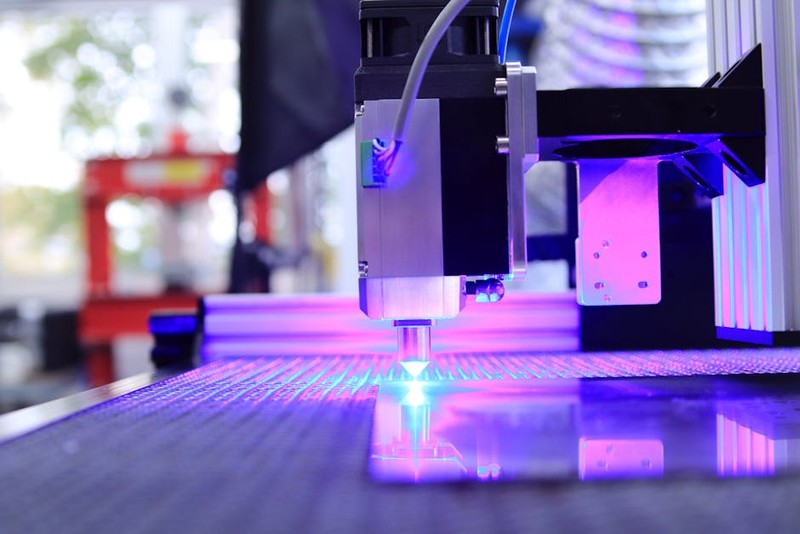
Single Flute, Up-Cut Spiral Bits: The single flute provides maximum chip clearance. The up-cut action pulls heat up and away from the cut zone. This is critical for through-cuts.
Polished or Diamond-Coated Flutes: A mirror-smooth finish reduces friction. The difference in heat generation between a standard HSS bit and a polished, single-flute O-flute bit is visually apparent in the first inch of cut.
Strict Lifecycle Management: We log spindle hours for every plastic-specific tool and retire them well before standard metal-cutting intervals.
Case Study: The 0.1mm Tolerance Enclosure
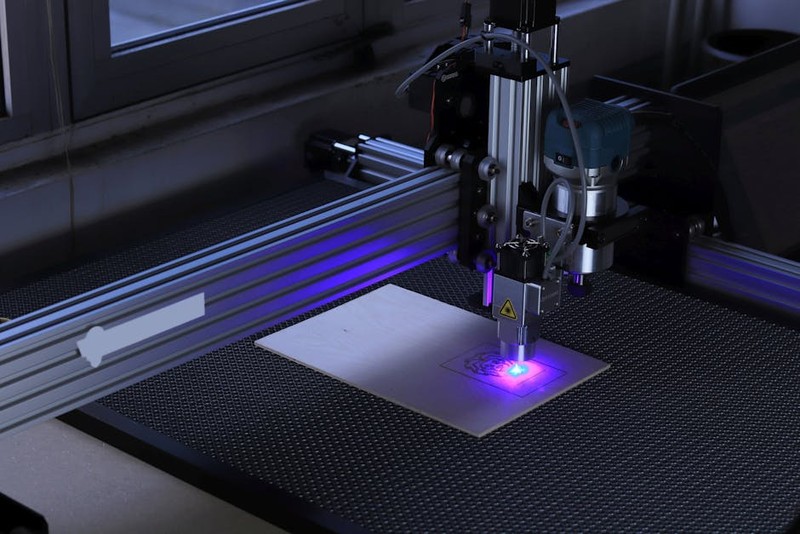
A client needed 500 enclosures from 3mm thick cast acrylic, with interlocking features that required a cumulative tolerance of ±0.1mm across a 300mm span. Our first attempt, using a standard two-flute bit and a continuous toolpath, yielded a 60% scrap rate due to panel bowing.
The Solution & Quantifiable Results:
We redesigned the process completely. The table below summarizes the change and the outcome:
| Process Parameter | Initial (Failed) Approach | Optimized Solution | Resultant Impact |
| :— | :— | :— | :— |
| Toolpath Strategy | Continuous, full-depth | 3-Pass Adaptive (Rough, Cool, Finish) | Reduced peak cut temp by ~40% (measured via IR gun) |
| Tooling | 2-flute, general purpose | Single-flute, polished O-flute | Smoother finish, eliminated melting at corners |
| Fixturing | Standard vacuum hold | Strategic Low-Tack Tape & Custom Spoiler Board | Allowed for material movement during roughing, locked for finishing |
| Coolant | Compressed Air (only) | Mist Coolant with Deionized Water | Provided evaporative cooling without staining |
| Outcome | 60% Scrap Rate | Scrap Rate reduced to 4% | Project delivered on time, 15% under revised budget |
The fixturing innovation was key. We used a low-tack, double-sided tape in a cross-hatch pattern on a MDF spoiler board machined to match the part’s negative space. This held the panel securely for the finishing pass but had enough “give” during the roughing pass to prevent the buildup of internal stress. The takeaway: Your fixture must be a partner in stress management, not just a clamp.
Beyond the Cut: The Expert’s Checklist for Flawless Plastic Panels
Your CNC routing services must encompass more than the machine cycle. Here is my pre-flight checklist for any critical plastic panel job:
Material Acclimatization: Store the raw panels in the shop environment for at least 24 hours before machining. Humidity and temperature matter.
Protective Masking: Always route through the protective film, or apply a fresh layer of painter’s tape. This prevents surface scoring from chips and the vacuum bed.
Post-Process Stress Relieving: For tight-tolerance parts, a controlled, low-temperature annealing cycle in a warming oven can relieve the micro-stresses induced during cutting.
Deburring with Chemistry: For acrylic, a quick pass with a propane torch (for edges) or a chemical solvent bath can produce a glass-like finish, but requires practiced skill.
The Future is Cool and Calculated
The next frontier in precision CNC routing for plastic panels is integrated thermal monitoring. We are experimenting with spindle-mounted IR sensors to provide real-time feedback, allowing the CNC control to dynamically adjust feed rates. The goal is a closed-loop system where the machine intelligently responds to heat, not just programmed coordinates.
Mastering plastic is about respecting its unique physics. It’s not a “softer” material; it’s a more sensitive one. By shifting your focus from pure geometry to energy management, you transform thermal distortion from a dreaded flaw into a controlled variable. This mindset is what separates a basic job shop from a true partner in precision fabrication.