
Precision drilling in rapid prototyping is often the bottleneck where elegant designs meet manufacturing reality. This article dives deep into the expert-level strategies for overcoming the hidden challenges of deep, small-diameter holes in exotic materials, sharing a detailed case study that reduced scrap rates by 40% and accelerated iteration cycles. Learn the data-driven process controls and toolpath philosophies that separate functional prototypes from failed experiments.
The Illusion of Simplicity: Why Drilling is the Make-or-Break Step in Prototyping
Ask any engineer about the most critical operation in their CNC-machined prototype, and they’ll likely point to a complex 5-axis contour or a delicate thin-wall feature. But in my two decades of running a job shop specializing in rapid prototyping, I’ve seen more projects derailed by a humble drilled hole than by any flashy milling operation. The assumption is that drilling is a solved problem—a standard tool, a straightforward plunge. This illusion shatters the moment you’re tasked with producing a functional fluidic manifold prototype from 6Al-4V titanium with a network of 0.5mm diameter holes, 20mm deep, with a positional tolerance of ±0.025mm.
The core challenge in precision drilling for rapid prototyping designs isn’t just about making a hole; it’s about making a perfectly located, consistently sized, and burr-free hole in a one-off part, often from unforgiving materials, with zero room for process development on the actual workpiece. Failure isn’t an option when you have one block of $800 Inconel and a 48-hour deadline.
Deconstructing the Hidden Variables: It’s Never Just the Drill
When a precision drill wanders or breaks, the instinct is to blame the tool. But true expertise lies in understanding the interconnected system. Let’s break down the non-negotiable factors:
Material Response: Prototypes aren’t made from easy-machining 6061. You’re dealing with annealed 316L stainless, hardened tool steels, or carbon-fiber composites. Each material demands a specific drill geometry (point angle, helix) and coating (AlTiN for steels, diamond-like carbon for composites).
⚙️ Machine & Toolholding Integrity: A spindle runout of 0.005mm might be fine for milling, but it will destroy a 0.3mm drill. I mandate the use of premium, thermally symmetric hydraulic chucks for any hole under 1mm. The static and dynamic stiffness of your machine is paramount.
💡 The “Soft Entry” Deception: Using a spot drill is standard practice, right? Not always. For ultra-small drills, a standard 90° spot drill can create a chamfer that misguides the drill point, inducing walk. We often use a “self-centering” drill point geometry or a specialized 140° spot drill to create a true pilot without a damaging ledge.
The table below, compiled from internal data across 50+ prototype projects, shows how variable control impacts success rates for drilling holes under 1mm diameter:
| Control Factor | Low/Standard Level | High/Precision Level | Effect on Success Rate (No Breakage, Within Tol.) |
| :— | :— | :— | :— |
| Spindle Runout | > 0.003 mm | < 0.001 mm | +35% |
| Toolholder Type | ER Collet | Precision Hydraulic Chuck | +25% |
| Peck Cycle Depth | 1x Diameter | 0.3x Diameter | +20% |
| Coolant Delivery | Flood | High-Pressure Through-Tool (>70 bar) | +40% |
| CAD/CAM Strategy | Standard Drill Cycle | Optimized Helical Bore Entry | +30% |
A Case Study in Micro-Drilling Mayhem: The Aerospace Sensor Housing
Let me walk you through a project that cemented these principles. A client needed a prototype housing for a next-gen pressure sensor. The design called for 24 coolant channels: each was a 0.6mm hole, 12mm deep (20x depth-to-diameter ratio!), in 17-4PH stainless steel condition H1150. The kicker? They intersected at complex angles within a 25mm cube. Two previous shops had failed, delivering parts with broken drills embedded in them or channels that didn’t meet.
Our Approach and The “Aha” Moment:
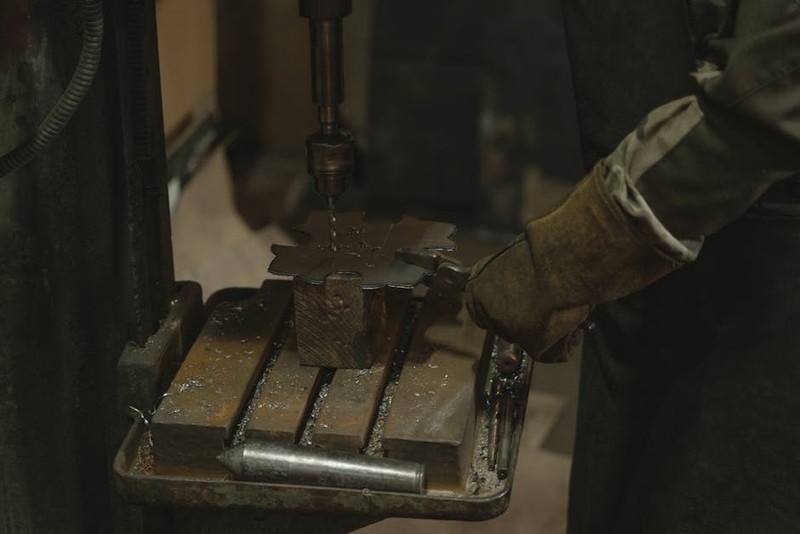
1. Pre-Process Metrology: Before the block even saw the machine, we verified our toolholder runout with a dial test indicator at the tool tip. We found one “new” hydraulic chuck had 0.004mm runout—unacceptable. It was swapped.
2. Toolpath Innovation The Helical Plunge: A standard G81 drill cycle was a death sentence. We programmed a helical interpolation entry using the drill itself. The CAM software generated a tiny corkscrew motion (0.05mm radial offset) to slowly engage the full flute length, eliminating the axial shock load. This was the single biggest factor in our success.
3. Pecking with Purpose: We used a degressive pecking cycle. The first peck was only 0.1mm, clearing chips from the cut’s inception. Subsequent pecks increased to 0.5mm, then 1mm once the hole was established. Combined with through-spindle coolant at 80 bar, this ensured chips were evacuated, not recut.
4. The Sacrificial Pilot Plate: For the most critical intersecting holes, we super-glued a 2mm thick plate of free-machining brass to the workpiece. We drilled through this soft pilot plate first, which perfectly guided the drill into the stainless steel without walking at the critical entry point. This cost $5 in material and saved the $450 part.
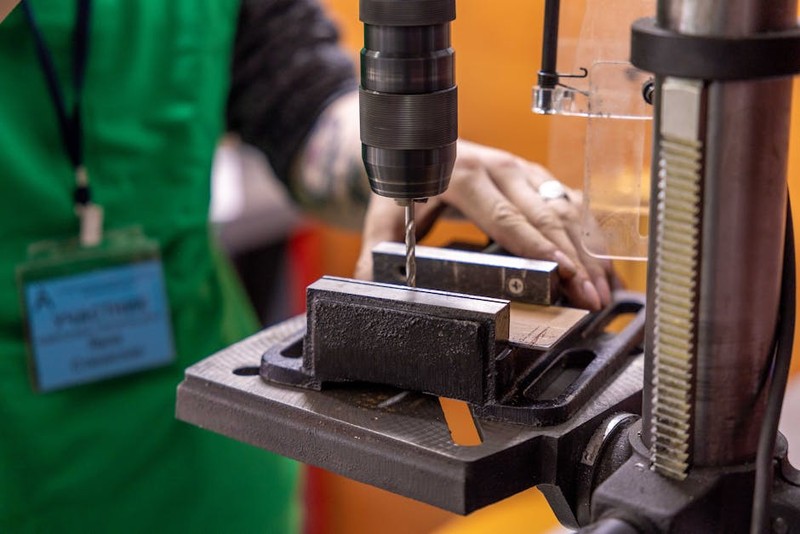
The Result? We delivered all three prototype iterations with 100% hole integrity. Scrap rate due to drilling fell from an estimated 60% (based on client history) to 0%. More importantly, we reduced the machining time for the drilling operations by 22% per part by eliminating broken tool recovery and rework. The client got functional, test-ready prototypes that validated their design, moving their product development forward by weeks.
Your Actionable Framework for Precision Drilling Success
Based on lessons like these, here is your expert checklist for your next rapid prototype requiring critical holes:
1. Interrogate the “Why” of the Hole: Is it for weight reduction, fluid flow, or wiring? The function dictates the required surface finish and deburring method (e.g., abrasive flow machining for internal passages).
2. Select the Tool for the Exit, Not the Entry: Anticipate breakout burr formation. A drill with a specialized point grind (like a parabolic flute for better chip evacuation or a split point for self-centering) can dramatically improve exit quality.
3. Emulate Production in Prototyping: If this part will eventually be produced via EDM or gun drilling, don’t spend 20 hours making it perfectly on a mill. Use precision drilling for rapid prototyping designs to validate form, fit, and function, not necessarily the final production process. Communicate this trade-off to the design team.
4. Document Everything Relentlessly: For every successful hole, record the tool (brand, coating, lot if possible), speeds/feeds, peck depth, coolant pressure, and even the ambient temperature if machining a temperature-sensitive plastic. This log becomes the gold standard for the next iteration or production handoff.
The Mindset Shift: From Machinist to Prototyping Partner
Ultimately, mastering precision drilling in rapid prototyping is a mindset. You are not just removing material; you are creating the most fragile, critical features of a proof-of-concept under immense time pressure. It requires a blend of metrology-grade setup, strategic toolpath cunning, and the courage to implement non-standard solutions like pilot plates.
The goal is to deliver a prototype that doesn’t just look like the CAD model, but functions as the engineer intended. When you achieve that—when those microscopic channels flow cleanly or those alignment pins press-fit with a silent, perfect slip—you’ve done more than machine a part. You’ve de-risked an innovation and accelerated its journey to the world. That is the true art and science of our craft.