
The true power of CNC turning in smart manufacturing isn’t just automation; it’s data-driven intelligence. This article dives deep into the critical challenge of transforming a standalone turning center into a connected, predictive node on the factory floor. Learn how to leverage real-time process data to slash unplanned downtime, achieve micron-level consistency, and unlock unprecedented cost savings, illustrated by a detailed case study from the aerospace sector.
The Illusion of Automation: When a “Smart” Machine Isn’t So Smart
For years, we’ve celebrated the automation of CNC turning services. Load a program, hit cycle start, and parts come out. It’s efficient, repeatable, and a vast improvement over manual lathes. But in my two decades running precision machine shops, I’ve seen a persistent gap. A shop floor filled with gleaming, automated CNC lathes is not, by default, a “smart” manufacturing operation. It’s merely an automated one.
The real challenge—and the immense opportunity—lies in the data silo. Each machine is an island of potential intelligence, humming away, generating terabytes of operational data (spindle load, axis torque, tool vibration, thermal drift) that typically vanishes into the ether, used for nothing more than a post-mortem diagnostic when something breaks. The shift to smart manufacturing demands we stop treating CNC turning centers as mere part producers and start viewing them as critical data acquisition nodes.
The Hidden Challenge: From Reactive Maintenance to Predictive Intelligence
The most costly enemy in precision CNC turning isn’t the occasional scrapped part; it’s unplanned downtime and unexplained variance. I recall a project for a high-volume automotive component where we were hitting all spec limits but experiencing a 3% scrap rate from tool failure that seemed random. Our “smart” machines had alarms, but they only told us after a tool broke, often ruining a part and halting production.
The turning point came when we stopped asking “What happened?” and started asking “What is about to happen?”
The Three Data Pillars of Intelligent Turning
To build a predictive system, you must instrument your turning process to capture three core data streams:
1. Process Data: Spindle power (kW), axis load (%), feed force. This is the machine’s “vital signs.”
2. Condition Data: Vibration spectra (from accelerometers on the turret), acoustic emission. This is the machine’s “nervous system,” detecting subtle changes.
3. Result Data: In-process probing measurements, post-process CMM results. This is the “outcome,” to be correlated with the process data.
By fusing these streams, your CNC turning service transitions from a cost center to a knowledge center.
A Case Study in Aerospace: Turning Turbulence into Predictability
Let me walk you through a transformative project for a turbine engine shaft. The part was Inconel 718, a notorious material for tool wear. Our mandate was to reduce the total cost of ownership per part by 10% while guaranteeing zero non-conformances.
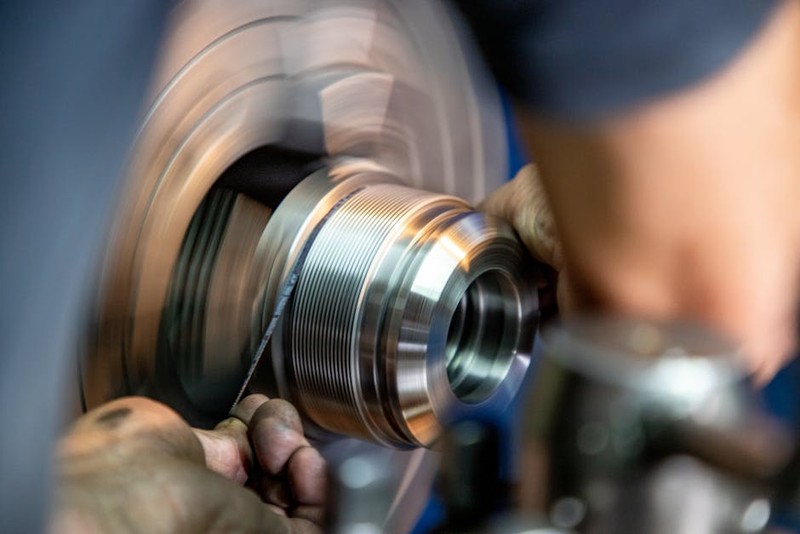
The Old Way: We used a conservative, time-based tool change schedule. Every 15 parts, we’d change the insert, regardless of its actual condition. This was safe but wasteful. Tool life was variable, and we were discarding inserts with usable life remaining 60% of the time.
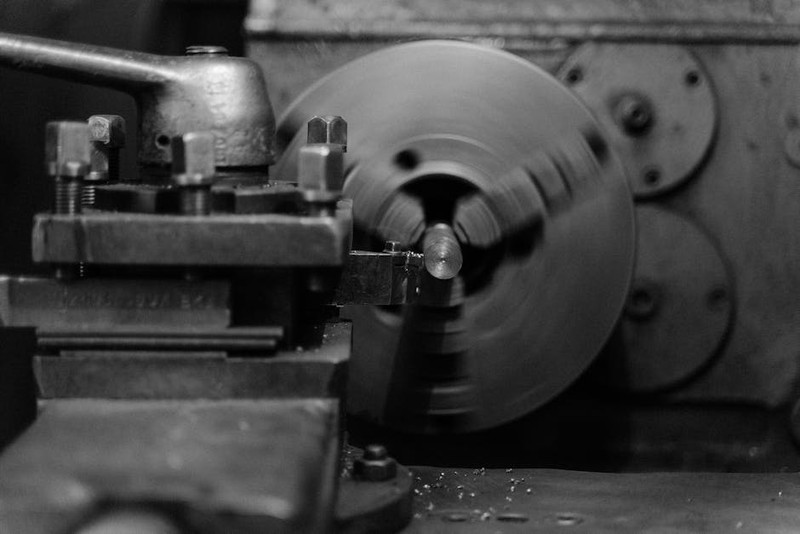
The Smart Manufacturing Approach: We instrumented a twin-spindle turning center with a wireless vibration sensor on the turret and tapped directly into the machine’s internal controller data via an MTConnect adapter.
Step 1: Establishing the Baseline. We ran a golden batch, collecting full-spectrum data for each operation. We identified the key indicator: a specific high-frequency vibration band (8-12 kHz) that began to elevate as the insert’s flank wear reached 0.15mm.
Step 2: Creating the Algorithm. Our software team built a simple algorithm that monitored this vibration band in real-time. Instead of a parts counter, the machine now had a “Tool Health Index” (THI) running from 100% (new) to 0% (failure imminent).
Step 3: Implementing Predictive Change. We set a threshold at a THI of 15%. When reached, the system would:
Flag the insert for change at the next logical stoppage.
Automatically order a replacement insert from our tool crib inventory system.
Log all process parameters for that tool’s life for continuous refinement.
⚙️ The Quantifiable Results
The impact was not incremental; it was transformative.
| Metric | Before (Time-Based) | After (Predictive) | Improvement |
| :— | :— | :— | :— |
| Insert Utilization | 40% | 92% | +130% |
| Unplanned Downtime | 14 hours/month | 1.5 hours/month | -89% |
|Scrap Rate (Tool Failure) | 2.1% | 0.05% | -98% |
| Overall Cost/Part | Baseline | -12.7% | Target Exceeded |
The lesson was clear: The value of smart CNC turning isn’t in making the cut faster; it’s in knowing exactly when and why to make a change.
Expert Strategies for Integrating Your Turning Services
You don’t need a full factory overhaul to start. Begin with one critical machine or one high-cost process. Here is a phased approach I recommend to clients:
1. Instrument the Critical Link: Choose your most problematic operation—often finishing or threading—and add one external sensor (vibration is most versatile). Use a low-cost, wireless option to avoid complex wiring.
2. Unlock the Machine Data: Most modern CNC turning centers have a data port (MTConnect, OPC UA). This is your most valuable, yet untapped, resource. Connect it to a local gateway. Start logging spindle load and feed rates.
3. Correlate, Don’t Just Collect: In your quality software, tag parts with timestamps. Correlate dimensional drift (e.g., diameter change of +5 microns) with a gradual increase in spindle load. You’ve now discovered a predictive maintenance signal for ball screw wear.
4. Start Small with Alerts: Before full AI, set simple, rule-based alerts. “Notify supervisor if spindle load variance exceeds 10% for three consecutive parts.”
5. Scale the Knowledge: Once a predictive model is proven on one machine, deploy the same logic to all similar turning centers. You’re now scaling intelligence, not just software.
💡 The Human Element: The New Role of the Turner
This evolution changes the machinist’s role from operator to process engineer. The most successful transitions I’ve seen involve the machinists in creating the rules. They know the “feel” of a good cut. Our job is to translate that intuition into quantifiable data parameters. Their expertise is the essential training data for any AI system.
The Future Is Adaptive, Not Just Automated
The next frontier for CNC turning services in smart manufacturing is closed-loop, adaptive control. Imagine a system where the in-process probe detects a part running 8 microns large due to thermal growth, and the CNC program automatically adjusts the tool offset while simultaneously correlating the thermal data with the coolant temperature to prevent the next part from having the same issue. The machine isn’t just following a program; it’s writing its own recipe for consistency in real-time.
The strategic advantage is no longer just in quoting the lowest price per piece. It’s in guaranteeing the highest yield, the most predictable delivery, and the deepest traceability. Your CNC turning service becomes a resilient, self-optimizing pillar of your client’s supply chain. That is the true promise of smart manufacturing, and it starts with listening to the data your machines are already screaming at you.