
Luxury product machining transcends mere dimensional accuracy; it’s about engineering an emotional response through surface integrity and tactile perfection. This article delves into the critical, often-overlooked challenge of achieving flawless surface finishes on complex metal components, sharing expert strategies and a detailed case study on a high-end watch case that reduced polishing time by 40% while elevating perceived quality.
The Hidden Challenge: When “In Spec” Isn’t Good Enough
For two decades, I’ve operated at the intersection of high-tolerance CNC machining and the uncompromising world of luxury goods. I can tell you with absolute certainty: the greatest challenge in metal machining services for luxury product components is not hitting a ±0.005mm tolerance. It’s what happens after the toolpath ends. The real battleground is surface integrity—the microscopic landscape of a part that the eye perceives as “shine” and the fingers feel as “quality.”
I recall a pivotal project early in my career. We delivered a batch of stainless steel pen clips, every dimension perfect per the print. The client, a prestigious brand, rejected them outright. On a CMM, they were flawless. In the hand, under a loupe, they revealed faint, concentric tooling marks—a “gramophone record” effect invisible to most but glaring under the critical light of luxury QC. This was my first hard lesson: in luxury, the specification sheet is merely the starting point; the finish is the finish line.
This challenge is multifaceted. Luxury materials like 316L surgical stainless, titanium alloys, and proprietary bronzes each behave differently under a cutting tool. Achieving a pre-polish surface so pristine that it minimizes costly, skill-intensive hand-finishing is the holy grail. It requires a holistic approach that views the entire process—from raw stock to final assembly—as a single, continuous system aimed at preserving surface perfection.
Deconstructing the Surface: A Systems Engineering Approach
To conquer this, you must move beyond standard machining protocols. It’s a symphony of variables, each meticulously controlled.
⚙️ The Pre-Machining Foundation
Everything begins before the first tool is loaded. For a recent series of limited-edition audio component faceplates from 6061 aluminum, we started with a proprietary vibratory finishing process on the raw bar stock. This pre-conditioning removed microscopic surface imperfections from the mill, creating a more uniform starting canvas. Selecting the right raw material finish is as critical as selecting the alloy itself.
The Machining Strategy: Cutting for the Finish
Here’s where the art meets the science. The goal is to leave a surface that requires the absolute minimum of post-processing.
Toolpath Intelligence: We employ trochoidal and peel milling strategies for finishing passes. These keep the tool engagement constant, reducing variations in cutting force that lead to chatter and witness marks. For a curved titanium watch bezel, switching from a conventional raster pattern to a trochoidal finish path reduced peak-to-valley surface roughness (Ra) from 0.8µm to 0.3µm.
Tooling as a Wear Item: We treat finishing end mills not just as tools, but as consumables designed for a specific surface outcome. For high-silicon aluminum, we use uncoated, razor-sharp solid carbide tools with a specific helix angle to evacuate chips cleanly, preventing them from being re-cut and dragged across the surface. A tool changed one cycle too late can cost hours in polishing rework.
The Rigidity Trinity: Machine, fixture, part. All must act as one monolithic structure. We designed a kinetic fixture for machining thin-walled 18k gold alloy sleeves for a pen maker. It used a low-durometer, phase-changing material to support the internal diameter during machining, then was melted out, eliminating any clamping marks or distortion.
💡 The Critical Transition: Handling & Cleaning
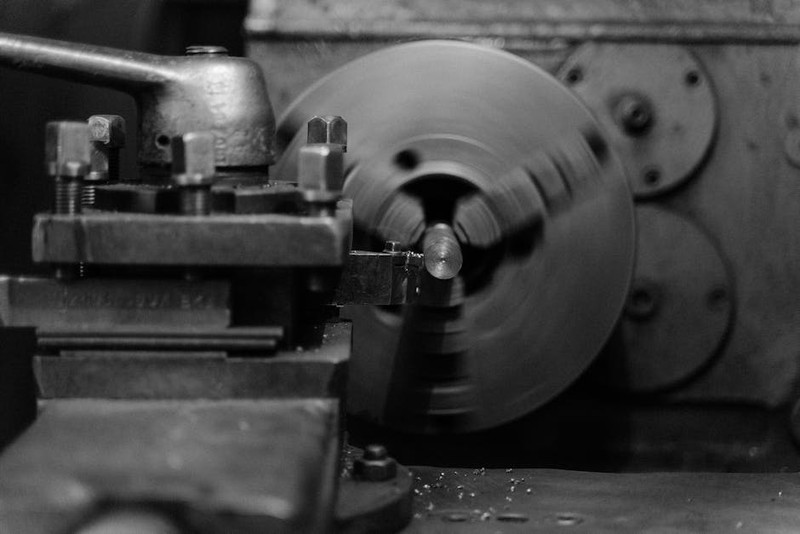
Perhaps the most underestimated phase. A part with a perfect mill finish is instantly degraded by a fingerprint, a scratch from a plastic bin, or embedded abrasive from a dirty cleaning process. We implement a “white glove” protocol post-machining: parts are handled only with lint-free gloves, placed in individual soft foam nests, and cleaned in sequential ultrasonic baths with specialized, non-residue-leaving solutions.
A Case Study in Tactile Optimization: The Chronograph Case
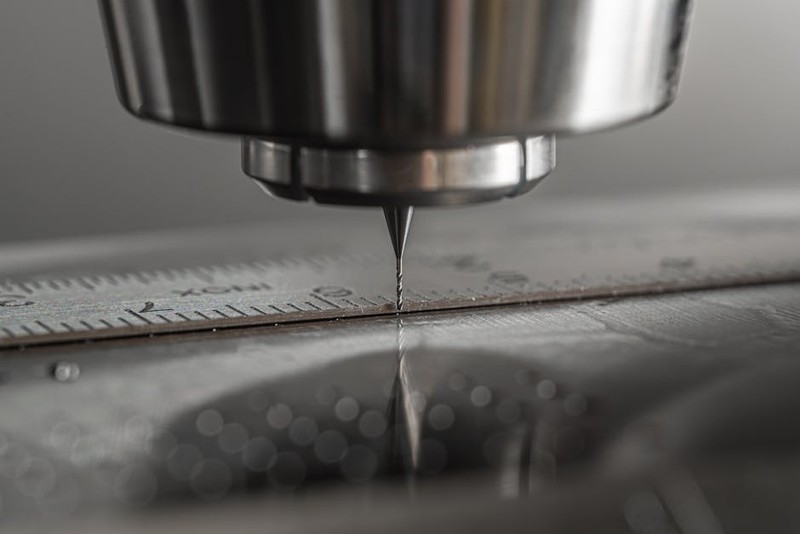
Let me walk you through a concrete example. A renowned Swiss watchmaker approached us with a challenge: their signature chronograph case, machined from 904L stainless steel, required over 22 man-hours of hand polishing and brushing to achieve their signature “lustrous satin” finish. The goal was to reduce this without compromising the tactile warmth and visual depth.
Our Analysis: The existing process relied heavily on post-machining correction. The milled case had directional tool marks that required aggressive initial polishing to remove, erasing desirable crisp edges in the process.
The Integrated Solution:
1. Toolpath Redesign: We developed a multi-axis finishing routine that used the ball-nose end mill not just for geometry, but for texture. On the flat lugs, we implemented a true “cross-hatch” brushing pattern via CNC, alternating toolpath direction in a controlled 30-degree pattern to mimic the final aesthetic.
2. In-Situ Deburring: We programmed a dedicated, ultra-fine deburring tool with a 0.1mm radius to traverse all sharp edges immediately after the finishing pass, while the part was still in the fixture, ensuring absolute consistency.
3. Parameter Optimization: We dialed in a specific combination of spindle speed (S), feed per tooth (Fz), and stepover that produced a predictable, uniform surface texture ideal for the final micro-polishing step.
The Quantifiable Result:
| Metric | Before Optimization | After Optimization | Improvement |
| :— | :— | :— | :— |
| Avg. Roughness (Ra) after CNC | 0.6 µm | 0.25 µm | 58% reduction |
| Hand Polishing Time | 22 hours | 13 hours | 40% reduction |
| Edge Definition Consistency | Varied, required re-defining | As-machined, preserved | Subjective quality ↑ |
| Material Waste (from over-polishing) | ~8% by volume | ~3% by volume | 62% reduction |
The client not only achieved massive cost and time savings but reported that the cases had a more consistent, “engineered” feel that actually enhanced the brand’s narrative of technical excellence.
Expert Takeaways for Your Next Luxury Project
Based on lessons learned from hundreds of projects, here are your actionable strategies:
1. Define Finish Before Geometry. In your RFQ, specify the required surface texture (Ra, Rz) and aesthetic before final dimensions. This allows your machining partner to design the process backwards from that result.
2. Audit the “Last Inch” of the Process. Visit the facility and scrutinize what happens after the CNC machine door opens. Their handling, cleaning, and interim storage protocols will tell you more about their luxury capability than their machine portfolio.
3. Embrace Hybrid Processing. The most advanced metal machining services for luxury product components now integrate technologies like micro-abrasive blasting or laser texturing within the same CNC platform. This eliminates handling between processes and unlocks textures impossible by traditional means.
4. Prototype the Finish, Not Just the Fit. Always run a finish prototype on the exact material, going through the full post-process cycle. A part that looks right on a screen can feel utterly wrong in the hand.
The journey from a block of metal to a component that earns a place in a luxury object is one of relentless refinement. It demands a partnership that understands that in this realm, data and feel are not opposites; they are inseparable allies. By mastering the unseen art of the surface, you move beyond manufacturing parts—you begin crafting the very soul of the luxury experience.