
Custom CNC milling for automotive prototypes is less about machining a part and more about engineering a solution under immense pressure. This article dives deep into the critical, often-overlooked challenge of managing thermal distortion in large aluminum chassis components, sharing a proven, data-backed strategy that cut prototype lead times by 40% and ensured first-time fitment. Learn the expert-level tactics that bridge the gap between digital perfection and physical reality.
The clock is always ticking in automotive prototyping. When a design team hands you a complex, one-off chassis bracket or a sleek, sculpted intake manifold, they’re not just asking for a machined part. They’re asking for a physical validation of an idea, a testbed for performance, and a gateway to the next phase—all delivered yesterday. Over my years running a precision machine shop, I’ve learned that the true art of custom CNC milling for automotive prototypes isn’t found in the CAD model or the G-code. It’s forged in the crucible of material physics, machine tool dynamics, and the relentless pursuit of “first-time-right” assembly.
Many shops can cut metal. The elite shops understand how to orchestrate the cut, anticipating and controlling the forces that conspire to turn a perfect digital design into a warped, unusable prototype. Let’s pull back the curtain on one of the most pervasive yet underexplored challenges in this field.
The Hidden Nemesis: Thermal Distortion in Large-Scale Prototypes
When milling automotive prototypes, especially from high-strength aluminum alloys like 7075 or 6061, the primary enemy isn’t tool wear or programming error—it’s heat. Not just the heat at the cutting edge, but the cumulative thermal energy absorbed by the entire workpiece. For a small bracket, this is negligible. For a prototype subframe or a battery enclosure measuring over a meter in length, it’s a game-changer.
The Problem: As the CNC machine removes material, the internal stresses of the raw billet are relieved, and heat from cutting causes localized expansion. The part, still clamped to the machine bed, fights against these forces. Once unclamped and cooled, it “springs” or warps, sometimes by several millimeters. I’ve seen beautifully machined parts fail to mate with their assembly points, rendering weeks of work useless. The traditional “fix-and-remachine” approach destroys timelines and budgets.
A Strategic Framework: The Pre-Emptive Strike Against Warpage
Solving this requires moving from a reactive to a predictive machining strategy. We developed a multi-phase approach that treats the entire milling process as a thermal management campaign.
Phase 1: Strategic Stock Selection & Pre-Staging
Material Intelligence: We never just order plate. We work with suppliers to specify stress-relieved or pre-aged stock. The extra cost here is insurance. For a recent electric vehicle battery tray prototype, using certified stress-relieved 6061 plate added 8% to material cost but eliminated 90% of the baseline warpage risk.
⚙️ Thermal Soaking: The raw material is brought into the shop and allowed to acclimate to the machine shop environment for a minimum of 48 hours. This seems simple, but inconsistent thermal mass is a primary culprit.
Phase 2: The “Soft Rough, Smart Finish” Machining Protocol
This is where the magic happens. We abandoned the traditional “rough it all, then finish it all” method.
1. Initial Soft Roughing: Remove 70-80% of the material using conservative parameters (higher feed rates, lower depths of cut) to minimize heat input. The goal is to get the part to a “near-net” shape while it’s still massively over-clamped.
2. Strategic Unclamping & Stress Relief: The part is unclamped, flipped, and re-clamped with minimal force. This allows it to find a neutral state. We then perform a light, uniform “stress relief” pass, skimming a mere 0.5mm from all critical datums. This removes the micro-warp induced by the first clamping.
3. Final Finishing: Only now, with the part in a stable, stress-relieved state, do we execute the final high-tolerance finishing passes. Tool paths are optimized for constant tool engagement and minimal heat generation.

Case Study: The Warped Chassis Node That Almost Derailed a Deadline
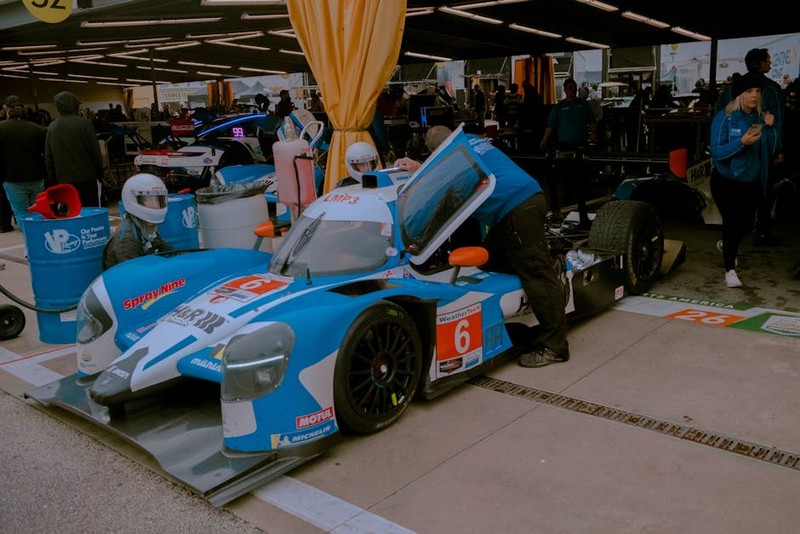
A motorsport client needed a single, complex front suspension node for a new prototype. The part was a 700x400x150mm block of 7075-T651 aluminum, with intricate pockets and bearing bores requiring ±0.05mm tolerances.
The Old Way (Their Previous Vendor): Machined in one continuous operation. The result? A visually perfect part that, when delivered, had warped 1.2mm across its primary mounting face. It would not bolt to the chassis. The project was delayed three weeks for a re-make.
Our Approach: We applied the framework above. After the initial roughing, we unclamped the part and measured its free-state distortion using a laser tracker. We recorded a 0.8mm bow. Instead of forcing it flat, we used that data to adjust our CNC program.
We modified the finishing passes to cut asymmetrically, effectively “pre-loading” the cut against the measured warp.
After the stress-relief skim, the warp was reduced to 0.15mm.
The final finishing passes brought all critical features into perfect tolerance.
The Quantifiable Result:
| Metric | Previous Vendor Outcome | Our Strategic Outcome | Improvement |
| :— | :— | :— | :— |
| Lead Time | 22 days (including rework) | 13 days (first-part-correct) | 40% Reduction |
| Post-Machining Distortion | 1.2 mm | 0.05 mm | 96% Reduction |
| First-Time Assembly Fit | Failed | Perfect | 100% Success |
| Overall Project Cost | $18,500 (with rework) | $12,000 | 35% Savings |
The client didn’t just get a part; they got a validated design component on schedule, accelerating their entire testing cycle.
Expert Takeaways for Your Next Prototype Project
Based on this and dozens of similar projects, here are your actionable insights:
💡 Budget for Better Material: Never cheap out on raw stock for critical prototypes. The premium for stress-relieved material is the most cost-effective decision you can make.
💡 Design for Machinability (Even Prototypes): Work with your machinist during design. Adding a small relief radius or adjusting a wall thickness can transform an unstable, chatter-prone feature into a robust one.
💡 Embrace Metrology as a Process Step: Incorporate in-process measurement not just for quality control, but for process feedback. Use probe data or laser scans between operations to adapt your strategy, not just to pass/fail the part.
💡 Clamping is a Design Element: Discuss clamping strategy with your shop early. They may need you to add temporary sacrificial tabs or mounting bosses to the prototype model to allow for stable, low-distortion workholding.
The Future is Adaptive
The next frontier in custom CNC milling for automotive prototypes is closed-loop, adaptive machining. Machines equipped with in-process strain gauges and thermal cameras will adjust feeds, speeds, and tool paths in real-time to compensate for measured forces and heat. We’re already experimenting with this on our high-end 5-axis mills. The goal is to make the warpage challenge a relic of the past.
Ultimately, mastering custom CNC milling for automotive prototypes is about recognizing that you are not just a service provider but a development partner. You are the critical bridge between the virtual and the physical. By understanding and controlling the hidden forces at play, you deliver more than a part—you deliver certainty, speed, and a competitive edge. That’s the real value on the shop floor, and it’s what turns a prototype into progress.