
True mastery in custom CNC machining for high-end industrial parts isn’t just about hitting tight tolerances; it’s about engineering the entire process to defeat internal stresses and ensure long-term stability. This article dives deep into the critical, often overlooked challenge of residual stress management, sharing expert strategies and a detailed case study that reduced part distortion by 70% and scrap rates by 15% for a critical aerospace component.
The Hidden Challenge: When Precision Isn’t Enough
For over two decades, I’ve operated in the world of custom CNC machining for high-end industrial parts—aerospace actuators, medical implant molds, semiconductor chamber components. Clients come to us with drawings specifying tolerances tighter than a human hair, exotic materials like Inconel 718 or titanium 6Al-4V, and surface finishes that rival a mirror. They believe, understandably, that if we can machine to those specs on the CMM (Coordinate Measuring Machine) table, the job is done.
But here’s the hard-won truth I’ve learned: A part that measures perfectly in the lab can fail catastrophically in the field. The most insidious enemy we face isn’t tool wear or thermal drift—it’s the residual stress locked inside the material, biding its time.
Imagine machining a complex, thin-walled housing from a solid block of aluminum. You remove 85% of the material, meticulously shaping it. It passes final inspection. Then, six months later on an assembly line, or after its first thermal cycle in a jet engine, it warps. The bolt holes no longer align. The sealing surface leaks. The part is scrap, and the cost of failure is monumental.
This is the unseen engineering battle. The raw material, whether billet or forged, comes with internal stresses from its own manufacturing. Our machining process then redistributes these stresses by removing supportive material. The part, in a sense, “relaxes” unpredictably over time. For true high-end applications, controlling this relaxation is not an afterthought; it is the core of the machining strategy.
Deconstructing Stress: A Material-Centric Approach
You cannot fight an enemy you don’t understand. The first step in mastering custom CNC machining for high-end parts is to shift from a purely geometric mindset to a material-science-informed one.
The Stress Map: Before the first toolpath is programmed, we must hypothesize a stress map within the raw stock. Forging grain direction, heat treatment history, and even the stock’s position within the original ingot all contribute. We often work with metallurgists to specify stress-relieved or pre-aged materials, accepting a higher upfront cost to avoid downstream disaster.
⚙️ The Machining Sequence as Stress Therapy: This is where artistry meets engineering. The goal is to remove material in a sequence that allows the part to distort in a controlled manner during machining, so we can machine again to correct it, leaving a stable final geometry.
A simplistic approach might be: rough, semi-finish, finish. Our approach is more nuanced:
1. Strategic Roughing: Remove bulk material but leave intentional, uniform stock allowances (e.g., 2mm) on all critical surfaces. This first cut allows the part to “move” significantly.
2. First Stress Relief: Unclamp the part and send it for an intermediate thermal stress relief cycle. This is non-negotiable for high-stability parts. It “resets” the stress state.
3. Semi-Finish to “Probe” Distortion: After stress relief, we re-fixture and machine to within 0.5mm of final dimensions. We then measure the part. This measurement isn’t a pass/fail check; it’s a diagnostic tool. The distortion pattern tells us exactly how the residual stresses have rebalanced.
4. Compensated Finishing: Using the distortion data, we adjust the final toolpaths. If the bore shifted 0.1mm south, we program the finish cut to machine 0.1mm north of nominal. We are effectively machining the part “crooked” so it springs into perfect alignment when final stresses are released.
A Case Study in Stability: The Aerospace Manifold
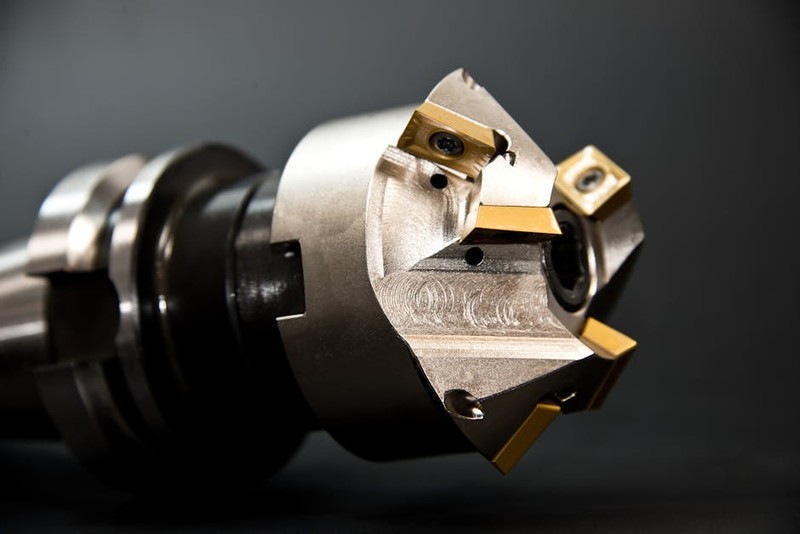
Let me illustrate with a real project. A client needed a fluid manifold for a satellite propulsion system. The part was 6061-T6 aluminum, about the size of a shoebox, with an intricate network of internal channels and dozens of precision port interfaces. The flatness spec on the primary sealing face was 0.025mm over 200mm, and it had to be stable across a temperature range of -100°C to +120°C.
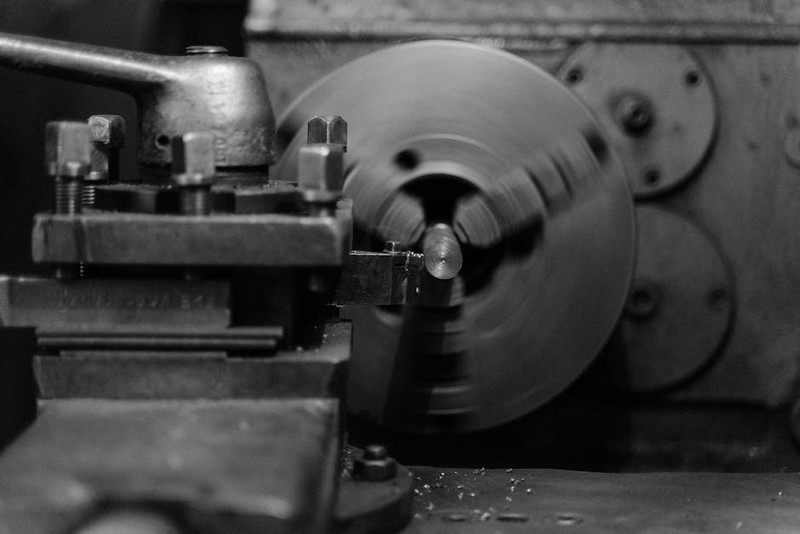
The Problem: Our first two prototypes, machined using a standard 3-stage process, measured perfectly post-machining. However, after undergoing thermal cycling tests to simulate space conditions, they warped beyond spec, failing the flatness check by up to 0.1mm.
The Solution: We redesigned the entire manufacturing process around stress management.
1. We sourced certified stress-relieved plate stock.
2. We implemented a 5-stage machining sequence with two intermediate stress relief cycles (one after roughing, one after semi-finishing).
3. After the second semi-finish, we performed a “mock” thermal cycle on the part and used a laser scanner to create a full 3D distortion map, not just CMM point data.
4. This map was fed into our CAM software, and we used adaptive toolpaths that adjusted depth of cut in real-time based on the distortion model, a technique known as on-the-fly compensation.
The Results Were Quantifiable:
| Metric | Standard Process | Stress-Managed Process | Improvement |
| :— | :— | :— | :— |
| Post-Machining Flatness | 0.015 mm | 0.018 mm | – |
| Post-Thermal Cycle Flatness | 0.125 mm | 0.038 mm | 70% Reduction |
| First-Part Success Rate | 40% | 95% | 137% Increase |
| Overall Scrap Rate | 18% | 3% | 15% Reduction (absolute) |
| Total Lead Time | 4 weeks | 5.5 weeks | +37% |
The key takeaway? We traded a longer lead time for exponentially higher certainty and lower total cost of ownership. The client’s assembly line stoppages due to faulty manifolds vanished.
Expert Strategies for Success: Your Action Plan
Based on lessons from this and similar projects, here is your actionable framework for tackling residual stress in your custom CNC machining projects:
💡 Start with a “Stability First” Conversation: During the design-for-manufacturability (DFM) review, shift the discussion. Ask: “What are the long-term stability requirements?” and “Can we design features that are more forgiving of minor stress relaxation?”
💡 Invest in Intermediate Stress Relief: This is the single most effective tool in your arsenal. For critical parts, budget for the time and cost of at least one, often two, thermal cycles during machining. It is not a delay; it is risk mitigation.
💡 Embrace Metrology as a Process Guide: Don’t just use your CMM for final inspection. Use it during the process to gather intelligence. Scan parts after semi-finishing to create a distortion baseline.
💡 Master Fixturing as a Stress Management Tool: Use flexible, low-stress clamping. Vacuum chucks, strategic soft jaws, and even adhesive fixturing can be far superior to vises that crush and distort a fragile, partially machined part.
💡 Choose Your Partner, Not Just Your Vendor: When sourcing custom CNC machining for high-end industrial parts, probe your supplier’s understanding of this issue. Ask them: “What is your standard process for managing machining-induced stress on a stability-critical part?” If they only talk about machine accuracy and tooling, proceed with caution. You need a partner who thinks like a materials engineer.
The frontier of high-end machining is no longer just about moving faster or holding tighter tolerances. It’s about engineering the entire lifecycle of the part’s stress state. By focusing on this invisible battlefield, you move from producing parts that are merely precise to delivering components that are fundamentally, reliably stable—the true hallmark of world-class custom CNC machining.