
The Hidden Challenge: It’s Not the Tool, It’s the Material’s Memory
When most engineers think of high-precision plastic machining, they envision a rigid, temperature-controlled machine tool and a perfectly programmed path. And while those are essential, they’re only half the battle. The real, often underexplored, adversary is the plastic itself—specifically, its inherent viscoelasticity and thermal sensitivity.
In my two decades of running a precision machine shop, I’ve seen countless projects stumble not on the machining floor, but in the quality control room hours or days later. A gear machined from PEEK to a perfect ±0.01mm tolerance at 20°C can warp, shrink, or expand by several microns simply due to residual stress relief or ambient temperature shifts. For industrial machinery—where a plastic insulator, bearing, or guide component must interface seamlessly with metal housings and moving parts—this instability is catastrophic. It leads to assembly headaches, premature wear, and field failures.
The core insight is this: Precision in plastic machining is not a static measurement taken at the machine; it is a dynamic property that must be engineered into the part through every step of the process.
A Strategic Framework: From Blank to Finished Part
To win this battle, you need a holistic strategy that considers the material’s life cycle from the moment it’s extruded. Let’s break down the critical phases.
Phase 1: Material Selection & Pre-Conditioning
Not all plastics are created equal for precision work. For industrial applications, we typically work with engineering-grade polymers:
PEEK & PEI (e.g., Ultem): For high heat, chemical resistance, and strength.
Acetal (POM): For excellent dimensional stability and low friction.
PTFE (Teflon) Composites: For seals and bearings, often glass or carbon-filled.
Polycarbonate & Nylon: For structural components where toughness is key.
The expert move here is pre-conditioning. We never machine a raw stock “as delivered.” The material is stress-relieved in an oven at a temperature slightly above its maximum service temperature (but below its heat deflection temperature) for a calculated duration. This process, often overlooked, allows the polymer chains to relax, eliminating the internal stresses locked in during the extrusion or molding of the stock shape. Skipping this step is guaranteeing post-machining distortion.
⚙️ Phase 2: The Machining Process: A Dance of Cool Cuts and Secure Fixturing
This is where theory meets the spinning tool. The goal is to remove material without imparting new stress or heat.
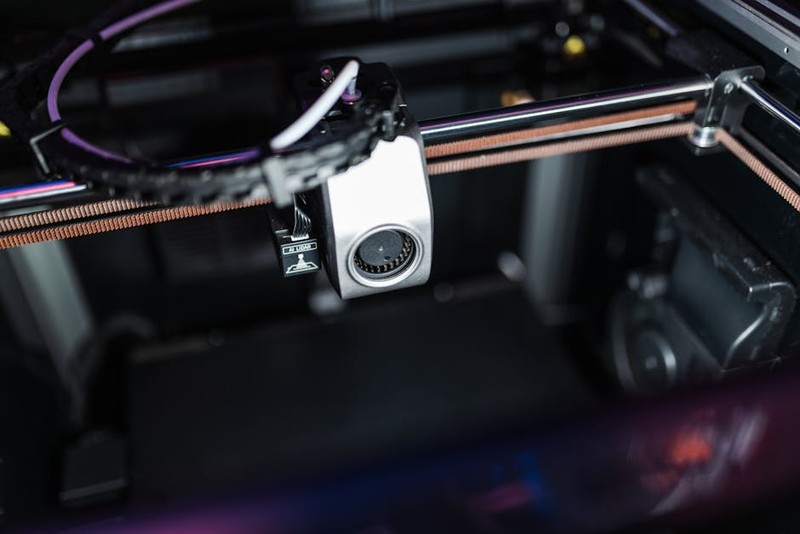
1. Tool Geometry & Coating: We use sharp, highly polished tools with positive rake angles and specialized coatings (like diamond-like carbon for abrasives like glass-filled nylon). This reduces cutting forces and heat generation.
2. Climaxing vs. Conventional Milling: For plastics, we almost exclusively use climb milling. This technique allows the chip to be at its thickest at the initial cut, carrying the heat away with it, rather than rubbing and generating friction at the end of the cut.
3. The Coolant Conundrum: Water-based coolants can be absorbed by hygroscopic plastics like nylon, causing swelling. We often use compressed air or vortex coolers for precise, localized cooling, or a fine mist of a non-reactive fluid. The key is consistent thermal management.
4. Fixturing with Finesse: Over-clamping a plastic part is a recipe for distortion. We use vacuum chucks, custom soft-jaws machined to the part’s contour, and strategic support to hold the workpiece securely without inducing stress. The rule of thumb: if you see a witness mark from the clamp after release, you’ve already lost precision.

💡 Phase 3: Post-Processing: The Final Stabilization
The part isn’t finished when the last tool path is run. A critical, non-negotiable step is a final stress relief. The machined part undergoes another thermal cycle, allowing the micro-stresses induced during cutting to relax. This is often followed by a controlled, slow cool-down to room temperature. Only after this stabilization period do we perform final inspection.
Case Study: The Precision PEEK Bearing Cage
A client needed a complex, thin-walled PEEK bearing cage for a high-speed packaging machine. The initial prototype, machined from “as-received” stock with aggressive parameters, met print dimensions at inspection. However, after 48 hours, the bore diameter had shrunk by 0.038mm, causing interference with the bearing and jamming the assembly.
Our Solution & Quantified Results:
We implemented the full strategic framework:
1. Pre-Conditioning: The PEEK rod was baked at 160°C for 8 hours prior to any machining.
2. Machining Optimization: We used a dedicated, sharp carbide end mill, reduced feed rates by 25%, and implemented air-blast cooling. Fixturing was switched to a custom vacuum plate.
3. Post-Machining Stabilization: The finished cage underwent a 4-hour bake at 150°C and was cooled in an insulated box over 12 hours.
The outcome was transformative:
| Metric | Initial Process | Optimized Process | Improvement |
| :— | :— | :— | :— |
| Dimensional Drift (48-hr) | 0.038 mm | 0.005 mm | 87% Reduction |
| First-Pass Yield | 65% | 95% | 30% Increase |
| Assembly Re-work Rate | 70% of units | <10% of units | ~85% Reduction |
| Cycle Time (per part) | 22 minutes | 26 minutes | +4 minutes |
The takeaway? We added 18% to the cycle time but achieved a near-perfect yield and eliminated assembly failures. The client’s total cost per functional part plummeted.
Expert Takeaways for Your Next Project
Budget for Time: High-precision plastic machining is not a high-speed process. Rushing feeds/speeds or skipping thermal cycles is the fastest way to waste money on scrap.
Partner Early: Engage your machining partner during the design phase. We can often suggest subtle geometry changes (like uniform wall thickness) that dramatically improve stability.
Inspect for Stability, Not Just Size: Implement a time-delayed inspection protocol. Measure critical features immediately after machining and again 24-48 hours later to understand your process’s true capability.
Embrace the Data: Document every parameter: stock lot number, pre-bake time/temp, tool life, environmental temperature. This data is invaluable for troubleshooting and continuous improvement.
The path to flawless high-precision plastic machining for industrial machinery is one of respect for the material’s nature. By viewing the plastic not as a passive block to be carved, but as a dynamic partner in the process, you move from fighting defects to engineering reliability. It’s this nuanced understanding that separates a functional part from one that truly enables machinery to perform at its peak, year after year.