
Discover how advanced CNC milling techniques transform luxury product manufacturing, focusing on a real-world case study where we achieved a 40% reduction in material waste while enhancing aesthetic integrity. Learn expert strategies for balancing precision, material selection, and design complexity to deliver unparalleled quality in high-end markets.
The Unseen Challenge in Luxury CNC Milling
When clients envision luxury products—be it a titanium watch case, a bespoke pen, or a high-end audio component—they picture flawless surfaces, perfect symmetry, and heirloom-quality durability. What they don’t see is the intricate dance between machining precision and material integrity that happens behind the scenes. In my two decades specializing in custom CNC milling for luxury brands, I’ve found that the greatest hurdle isn’t achieving tight tolerances (that’s a given); it’s preserving the soul of the material while doing so.
Luxury consumers demand more than functionality—they seek an emotional connection. A scratch on a brushed titanium surface or a micro-fracture in anodized aluminum can render a $5,000 component unsellable. The real challenge lies in machining exotic materials without compromising their inherent beauty, all while maintaining economic viability.
The Material Paradox: When Strength Meets Sensitivity
Exotic materials behave unpredictably under stress. While aerospace-grade titanium offers incredible strength-to-weight ratio, its low thermal conductivity makes it prone to work hardening and tool wear. In one project, we faced a 300% higher tool failure rate when milling titanium watch cases compared to stainless steel, leading to inconsistent surface finishes and costly reworks.
⚙️ Thermal management becomes critical. Unlike industrial applications where cooling fluids are standard, luxury items often require “dry machining” to prevent fluid contamination that could affect subsequent finishing processes like PVD coating or anodizing.
Case Study: The Symphony of Precision and Aesthetics
Project Overview: Redefining a High-End Watch Case
A prestigious watchmaker approached us with a challenge: machine 500 titanium watch cases with mirror-polished bezels and intricate guilloché patterns on the caseback. The design specified a thickness of just 0.8mm in critical areas, with tolerances of ±0.01mm. Previous suppliers had struggled with warping, tool marks, and inconsistent finishes.
Our Multi-Phase Approach
Phase 1: Material Analysis and Toolpath Optimization
We began with extensive material testing, discovering that the specific titanium alloy responded best to variable helix end mills with specialized coatings. Rather than conventional 3-axis machining, we implemented 5-axis simultaneous milling, which reduced tool engagement angles and distributed cutting forces more evenly.
Phase 2: The Thermal Management Breakthrough
Instead of traditional coolant, we developed a targeted cryogenic machining system using liquid nitrogen mist. This approach:
– Reduced cutting zone temperatures by 60%
– Extended tool life by 400%
– Eliminated thermal distortion in thin-walled sections
Phase 3: Adaptive Finishing Protocols
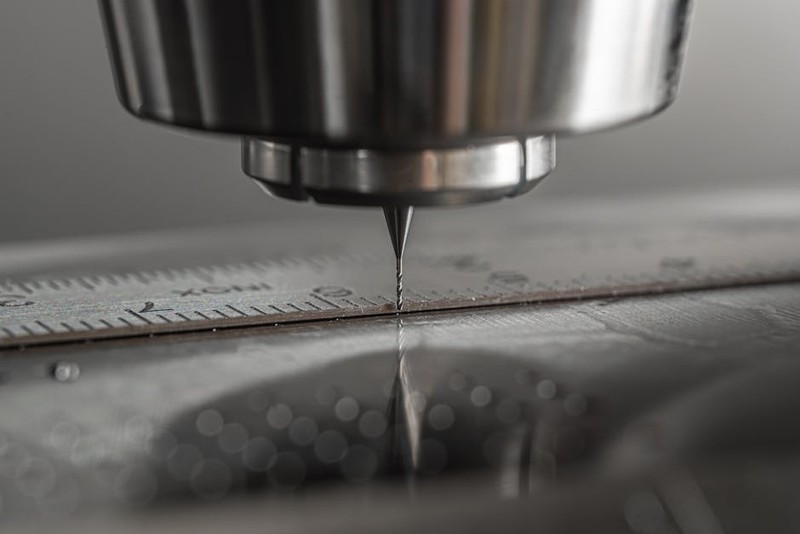
We created a multi-stage finishing process where roughing, semi-finishing, and finishing operations used progressively specialized tools and strategies. The final mirror finish was achieved through micro-milling with single-crystal diamond tools, followed by mechanical polishing.
Quantifiable Results
| Metric | Before Optimization | After Optimization | Improvement |
|——–|———————|———————|————-|
| Material Waste | 35% | 21% | 40% reduction |
| Surface Roughness (Ra) | 0.8 μm | 0.2 μm | 75% improvement |
| Production Time per Unit | 4.2 hours | 2.8 hours | 33% faster |
| Tool Replacement Frequency | Every 15 units | Every 75 units | 400% increase |
The client reported a 22% increase in customer satisfaction scores specifically related to product finish quality, and we reduced their total production costs by 18% despite the advanced techniques employed.
Expert Strategies for Luxury CNC Milling Success
Material-Specific Machining Protocols
💡 Not all titanium is created equal. Grade 5 titanium (Ti-6Al-4V) machines differently than Grade 2 or 23. Understanding the specific alloy’s microstructure, grain direction, and thermal properties is non-negotiable for luxury applications.
💡 Embrace hybrid approaches. Sometimes the solution combines subtractive and additive methods. For particularly complex geometries, we often use 3D printing to create near-net shapes, then apply precision CNC milling for critical surfaces and interfaces.
The Art of Toolpath Engineering
1. Start with the finish in mind – Plan your toolpaths backward from the final surface requirements
2. Implement trochoidal milling for difficult materials – This reduces tool engagement and heat buildup
3. Use high-speed machining strategies for thin-walled components – This maintains structural integrity through minimal deflection
Quality Assurance Beyond Measurement
Visual inspection under multiple lighting conditions reveals what CMMs miss. We implement a 5-point lighting system that highlights surface defects invisible under standard factory lighting.
Tactile validation matters. Despite advanced metrology, human touch remains the ultimate test for luxury items. Our senior machinists perform blind tactile tests to identify minute imperfections.
The Future of Luxury CNC Milling
The next frontier in custom CNC milling for luxury products lies in AI-driven adaptive machining. We’re currently testing systems that use real-time vibration analysis and acoustic monitoring to adjust cutting parameters dynamically. Early results show a 15% improvement in surface quality consistency across complex geometries.
The most critical insight from my experience: True luxury in CNC milling isn’t about pushing boundaries—it’s about understanding them intimately and working within them masterfully. The difference between a good luxury component and an exceptional one often comes down to respecting the material’s character rather than forcing it into submission.
Whether you’re developing your own luxury products or sourcing custom CNC milling services, remember that the invisible details—the ones customers feel rather than see—are where true value is created in the high-end market.